
Prepping at a glance
- Check what your heating system needs to operate.
- Plan an alternative place to stay before roads deteriorate.
- Keep backup heating within product safety instructions.
Check how the house actually stays warm
A winter storm preparedness checklist starts with the building's heating dependencies. A fuel-burning furnace may still need electricity for controls or air movement. Ask an appropriate technician about your specific equipment and keep maintenance current. Do not assume a fireplace, heater, or generator is suitable for a particular space because it produces heat.
Review National Weather Service winter preparation guidance and identify who may be especially affected by a cold home or interrupted care. An older adult living alone, a person using medical equipment, and a household with an infant may need different arrangements. Plan with the people concerned instead of applying one generic temperature or supply rule to everyone.
Assemble supplies for ordinary tasks
Winter outage supplies should make food, water, light, communication, and personal care manageable without normal appliances. Choose familiar food that can be served safely with available equipment. Keep appropriate clothing, bedding, battery lights, charged communication backups, and essential care supplies accessible. Test a light with cold or gloved hands if that is how it will be used.
Store items where they can be reached without crossing an icy walkway or opening a difficult outdoor shed. Review pet needs and water access if your home relies on a pump. A written inventory prevents repeated purchases while overlooked necessities run short. Set aside supplies for departure as well as staying home so packing does not consume the last safe travel window.
Complete property tasks before the storm
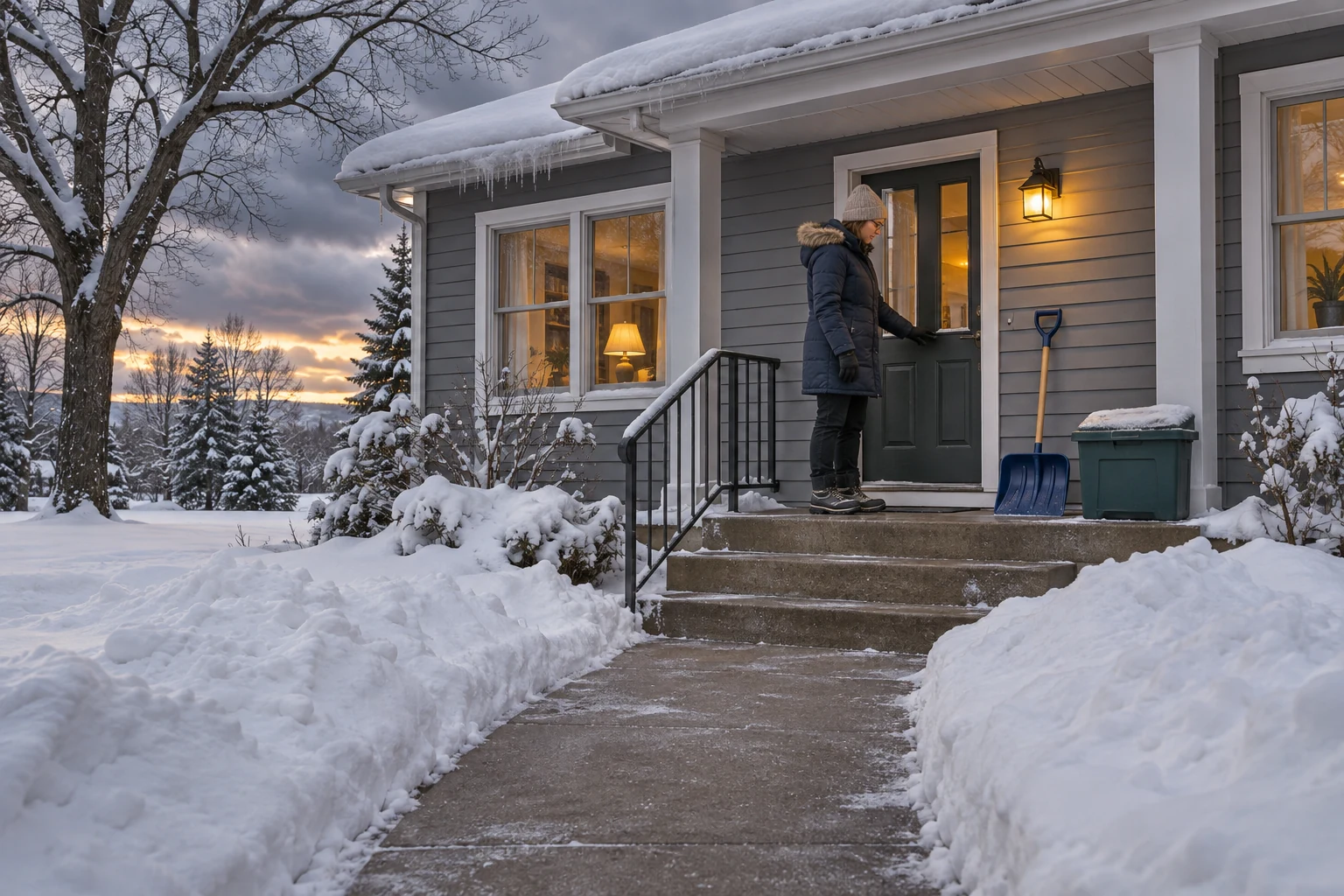
Winter storm home preparation includes checking obvious maintenance concerns, clearing appropriate access areas while conditions allow, and arranging help for snow or ice tasks beyond your abilities. Follow local and product instructions for plumbing protection and utility equipment. Renters should clarify who handles heating failures, snow removal, and urgent maintenance before severe weather.
Keep emergency contacts and your exact address available for anyone who may need to call for help. Review vehicle readiness if travel is essential, but do not treat preparedness supplies as a reason to drive during dangerous conditions. Canceling a nonessential trip can be a more useful safety decision than adding another piece of equipment to the car.
Set a relocation and check-in plan
Identify a place with the services you need and confirm that you could stay there. Consider accessibility, pets, care requirements, and whether the destination may experience the same outage. Decide when to make a move based on official instructions, household health needs, and travel conditions rather than waiting until supplies or warmth are nearly gone.
Arrange check-ins with relatives or neighbors and agree what happens after a missed contact. Keep them brief so the system is realistic. During an outage, do not improvise indoor combustion or use outdoor cooking equipment for heat. Afterward, review what failed first: a heating assumption, an icy route, a missing prescription detail, or a phone battery. Repair that weak point before buying general-purpose extras.
