
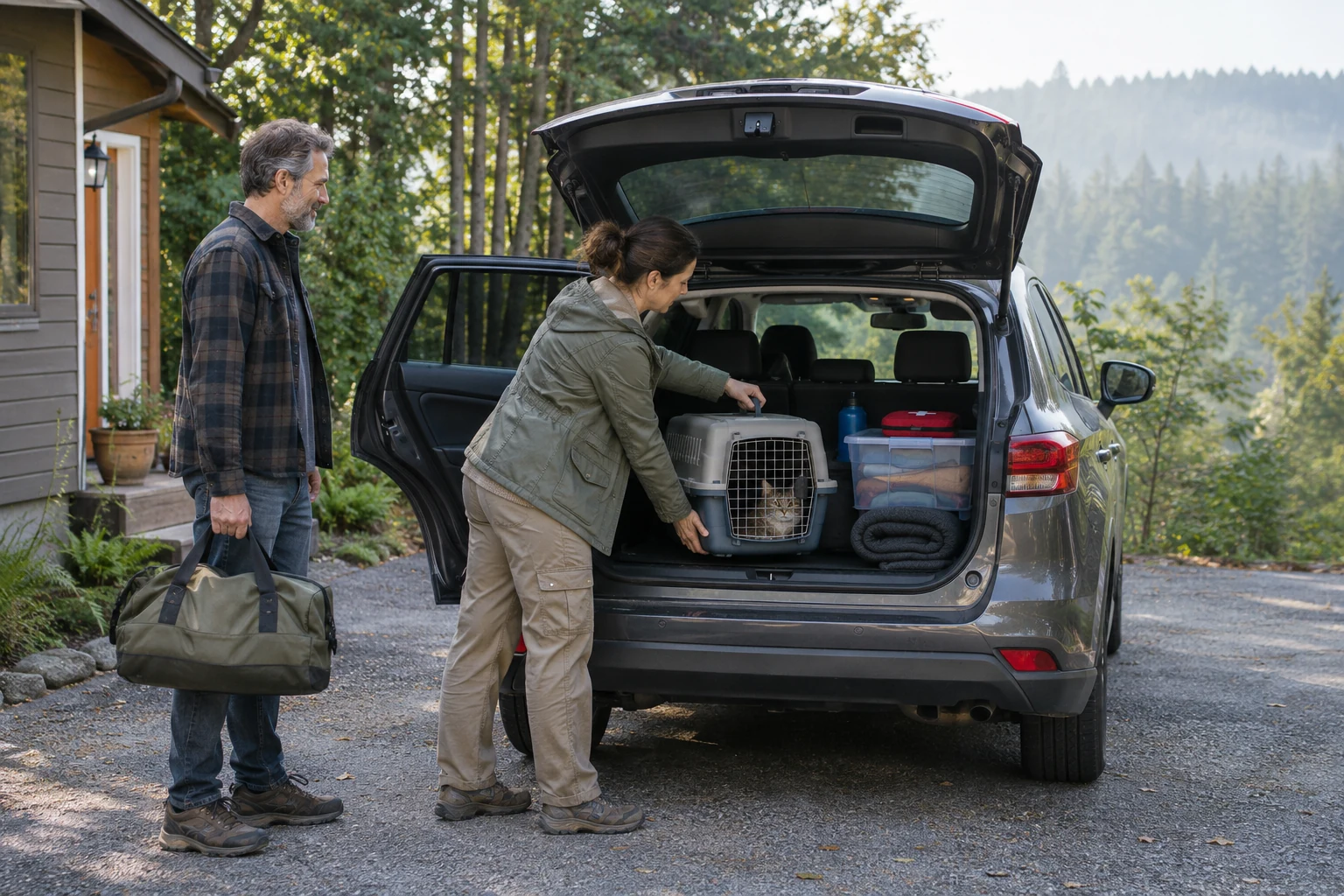
Prepping at a glance
- Pack essentials early and keep the exit path clear.
- Confirm transportation for people and animals.
- Follow evacuation instructions without delaying for property tasks.
Prepare to leave before you need to decide
A wildfire evacuation checklist should reduce the work required to get people moving. Identify local alert sources and learn how your jurisdiction describes evacuation stages. Do not assume that terms used in another state have exactly the same meaning where you live. Save official information channels on paper as well as on your phone.
US Fire Administration evacuation guidance provides a starting point for advance preparation. Make a list of household members, transportation needs, and essential destinations. If anyone needs extra loading time, arrange help before a warning. A plan that depends on a neighbor who may already be away needs an alternative.
Pack a bag for continuity of care
A wildfire go bag should contain the items that keep you functioning away from home: identification, medicines, essential medical information, chargers, communication aids, basic clothing, and appropriate personal care supplies. Include pet identification, carriers, and necessary food. Keep critical documents backed up securely so the bag is not your only copy.
Separate essentials from optional keepsakes. A short optional list can be useful when there is ample time, but it must never become a reason to delay departure. Revisit the bag as prescriptions, clothing sizes, and household members change. Check whether it can be carried or loaded by the person who will actually be home, not only by the strongest household member.
Map routes and transportation constraints
Wildfire evacuation routes should include alternatives because the familiar road may become unavailable. Review local evacuation planning materials rather than assuming a navigation app knows every closure. Discuss where to meet if cars become separated and which out-of-area person receives updates. Keep fuel or vehicle charge adequate for your ordinary travel needs and anticipated departure.
Ask ahead about animal accommodation, accessible transport, and assistance for people without vehicles. Large animals require a different loading and destination plan from a cat in a carrier. If you rely on an elevator or a powered garage door, learn the safe alternative procedure before a disruption. Do not leave these discoveries for a smoke-filled departure window.
Practice a departure that stops at the door
Rehearse gathering people, essential bags, and pets during normal conditions. Check whether the route from the house to the vehicle is clear and whether necessary items fit without blocking passenger space. You do not need to drive through a simulated emergency to identify a missing carrier or an inaccessible medicine list.
When officials direct evacuation, follow their instructions promptly. Do not delay to complete landscaping, retrieve optional belongings, or document every room. Once away, send a short location update to your designated contact and monitor official reentry information. Returning without authorization can place you in an active hazard area and interfere with response. Afterward, update your checklist from the actual departure experience while details remain fresh.
