
Prepping at a glance
- Check falling and sliding hazards in ordinary living spaces.
- Plan around where people spend time during the day.
- Include exits and post-event communication in your rehearsal.
Start where people sleep and sit
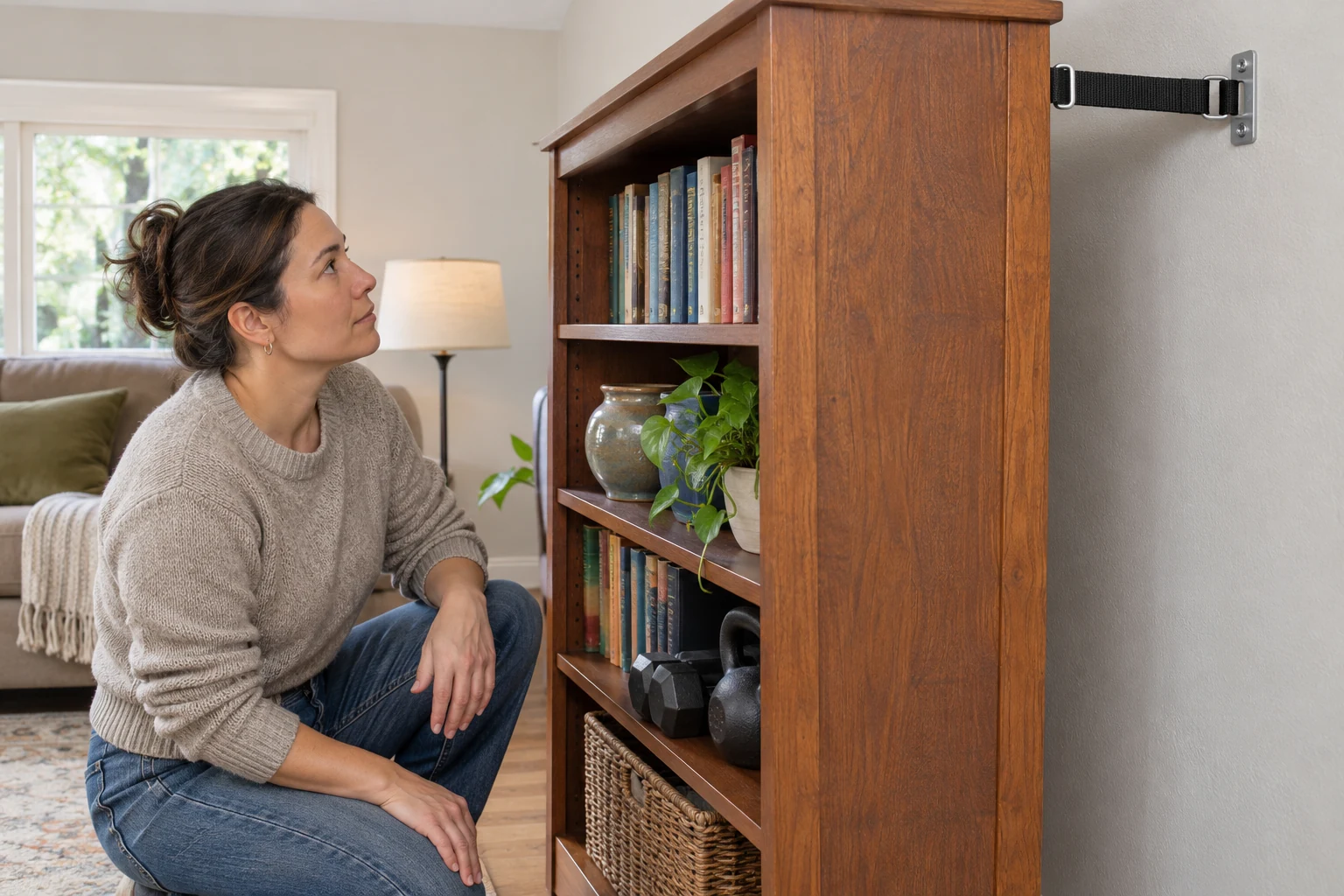
An earthquake preparedness checklist is easier to complete one room at a time. Begin beside beds, couches, desks, and children's play areas. Look for heavy items above these places, tall furniture that could move, and objects that might block an exit. Photograph concerns, then decide which can be corrected immediately and which require an appropriate fastener, installer, or landlord's approval.
USGS earthquake preparation guidance emphasizes securing movable objects and making household plans. Match anchoring methods to the furniture and building materials rather than improvising from a picture online. Moving a heavy display away from a sleeping area may be a useful first step while you arrange a suitable permanent solution.
Review kitchens, storage, and utility areas
Earthquake home safety includes more than bookcases. Consider cabinet contents, fragile containers, stored chemicals, and objects placed high on open shelving. Arrange commonly used items so daily access does not depend on climbing around unstable piles. Keep exits and the route to your emergency supplies clear.
Ask qualified professionals about water heaters, gas connections, and structural concerns that exceed ordinary household maintenance. Learn local utility instructions before an emergency and do not treat online advice as permission to manipulate unfamiliar equipment. Know where essential controls are located, but also know when to leave and call the appropriate service. A plan that requires someone to investigate a suspected leak is not a good household safety plan.
Plan for separated family members
An earthquake family communication plan should cover school, work, travel, and home. Agree on an out-of-area contact and a meeting location if your usual home is inaccessible. Keep a paper copy of important numbers because a phone may be damaged, discharged, or separated from its owner. Clarify school and care-facility reunification procedures rather than assuming you can immediately reach the building.
Discuss what each person should do if they cannot send a message. Give children a simple, age-appropriate plan and identify authorized adults who can help. For people who use mobility or communication aids, plan with them directly so backup arrangements fit their actual routines instead of an outsider's assumptions.
Practice actions without creating new hazards
Follow recognized earthquake protective-action guidance and rehearse appropriate actions for the spaces you use. Keep the exercise calm and brief. Do not move heavy furniture or shut off essential utilities as part of an improvised drill. Notice whether a person can reach their shoes, glasses, mobility aid, and light without crossing a cluttered floor.
After the rehearsal, select three fixes with clear owners and completion dates. For example, secure a specific bookcase, move a heavy framed object, and print the contact sheet. Plan for aftershocks and disrupted services when choosing supplies, and follow official building safety instructions after an event. An orderly inventory of practical improvements is more useful than buying equipment while obvious falling hazards remain unaddressed.
