
Prepping at a glance
- Choose shelter before a warning arrives.
- Plan alternatives for mobile homes and outdoor locations.
- Practice reaching shelter with necessary mobility aids.
Choose a place based on the building
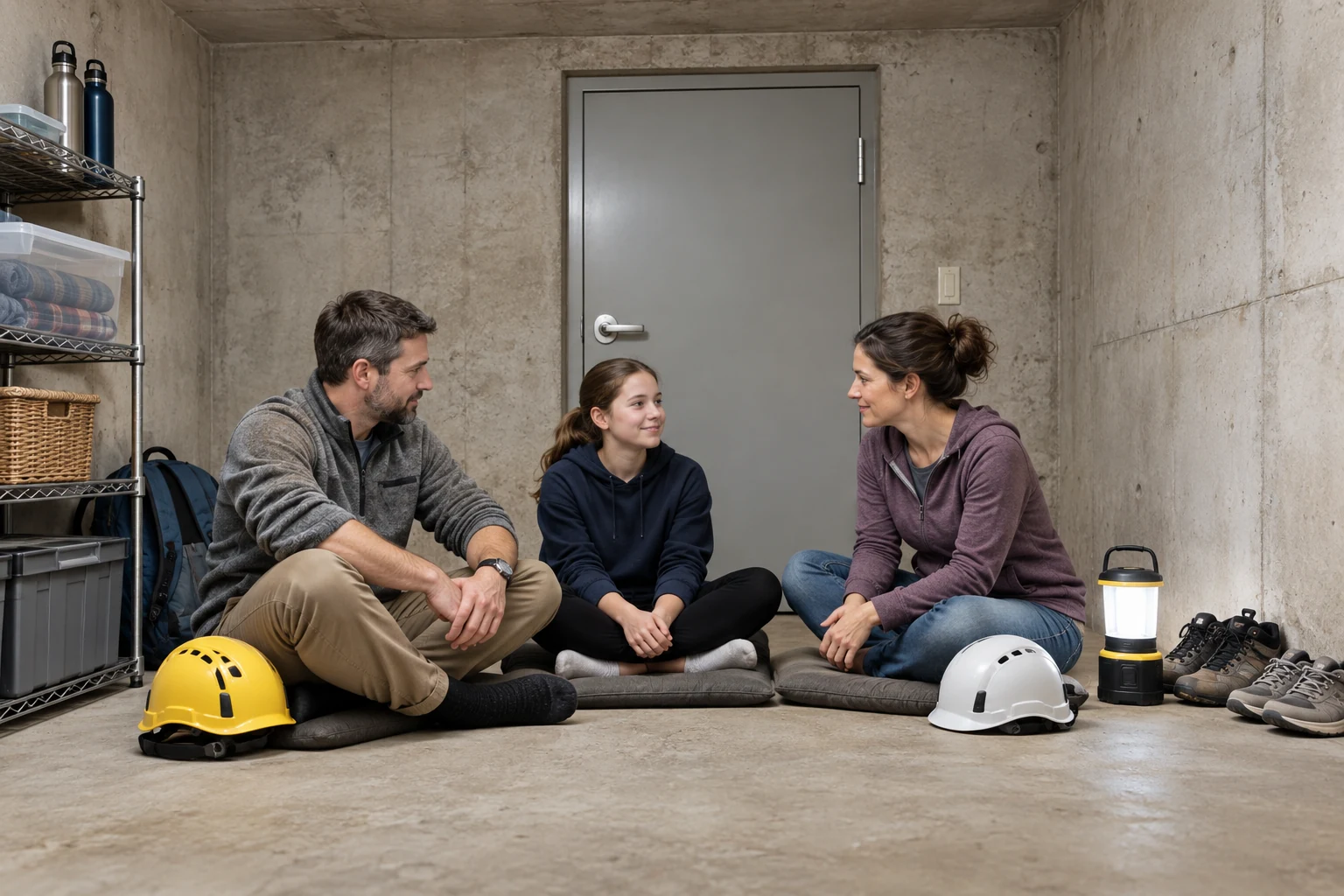
Tornado preparedness at home begins with an honest look at the structure. Identify a suitable shelter location before severe weather develops. The National Weather Service tornado guidance favors a basement or small interior room on the lowest floor of a sturdy building, away from windows; manufactured homes, tents, and vehicles do not provide comparable protection.
Do not label any convenient closet a safe room. A purpose-built storm shelter has design requirements that an ordinary room may not meet. If your current home offers limited protection, identify a stronger nearby location and clarify when you can enter it. The plan must work outside business hours and when the person who usually has the key is away.
Make the route usable for everyone
The best tornado shelter location on a drawing is not useful if someone cannot reach it. Walk the route with household members who use wheelchairs, walkers, or other assistance. Keep necessary aids close and avoid storing boxes in the route or shelter. Check whether a basement staircase creates an access problem that needs a different plan.
Keep a small set of essentials in or near the chosen area: a light, shoes, communication supplies, and immediately necessary personal items. Do not require a trip through multiple rooms during a warning. Agree who assists children or pets, while keeping human safety first. A carrier stored within reach is more practical than searching for one after conditions deteriorate.
Receive warnings when routines change
Arrange more than one way to receive official weather warnings, including an option that works overnight. Review phone alert settings and keep an appropriate weather radio usable. Understand local alert terminology and follow current instructions rather than waiting to see a funnel cloud. Severe weather can arrive when visibility is poor or people are asleep.
Consider where you spend time beyond home. Ask about shelter procedures at work, school, and regular activities. On days with a severe-weather threat, review travel and outdoor plans early. If you depend on a shared community shelter, confirm the opening procedure ahead of time. A remembered address is not enough if the building is locked when needed.
Run a calm family drill
A family tornado drill should be short enough that you will repeat it. Announce the practice, move to the designated place, and check whether everyone knows the route. Do not create a frightening surprise or simulate dangerous conditions. Time spent resolving a difficult door, misplaced light, or pet carrier location is the most useful result.
Write down the gaps and fix the largest one first. Then rehearse an alternative situation: someone is visiting, a caregiver is present, or the household is asleep. Keep instructions visible for guests and babysitters. After an actual warning, wait for official information before leaving shelter and stay alert to damaged structures and utility hazards. Your plan is successful when people can act promptly without inventing the shelter decision in the moment.
