
Prepping at a glance
- Identify substantial nearby buildings for shelter.
- Keep information and essential care supplies accessible indoors.
- Let official instructions guide movement and next steps.
Plan around actions you can take
Nuclear emergency preparedness should focus on protective actions and reliable information, not predictions about a particular event. A nuclear detonation, an incident at a nuclear facility, and another radiation emergency can present different conditions. Your household cannot determine exposure or safe travel simply by looking outside or checking an unverified social post.
Read CDC information about nuclear blast hazards before interpreting shelter as protection against every effect. A building cannot guarantee safety in all circumstances. The useful planning question is narrower: where could you get inside promptly, obtain instructions, and support essential needs while authorities assess the situation? Write that answer for home, work, and other places you regularly visit.
Choose accessible shelter options
A radiation emergency plan should name actual buildings and interior locations rather than a vague direction such as heading to the basement. CDC shelter guidance favors substantial buildings and locations away from exterior surfaces, while emphasizing getting inside promptly. Consider access, stairs, building hours, and whether everyone can reach the chosen space.
Keep the route uncluttered and identify an alternative if the preferred building is unavailable. Avoid a plan that requires crossing town to collect everyone before anyone shelters. Agree that separated family members will follow local instructions where they are and communicate when possible. Knowing school or workplace procedures helps reduce the impulse to make a dangerous, unnecessary journey.
Gather supplies for communication and care
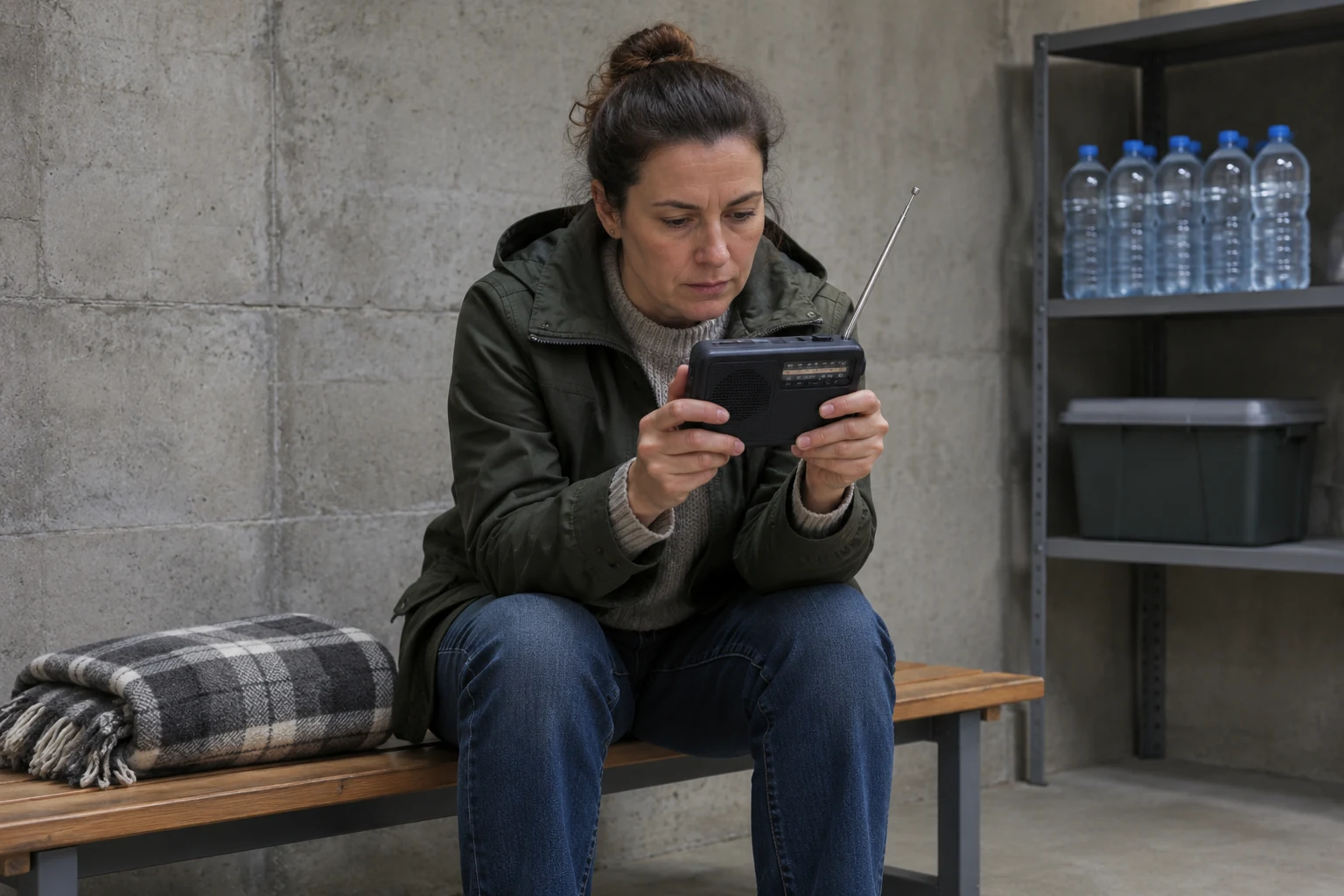
Nuclear shelter supplies should support the people using the space: drinking water, appropriate ready-to-eat food, essential medicines, basic sanitation, lighting, and a way to receive official broadcasts. Include necessary mobility, hearing, or communication aids. Put written contact details and concise care information with the supplies so another adult can help if needed.
Do not turn the supply list into a construction project that delays basic readiness. A usable light and an accessible contact sheet are immediate improvements. Ask clinicians about individual medical needs in advance, and do not self-prescribe protective medicines or assume a supplement provides general radiation protection. Different interventions have specific indications and limitations that cannot be replaced by a shopping list.
Prepare a calm information protocol
Choose official emergency information channels and a battery-powered way to receive updates. Keep messages to family brief: location, immediate needs, and the next planned check-in. Avoid promising to leave shelter at a fixed time regardless of conditions. FEMA nuclear shelter guidance emphasizes sheltering and staying informed; the next step depends on the actual event and official instructions.
Rehearse locating the shelter and supplies during normal conditions. Discuss what children should do if separated from caregivers, using calm language appropriate to their age. Note accessibility gaps and resolve them with building managers or local emergency planners. A useful household plan reduces decisions during an alert while keeping room for instructions that reflect what has actually happened.
