
Prepping at a glance
- Add warm layers for every regular passenger.
- Keep snow-clearing tools accessible.
- Plan communication and assistance before departure.
Decide whether the trip needs to happen
A winter car emergency kit cannot make an unsafe road safe. Before leaving, check the forecast, road conditions and closures for the entire route. Consider what would happen if the trip took several hours longer or a planned charging location became unavailable. Rescheduling can be the most useful part of winter preparedness.
Tell someone where you are going and when you expect to arrive. Keep enough flexibility to change the route or stop before conditions worsen. NHTSA winter driving tips recommends planning ahead and stocking appropriate supplies; use that guidance alongside local transportation updates. A photograph of an icy road elsewhere is not a substitute for current conditions on your route.
Add warmth without relying on the engine
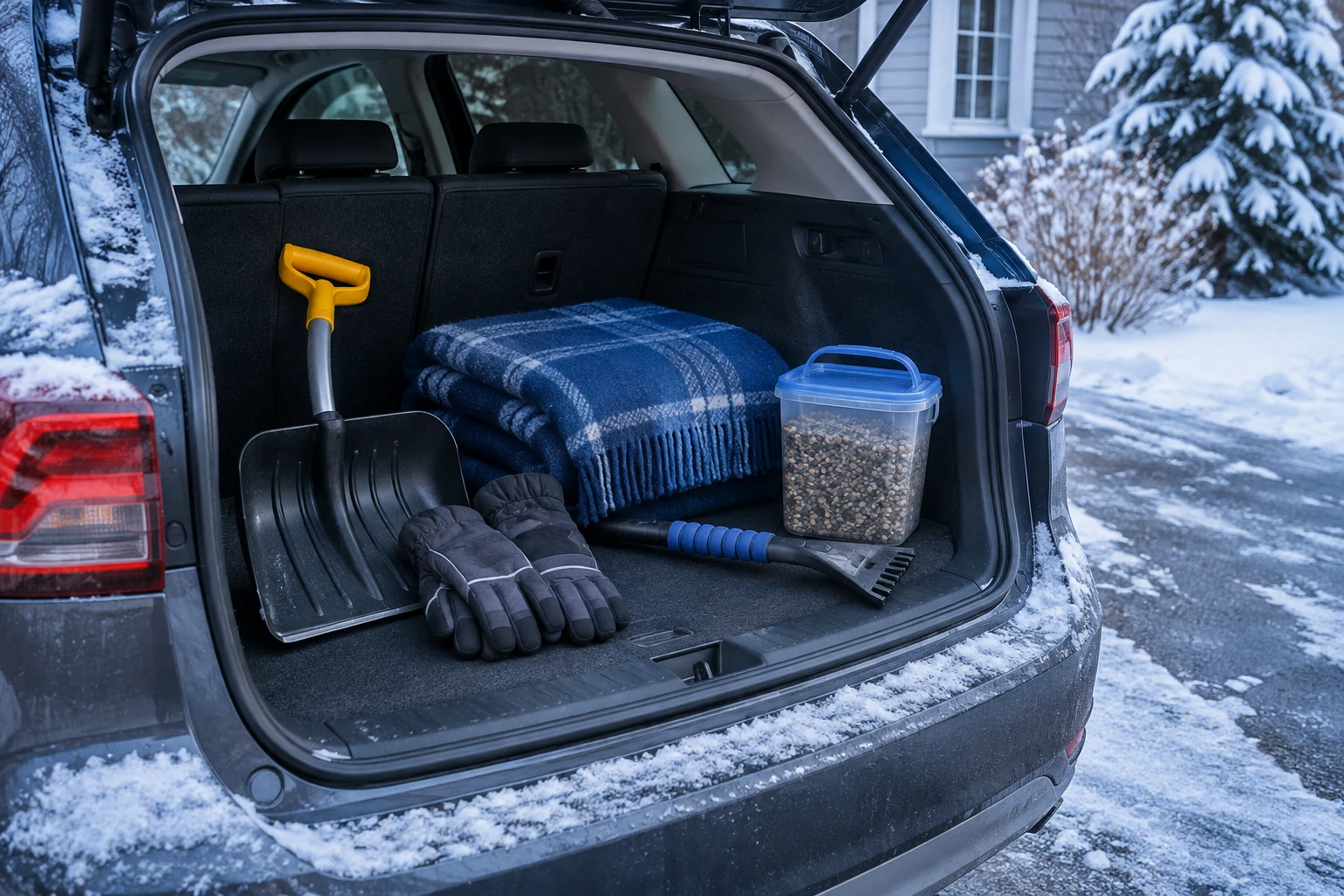
Pack a cold weather car kit with dry layers, hats, gloves and blankets appropriate for the passengers. Keep usable footwear available even if you normally drive in light shoes. Store items where someone can reach them without unloading everything into snow. Consider whether children or people with limited mobility will need help putting layers on.
Winter roadside emergency supplies should support a wait rather than assume immediate rescue. Include drinking water and familiar snacks, while accounting for freezing and product storage limits. A small bag inside the passenger area can hold a light, phone cable and written contacts. Do not depend on a single phone battery for both entertainment and emergency communication.
Organize vehicle-specific equipment
A snow brush, ice scraper and suitable shovel can serve different jobs; one small scraper does not clear an entire vehicle. Check traction aids against your vehicle manual and local road rules. Learn how to access the spare or tire repair equipment before snow covers the cargo area. Keep gloves with the equipment you expect to handle outdoors.
Review the vehicle's instructions for a roadside stop and carbon monoxide precautions. Snow can obstruct an exhaust outlet, and an engine is not an unconditional safe heating plan. Follow emergency-service directions when stranded. Do not use camping heaters or other improvised fuel-burning equipment inside the vehicle. Place assistance numbers somewhere visible to all adult passengers.
Test before the first storm
On a mild day, assemble the winter load and check that doors, restraints and essential controls remain unobstructed. Try retrieving the blankets while seated. Turn on the light and charge a phone with the actual cable. If the kit includes a jump starter, follow its maintenance and storage instructions and confirm compatibility with the vehicle.
Set a seasonal review for worn wipers, tires, fluids, battery condition and any required service. Have unresolved mechanical issues assessed before cold weather exposes them on the roadside. After each use, dry wet equipment and replace consumed supplies. Write a simple departure checklist covering weather, route, fuel or charge, passenger needs and contact information. The completed routine matters more than keeping an impressive box in the trunk.
