
Prepping at a glance
- Build around frequent real-world problems.
- Separate pocket items from a larger bag.
- Check restrictions before carrying tools.
Begin with the last three inconveniences
Everyday carry essentials should earn their place through usefulness. Think about recent problems: a dead phone, missing contact number, dark parking area, uncomfortable shoes or a small cut. Write down what would have helped. This produces a more personal everyday carry checklist than copying a photograph of someone else's equipment.
Start with what already works: keys, identification, payment method and phone. Review their weak points. Is the phone your only way to find a relative's number? Does the key ring include an obsolete key that makes it awkward? Improving an existing setup can be cheaper and more effective than adding specialized gadgets.
Give each layer a role
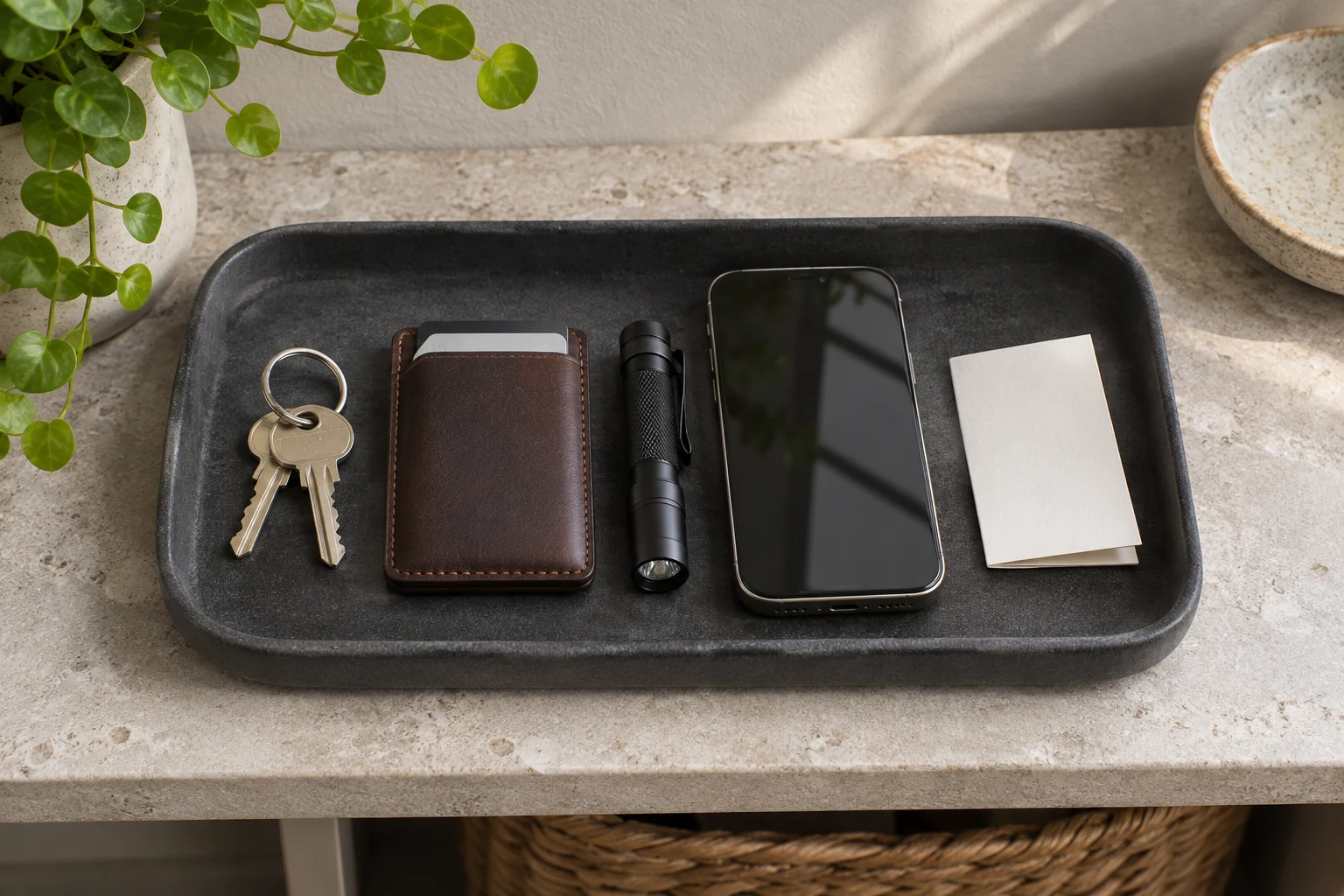
Pocket items should remain comfortable when sitting, walking and wearing ordinary clothes. A compact light and a small written contact card may solve useful problems without much bulk. Keep larger items such as water, a power bank or weather protection in a day bag when your routine supports it. At home, a separate reserve can handle longer disruptions.
A minimalist emergency kit does not need to duplicate every item in a larger evacuation bag. Ready.gov emergency supply checklist offers broader preparedness categories; choose the few relevant to your daily routine. For example, someone who works beside an accessible supply cupboard needs a different personal load from a person traveling between remote appointments.
Check access, restrictions and personal needs
Consider how each item is carried and who can reach it. Loose batteries and sharp objects need appropriate protective storage. A tool that opens easily at a kitchen table may be awkward with limited hand strength. If an item requires a complex sequence, practice that sequence or choose something simpler.
Workplaces, schools, airports and public venues can restrict tools and other objects. Check the rules before adding a blade or multitool, and arrange lawful alternatives. Keep medication decisions specific to your prescriptions and storage requirements. A labeled original package or a pharmacist-approved arrangement is preferable to an anonymous pill container that someone else cannot identify.
Run a one-week carry review
Carry the proposed items through a normal week, without inventing emergencies to justify them. Record when each was useful, hard to access or annoying. A small notebook note is enough. If a pocket feels overloaded, move appropriate supplies to the bag or remove duplicates. Leave essentials accessible rather than buried under optional extras.
Then practice a modest scenario: find a contact without the phone, retrieve the light in a dim room or connect the charging cable with the case installed. Do not deliberately run down the phone or disable safety equipment. Set a recurring reminder to replace used supplies and check the power bank. The goal is a repeatable habit that makes everyday disruptions easier, not a collection with the most impressive specifications.
