
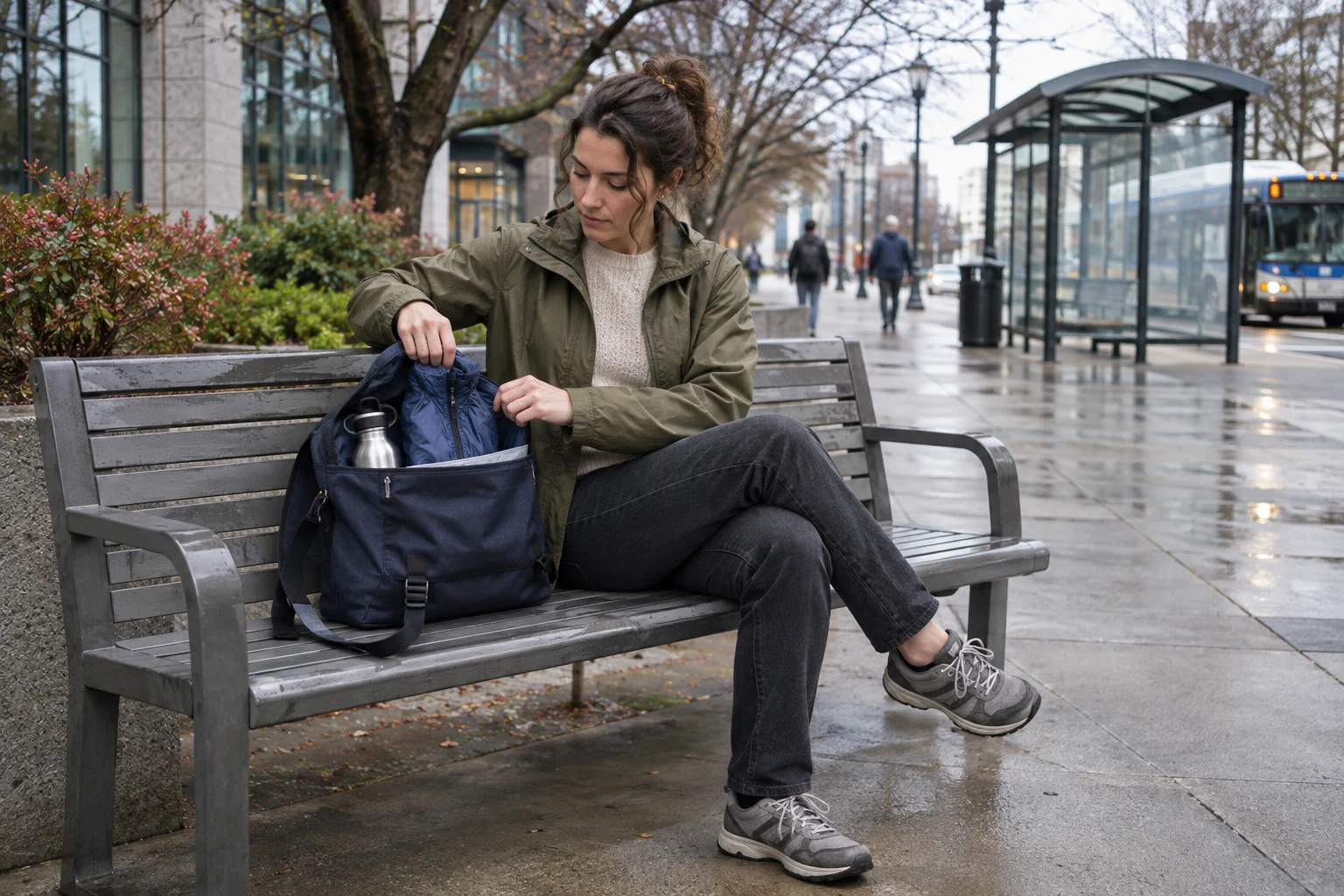
Prepping at a glance
- Plan waiting locations as well as alternate routes.
- Match clothing and footwear to the commute.
- Carry critical personal items rather than a huge duplicate kit.
Map the disruption before packing
A get home bag checklist begins with the trip you actually make. List your usual transport, the longest regular distance from home and places where a closed bridge, transit interruption or severe weather could strand you. An emergency commute plan should include a safe place to wait and a way to tell family your decision. Getting home immediately is not always the safest objective.
Save workplace emergency procedures and identify who can authorize sheltering there. If you use transit, write down alternate lines and realistic pickup points. Avoid assuming you can walk along a highway, cross floodwater or pass through a closed area simply because a map shows the shortest route.
Choose supplies for ordinary delays
Useful get home bag essentials include a charged power bank, the right cable, a small light, contact information, water, familiar snacks and weather protection. Add comfortable footwear if your work shoes are unsuitable for walking. Include personal items you would need if a return trip takes longer than expected, with medicines stored according to professional and label guidance.
Use Ready.gov emergency supply checklist to check broad supply categories, but resist packing an entire household reserve. A commuter needs enough space for practical essentials, not a bag so bulky it stays behind. If you work in several locations, decide which items travel with you and which can remain securely at work.
Make routes and communication usable
Print a small map showing your workplace, home, agreed waiting places and major barriers. Write at least two transportation options where possible. An alternate route should remain lawful and suitable for its travel mode; a road connection may not be a safe pedestrian path. Verify details during normal travel rather than exploring unfamiliar shortcuts during a crisis.
Agree on a concise family message: location, whether you are safe, intended next step and next check-in time. Store the out-of-area contact on paper. Decide how long household members will wait before changing plans, and who handles children or dependent adults if the commuter cannot return. These arrangements usually matter more than another tool.
Test the bag on a normal workday
Carry the bag through your routine for a week. Notice whether it fits on public transportation, weighs down a shoulder or conflicts with workplace restrictions. Practice finding the light and contact card without unpacking everything. Try the rain layer and verify that snacks remain intact and water containers do not leak.
Review storage conditions before leaving batteries, food or personal supplies inside a vehicle for long periods. Heat and cold may exceed product limits. Rotate items into everyday use and refresh the bag when your commute changes. At the end of the trial, remove objects with no defined use and write down missing information. A smaller, regularly carried kit beats a perfect-looking bag that never leaves the closet.
