
Prepping at a glance
- Group supplies around tasks you must continue.
- Record quantities and locations on one inventory.
- Separate travel supplies from the household reserve.
Start with a day at home without services
Your home emergency kit checklist should describe how the household will drink, eat, receive information, manage hygiene and stay comfortable when ordinary services stop. Imagine a weekday evening with no power and limited water. Which tasks immediately become difficult? Write those down before shopping. A household with an electric well has different dependencies from an apartment supplied by municipal water.
Choose an initial duration you can afford and store safely, then extend it in stages. Do not treat a basic kit as permission to remain in an unsafe building. Evacuation instructions, fire, flooding or an unmanageable medical need can override a stay-at-home plan.
Create useful supply groups
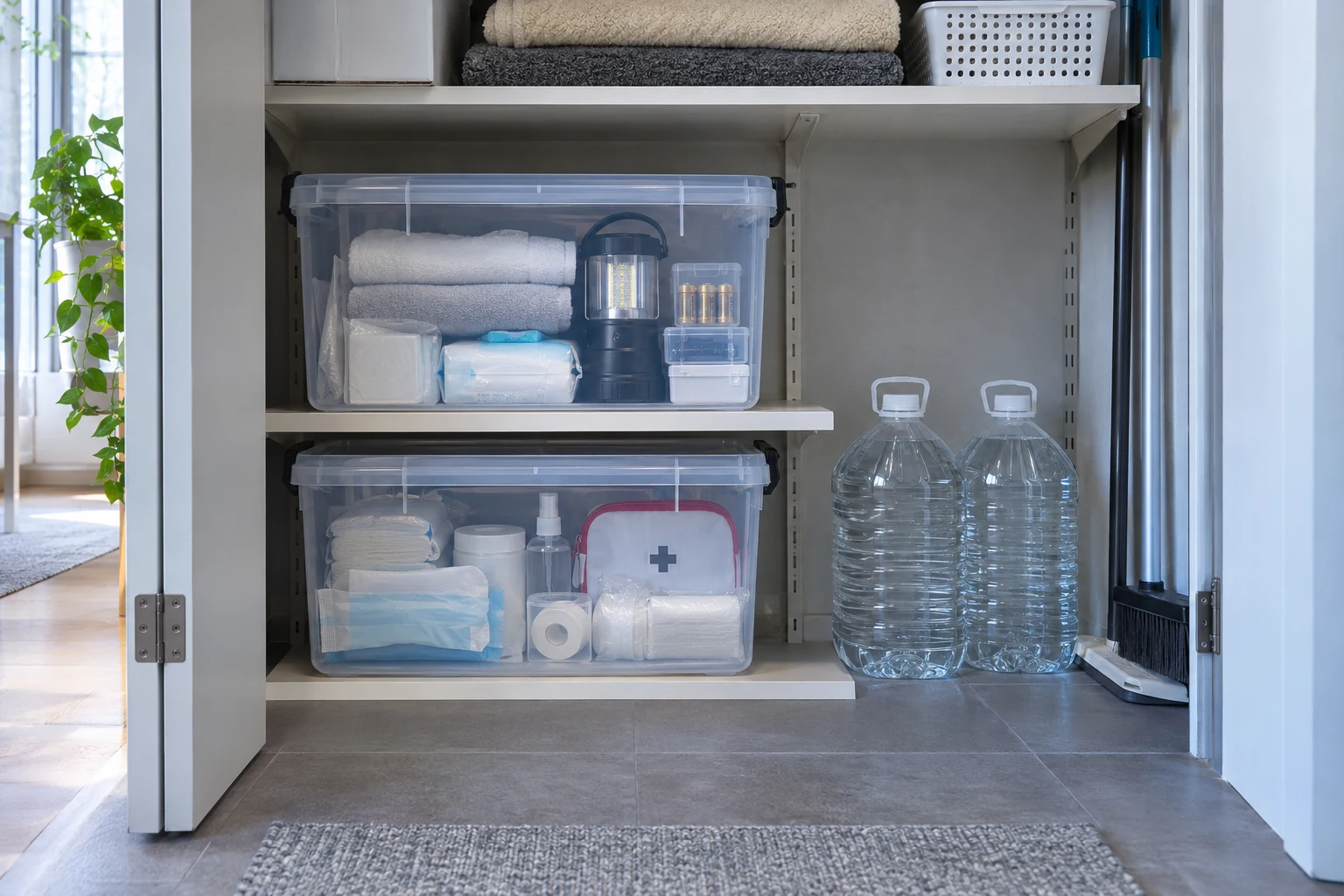
Put drinking water and familiar shelf-stable meals on the same planning sheet, including a manual opener if your food requires one. Give lighting and communication their own box with batteries, cables and simple operating notes. Keep hygiene products, waste bags and cleaning items separate from food. Include pet needs and adaptations for children, older adults or disabilities.
Ready.gov emergency supply checklist provides a starting reference for shelter in place supplies. Add the household-specific details that generic lists cannot know: a spare hearing-aid battery type, a particular food allergy, replacement eyeglasses or a key needed to reach a storage room. Store chemicals in original containers and follow their labels rather than combining everything into one crowded tote.
Use storage space as a constraint
Build a household emergency inventory with five columns: item, amount, location, review date and person responsible. The location column matters as much as the quantity. Six lanterns scattered through unknown drawers are harder to use than two in agreed places. Put frequently needed supplies where adults can reach them without climbing or moving heavy boxes.
Consider a small immediate-use station and a larger reserve. The station might hold a flashlight, contact card, radio and phone cable. Food and water can remain in suitable storage areas, clearly marked. Avoid making your entire plan depend on a basement likely to flood or a garage with unsuitable temperature swings.
Keep the reserve usable
Choose a routine meal to cook from stored food and replace what you use. Open a packaging sample in ordinary conditions so you know whether containers require scissors or unusual preparation. Check that the stored batteries actually fit the devices. Photograph the organized storage area for your own reference and update the inventory when anything moves.
Assign someone to check supplies twice a year and after each use. Mark purchases as essential replacement, useful improvement or optional extra. If a blackout reveals that one room needs another light, fix that specific gap. This approach keeps a home kit from turning into an expensive collection while helping the household complete ordinary tasks during a disruption.
