
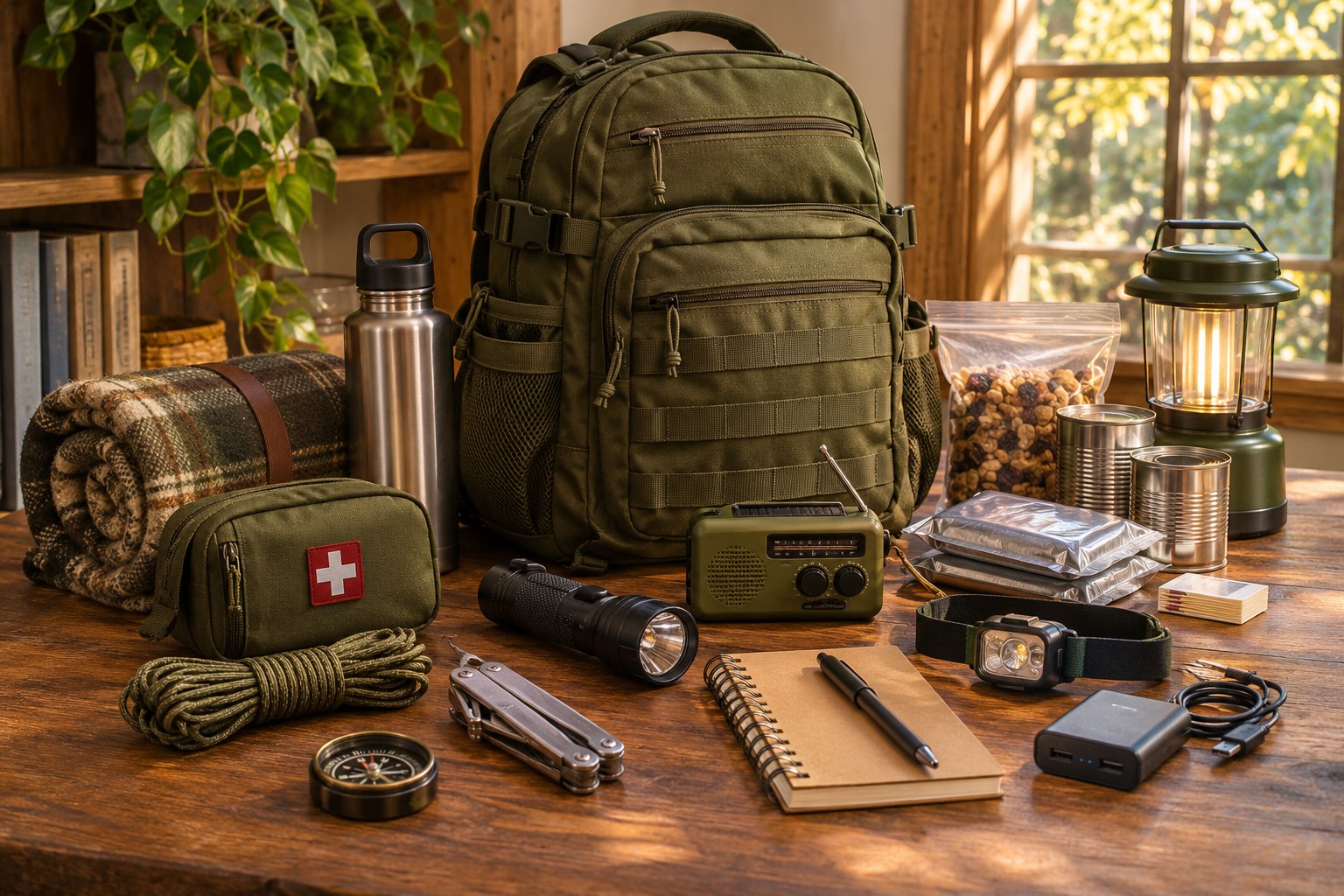
Prepping at a glance
- Pack for a destination and transportation plan.
- Keep documents and daily essentials accessible.
- Walk with the finished bag before adding extras.
Give the bag a specific job
A bug out bag checklist works best when it starts with a destination. Write down where you would go, how you would travel and what might delay you. A bag for a hotel evacuation differs from one supporting an overnight outdoor journey. Do not assume every emergency means leaving on foot; follow local evacuation instructions and plan transportation for everyone in the household.
For a 72 hour evacuation bag, organize three days of personal continuity: clothing, food you can eat, drinking water arrangements, hygiene, communication and essential records. The number describes a planning window, not a promise that a backpack alone covers every need.
Pack by need instead of gadget
Start with identification copies, emergency contacts, a phone cable and charged power bank. Add a headlamp, weather-appropriate layers, spare socks, compact hygiene supplies and suitable first-aid basics. Include glasses, hearing-device supplies and other items you use daily. Plan prescription access and storage with your pharmacist rather than repackaging medicines without instructions.
Use Ready.gov emergency supply checklist as a gap check, then customize it. A child may need comfort items and contact information; a pet needs its own transport arrangement. Split shared supplies deliberately, but keep each person's critical items with them in case the group separates. Label pouches by function so someone else can find them.
Make the weight budget honest
A lightweight bug out bag is the result of choices, not a particular fabric or brand. Put the empty bag on a scale, then weigh the full load with water. Remove duplicate tools before reducing essential clothing or personal needs. A large pack can make unnecessary gear seem reasonable because there is still room.
Test ordinary actions: put the bag on without help, sit in the vehicle, climb your usual stairs and walk a comfortable local loop. Stop if it changes your balance or causes pain. For limited mobility, investigate wheeled luggage, assistance or a smaller personal bag alongside vehicle supplies. Avoid universal body-weight percentages; individual capacity and terrain matter.
Stage it for an actual departure
Keep departure items together in a reachable place, away from hazards that could block access. Attach a short last-minute card for medicine, refrigerated items needing an approved transport plan, chargers in use and pet carriers. Do not bury documents beneath spare clothing. A waterproof pouch can protect paper, but keep digital copies protected as well.
Revisit the bag when the season, destination or household changes. Use a low-stress practice departure to discover missing shoes, inaccessible keys or a bag that will not fit beside mobility equipment. Record three corrections and make them before buying more equipment. The useful result is a repeatable departure routine with a bag you can actually move.
