
Prepping at a glance
- Keep assistance numbers available outside your phone.
- Match supplies to passengers and route conditions.
- Secure gear so it cannot become loose cargo.
Plan for waiting safely
A car emergency kit checklist should begin with assistance, not roadside repairs. Save roadside service details, policy information and emergency contacts on paper. Learn how to describe your location using road names, direction of travel and nearby signs. Review the vehicle manual's breakdown guidance before you need it.
The safest waiting place depends on traffic, weather, vehicle position and local instructions. Do not turn a tire problem into an injury by attempting a repair beside fast-moving traffic. If the vehicle is in an immediately dangerous position, prioritize contacting emergency services and following their directions. Your kit should support that decision, not pressure you to fix everything yourself.
Build the passenger supply layer
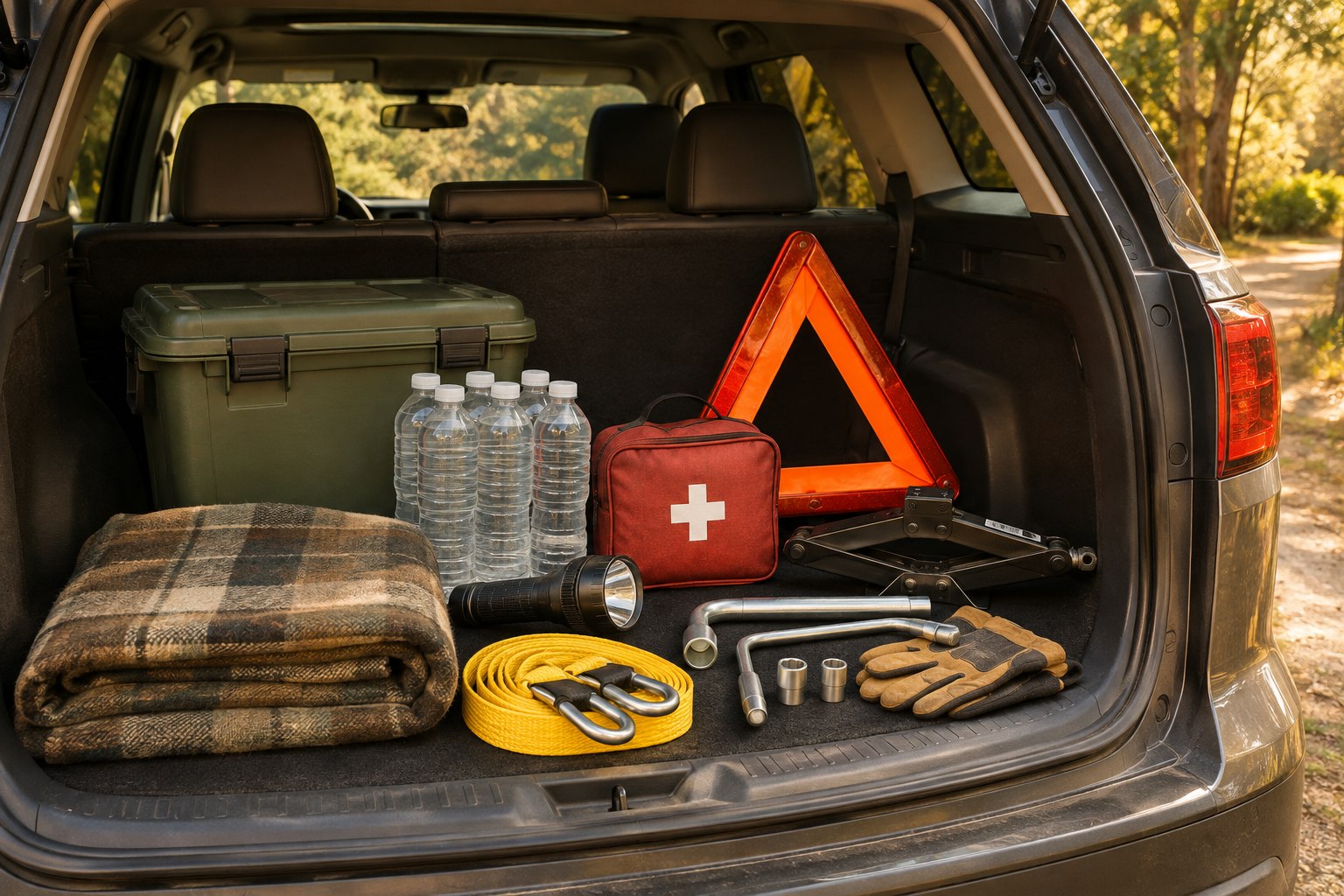
Pack water, familiar snacks, a flashlight, a phone cable compatible with the vehicle and appropriate weather layers. Add first-aid basics and personal items for regular passengers. Keep a child's needs, pet transport and mobility equipment in mind. A vehicle emergency kit should be accessible even when luggage fills the cargo area.
Road trip emergency supplies also include information: accommodation details, an alternate destination and copies of important contacts. NHTSA winter driving tips includes a useful vehicle-supply checklist that can inform seasonal planning. Check food, batteries and other products against their allowed storage temperatures; a parked vehicle is a harsh storage environment. Do not leave temperature-sensitive medicine there without a suitable care plan.
Add equipment you can use correctly
Check that the spare tire or repair system, jack and wheel tool are present if the vehicle is equipped with them. Some cars have no spare, so confirm what the supplied system can and cannot address. Read instructions for a jump starter or cables and your vehicle's designated connection points. Different drivetrains and electrical systems require different procedures.
Warning devices, reflective clothing and work gloves may be useful, but use them only when it is safe to leave the vehicle. Store tools securely and keep heavy items restrained. Avoid placing hard objects where sudden braking could send them toward passengers. Photograph the kit layout so another household driver can find equipment quickly.
Review before the route changes
Before a long trip, check tires, fluids and scheduled service through the vehicle manual or a qualified mechanic. Look at expected weather, road closures, fuel or charging stops and stretches with limited service. Tell a trusted person the intended route and approximate arrival, then update them if plans change significantly.
For a practical test, retrieve the kit with the trunk fully packed. Confirm the flashlight works, charging ports supply power and the roadside account number is readable. Replace used items immediately instead of waiting for a calendar reminder. After the trip, remove supplies that cannot tolerate storage conditions and note anything passengers needed but could not find. A kit improves when it follows actual travel rather than staying sealed for years.
