
Prepping at a glance
- Compare complete contents rather than item counts.
- Price missing personal supplies separately.
- Inspect and practice with a prebuilt kit immediately.
Compare the actual job
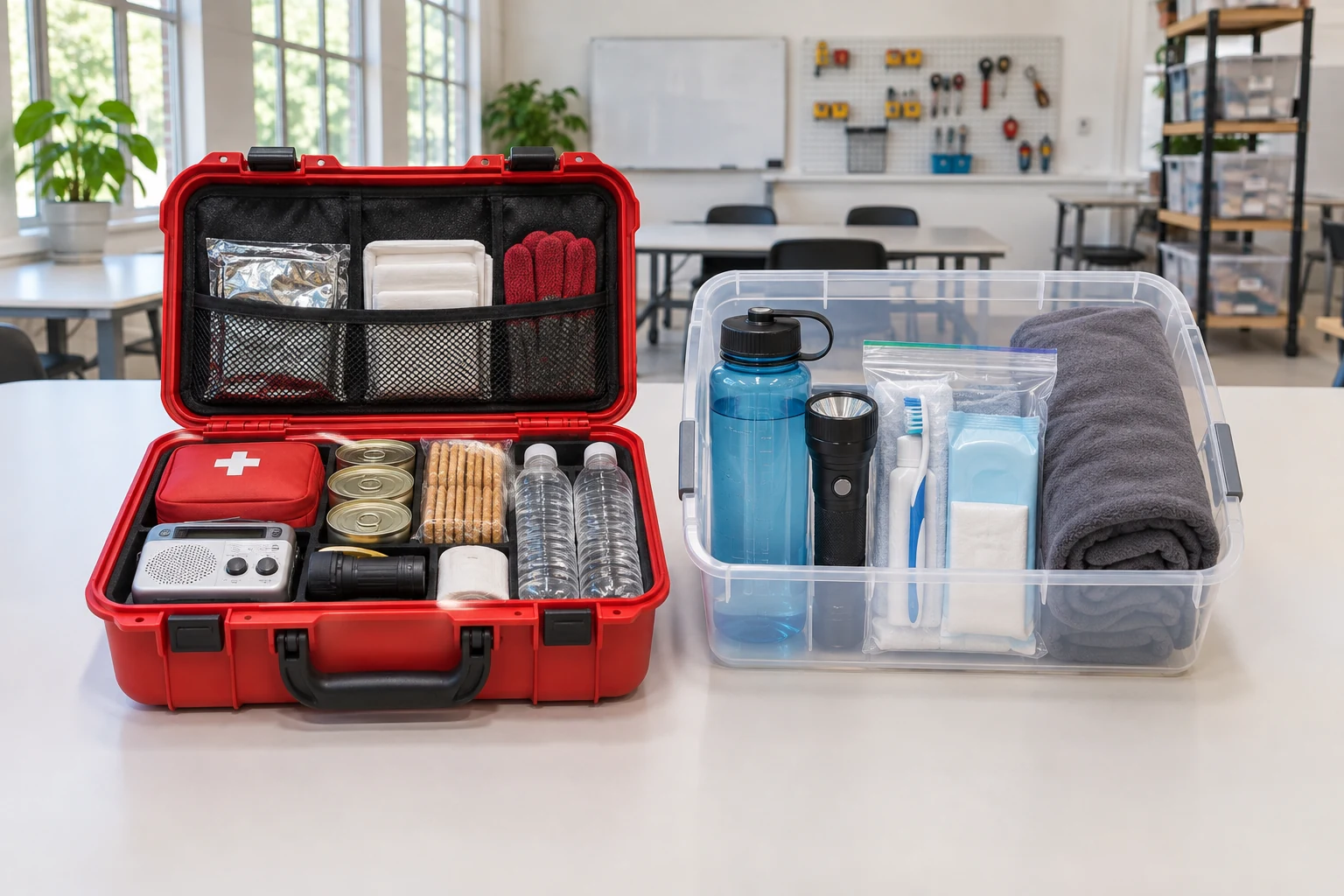
The DIY vs prebuilt emergency kit question is easier when both options have the same purpose. Are you assembling an evacuation bag for one adult, a household outage reserve or a vehicle kit? A product advertised for several people may cover only selected needs. Write your intended users, duration and storage location at the top of the comparison.
Use a prebuilt survival kit checklist to translate marketing language into individual functions. Separate drinking water, meals, lighting, communication, hygiene and personal supplies. An item count can include many small pieces while leaving a major need unanswered. Ask whether the bag or container remains useful once you add what is missing.
Calculate the completed cost
List the purchase price, shipping if applicable, additions and likely replacement items. Compare those figures with the cost to build your own emergency kit using suitable supplies you already own. Do not count an existing flashlight as free if it belongs in another kit and would leave that kit incomplete.
Make a simple worksheet with one row per required function. Record which option covers it, whether the item is usable by your household and what it costs to fix a gap. Include less visible expenses such as proprietary batteries, replacement filter cartridges or unusual food portions. The cheaper initial package may cost more once it is ready for actual use.
Inspect quality and suitability
Check labels, instructions, expiration or review dates and any relevant product certifications. Confirm that the flashlight has a useful low setting, the container opens easily and the food fits allergies and preparation constraints. Do not assume an included first-aid pouch matches your training or medical needs. Ready.gov emergency supply checklist can help identify categories omitted from a commercial bundle.
A prebuilt kit can offer convenience, particularly when getting started feels overwhelming. Its advantage disappears if nobody opens it until an emergency. Unpack it, read the contents list and test ordinary functions without consuming critical supplies. Replace damaged or unsuitable items and keep the original product information for future maintenance.
Choose a hybrid when it fits
You do not have to select one method for every component. A basic organized bag may be a reasonable starting point, while clothing, documents, food preferences and charging equipment are added individually. Conversely, an existing backpack and purchased supplies may fit better than a packaged kit with an unsuitable carrying system.
Finish the comparison by asking who will maintain each option. Can replacement supplies be bought locally? Does another household member know where everything belongs? Schedule a practical review after a few weeks of ownership. Keep receipts and record the completed cost, then stop buying duplicate bundles. The strongest value is an organized kit that gets used, replenished and understood rather than a bargain that remains shrink-wrapped.
