
Prepping at a glance
- Separate output power from stored energy.
- Measure priority loads where practical.
- Plan how the battery will recharge during an outage.
Write down what must run
Choosing a portable power station for home backup starts with a short priority list. A phone, several lights and a router present a different problem from a refrigerator or a medical device. For medically necessary equipment, work with the equipment provider and care team on a backup plan; a general shopping worksheet cannot establish safe runtime or compatibility.
Create an emergency power load worksheet with device name, operating watts, hours needed and connector type. Add notes about starting surges, adapters and whether the device can be turned off between uses. Separate essential loads from conveniences so a limited budget is not consumed by equipment that can wait.
Keep watts and watt-hours separate
Watts describe how quickly a device uses power; watt-hours describe energy over time. A hypothetical 20-watt load running five hours uses 100 watt-hours before losses. Virginia Cooperative Extension: estimating appliance energy use explains the basic energy calculation. This arithmetic is a planning tool, not a guarantee that a particular battery will deliver its entire advertised capacity through every outlet.
Backup battery capacity must cover the planned energy use plus a practical allowance for conversion losses, idle consumption and uncertain conditions. Output specifications must separately support the connected load and any starting surge. Check manufacturer documentation for continuous output, surge duration, supported charging methods and usable temperature limits. A large capacity label does not prove that an inverter can start a motor.
Work through an example
Suppose your chosen lights use 30 watt-hours over an evening and phone charging adds another estimated 40. The planned energy is 70 watt-hours before system losses. Add each load rather than selecting a battery based on a vague number of devices. If you later add a 60-watt appliance for six hours, that single decision adds 360 watt-hours and changes the purchase substantially.
Measure variable loads when possible with an appropriate energy meter used according to its instructions. Record the test conditions and duration. A single instantaneous reading may miss cycling, startup or other modes. Treat unmeasured figures as estimates and avoid turning a shopping estimate into a precise promise of emergency coverage.
Plan charging, placement and a fallback
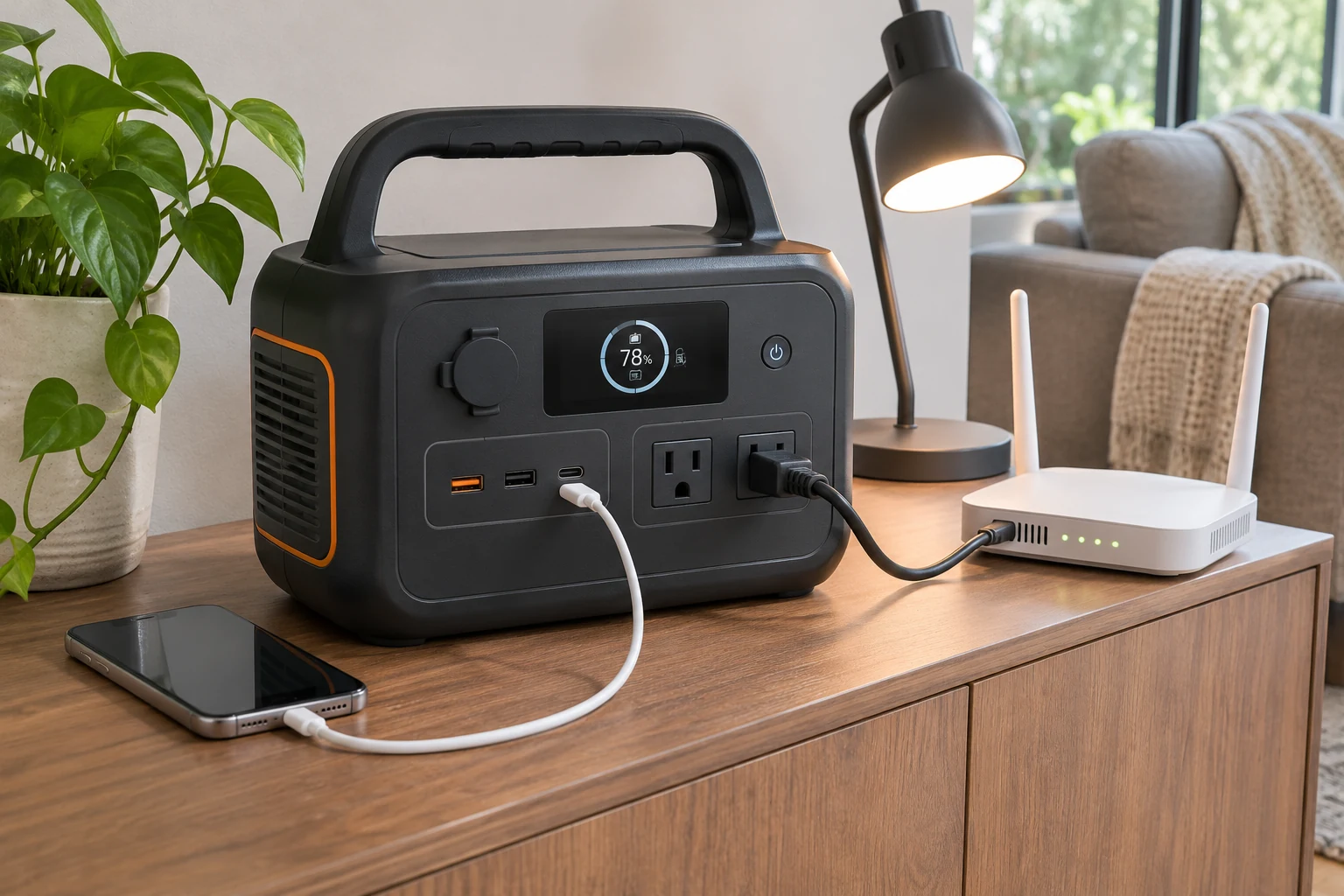
Decide where the power station will sit, how you will move it and which cables reach the devices safely. Follow its clearances and ventilation instructions, keep it dry and avoid blocked exits or trip hazards. A portable unit should not be connected to household wiring unless an approved system is installed and used as intended by qualified professionals.
Consider the next day: utility charging may be unavailable, solar input depends on conditions and compatible panels, and other charging routes have their own limits. Test the setup during normal service with noncritical loads and record actual results. Maintain a fallback if the outage outlasts the battery. Buying enough energy for one evening is useful only when everyone understands what happens afterward.
