
Prepping at a glance
- Identify a lawful safe operating location first.
- Compare replenishment, not only initial runtime.
- Keep essential-device planning separate from convenience loads.
Start with the setting
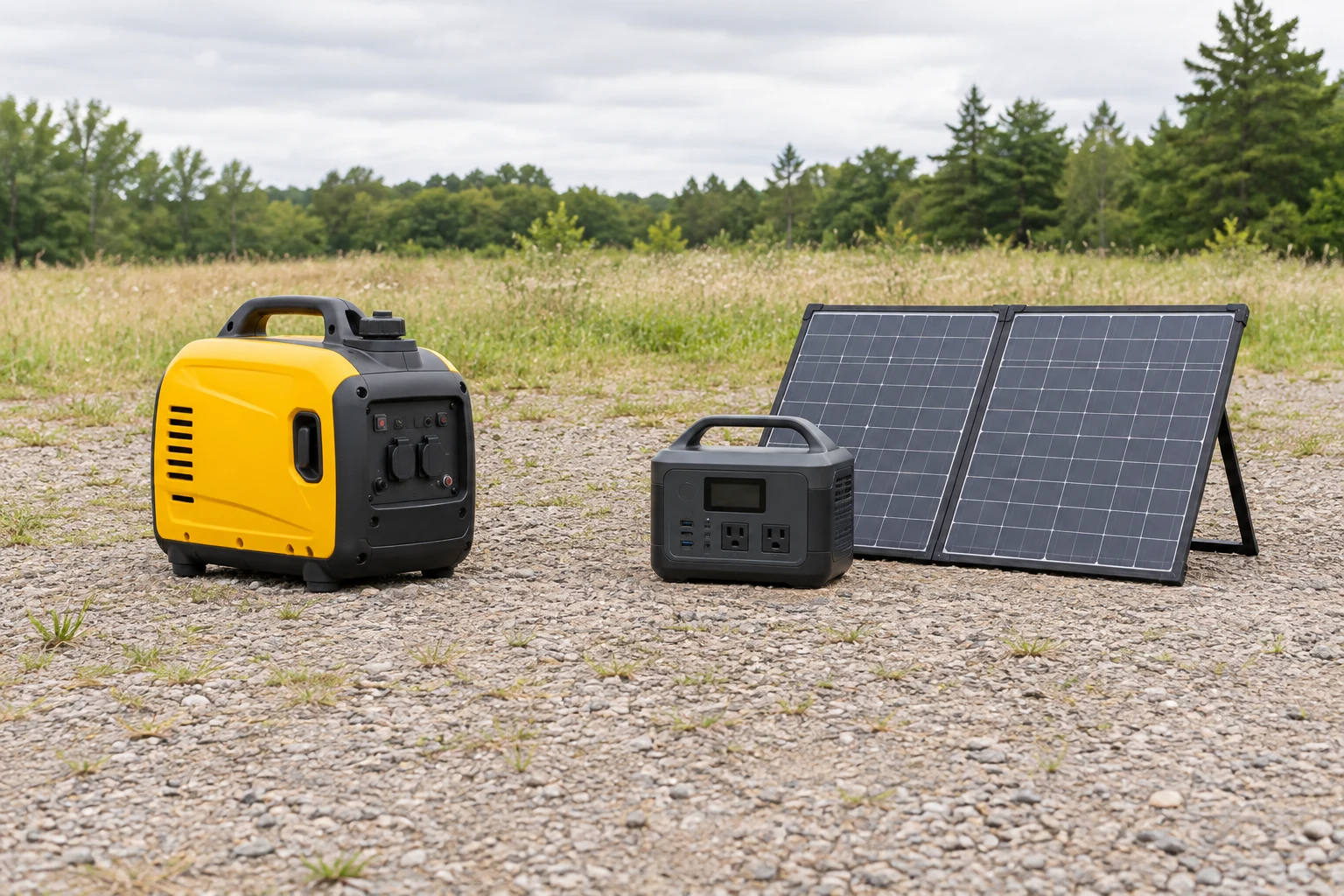
A solar generator vs gas generator comparison needs a real location. Many products called solar generators are battery power stations paired with panels. They store electrical energy; panels replenish it when conditions and compatibility allow. A fuel-powered generator produces electricity while running and requires a safe outdoor operating arrangement.
For a renter without a suitable location, a fuel generator may be impractical regardless of its output. Portable generator safety begins before purchase. CPSC portable generator safety says fuel-powered portable generators belong outdoors at least 20 feet from a home, with exhaust directed away, and never inside enclosed or partly enclosed spaces. Follow the manufacturer's instructions and local rules as well.
Compare loads and replenishment
In a battery backup vs generator decision, list the same required loads for both options. Check continuous power, startup requirements and expected energy use. A battery can be convenient for small electronic loads, but stored energy is finite. A generator may support longer operation only if fuel, maintenance, safe placement and operation remain available.
Solar replenishment depends on compatible equipment and actual daylight, shade, weather and placement. Rated panel wattage is not a guaranteed all-day output. Fuel replenishment depends on approved storage, availability and safe handling. Ask what happens on the second and third day, when the initial battery charge or conveniently stored fuel is gone.
Include the work each system creates
Compare purchase cost with cables, approved accessories, maintenance and storage. Consider lifting weight and whether another adult can operate the setup. A fuel generator adds noise, exhaust, hot surfaces and refueling tasks. A battery adds charging, storage-temperature and electrical-capacity limits. Neither is maintenance-free merely because it has a display.
Plan carbon monoxide alarms and an emergency response for any fuel-powered setup. Let a generator cool before refueling according to instructions. Do not connect it to a wall outlet or improvise a household connection. Permanent or transfer equipment requires appropriate professional installation. These requirements can decide whether a generator is suitable long before you compare promotional runtime figures.
Choose a plan you can repeat
Write a simple operating plan: where the equipment goes, which loads connect, who starts it and what triggers shutdown or relocation. For medically essential devices, involve the provider and care team and identify a destination with dependable support. Do not rely on an ordinary consumer comparison to establish medical continuity.
A small battery for communication and lighting may meet your first priority while you defer larger loads. Another household may need a professionally designed backup system. Test the chosen arrangement under normal conditions with suitable noncritical loads. Keep a record of results and questions. The useful answer is the system you can operate safely and replenish realistically, not the technology that wins every category on a sales chart.
