
Prepping at a glance
- Measure energy over a representative period.
- Verify startup compatibility separately.
- Keep a food-safety fallback if power runs out.
Identify the refrigerator and the power station
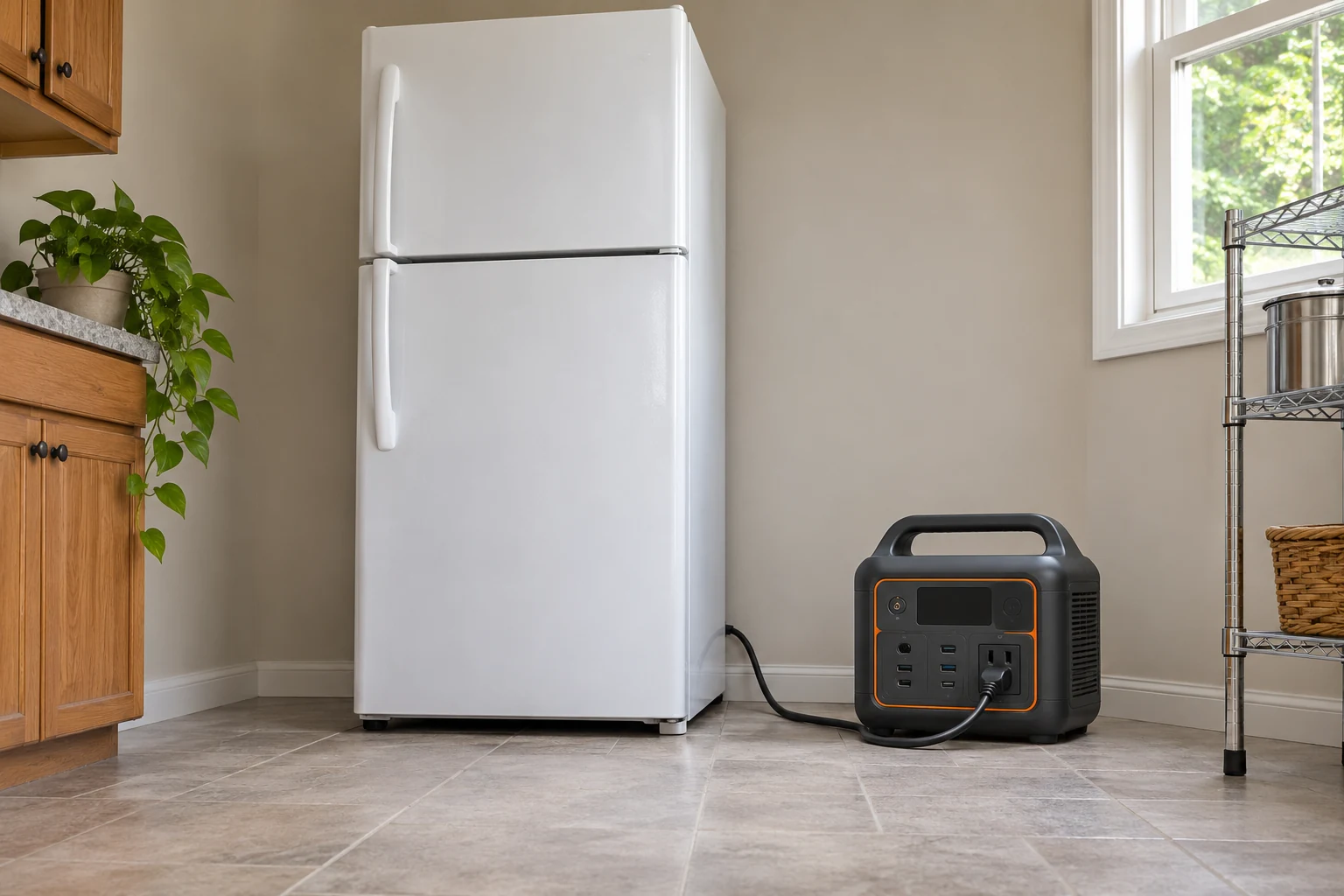
Selecting a portable power station for refrigerator backup requires two sets of information. Record the refrigerator model, electrical label and manufacturer guidance. Then record the power station's continuous AC output, surge capability, battery capacity and operating restrictions. A battery with enough stored energy may still fail to start the compressor, while a powerful inverter may have too little energy for the desired duration.
For refrigerator backup power, avoid assuming that one example applies to every unit. Size, ambient temperature, door openings, settings and defrost behavior can change use. A freezer or combination appliance may have different operating patterns. Keep the manuals available so product-specific questions can be answered rather than guessed.
Measure energy rather than one moment
Where suitable, use a properly rated plug-in energy meter according to its instructions. Record energy over a representative period that includes normal cycling, preferably long enough to capture varied operation. Note room conditions and whether the doors were opened normally. Virginia Cooperative Extension: estimating appliance energy use explains why energy depends on power and time.
The power station runtime calculation should use an average derived from that measurement, while recognizing it remains an estimate. Suppose a hypothetical appliance uses 1,200 watt-hours in 24 hours. Its average for that period is 50 watts, even though the instantaneous draw varies. A brief low reading while the compressor is off would badly understate its needs.
Calculate a range and check startup
If a hypothetical backup setup delivers 800 usable watt-hours through its AC outlet and the measured average load is 50 watts, simple division gives about 16 hours. Both numbers are assumptions for illustration. Real usable energy depends on the model, conditions, inverter losses and operating behavior, so report a range rather than treating the result as a guarantee.
Confirm startup compatibility through manufacturer specifications and an appropriate normal-condition trial. Do not repeatedly force a system that trips or reports an error. Read any low-load shutdown settings; cycling appliances can expose features that behave differently from continuous loads. Keep cords appropriate for the load and avoid unsafe routing, damaged plugs or improvised household connections.
Decide what happens when the battery is low
Recharging while powering an appliance may have product-specific limits. Check those instructions and calculate whether the available input can actually replenish the daily energy use. A solar panel's label alone cannot establish that outcome. Consider the weight and placement of equipment before assuming you can move it to another location mid-outage.
Keep refrigerator and freezer thermometers and a separate food-safety plan based on current public-health guidance. Do not decide that food is safe merely because the compressor ran occasionally or items still feel cool. Record outage timing and avoid unnecessary door openings. If the backup cannot meet your duration goal, plan a suitable cooler, alternate powered storage or disposal decisions instead of treating an undersized battery as complete protection.
