
Prepping at a glance
- Confirm whether the notice says boil, do not drink, or do not use.
- Include toothbrushing, ice, and pet bowls in the plan.
- Wait for the official all-clear and follow flushing instructions.
Read the actual notice first
What to do during a boil water advisory depends on the notice your utility or public-health agency issued. Check its affected area, start time, and instructions. A boil-water notice is not the same as a do-not-drink or do-not-use notice; boiling does not resolve every contamination problem. Save the official page or announcement so household members follow the same directions.
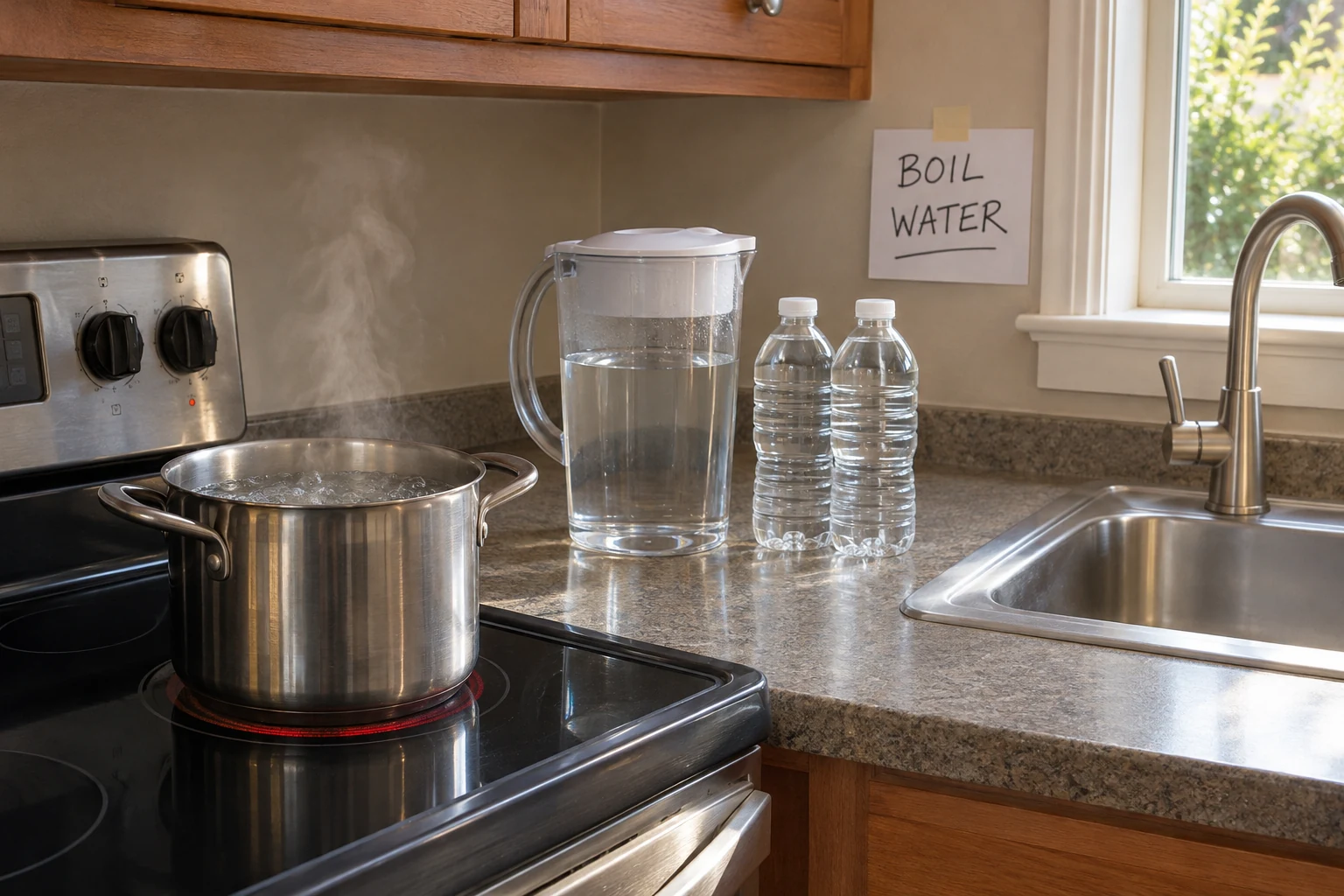
Begin a boil water advisory checklist with the source of the notice and the place to check for updates. Tell everyone at home, including caregivers and visitors. A note near the kitchen tap can interrupt the habit of filling a glass without thinking. Avoid forwarding a screenshot without checking that it still applies to your address.
Cover drinking, cooking, teeth, and ice
The CDC's advisory guidance says to use bottled or appropriately boiled water for drinking, food preparation, and toothbrushing during a boil advisory. It also warns against using water or ice from plumbed refrigerator dispensers. A household pitcher filter does not remove the need to follow the boiling instruction.
If boiling is the advised method, follow the official directions: CDC specifies a rolling boil for one minute, or three minutes above 6,500 feet, then cooling before use. Arrange the work area to avoid burns and keep clean covered containers ready. Store enough cooled water for the next tasks rather than repeatedly handling a hot pot whenever someone needs a drink.
Include less obvious household uses
Make a list of routines that use tap water: rinsing produce, making beverages, preparing infant feeds, filling pet bowls, and cleaning equipment. Follow the advisory and relevant care instructions for those tasks. For safe water for pets, CDC recommends bottled water or boiled water that has cooled during a boil advisory.
Use the official guidance for dishwashing, bathing, and handwashing rather than assuming one rule applies to every activity. People with specialized medical equipment or care needs should follow their provider's instructions for an interruption. Keep safe water clearly labeled, and avoid placing a container of untreated water beside it without a distinction that everyone understands.
Plan the return to normal use
Do not end precautions because the water looks clearer or a neighbor says service is restored. Wait for the responsible authority's all-clear for your area. Then follow its directions for flushing plumbing and handling appliances, filters, ice, or stored water. Instructions can vary with the cause and the system involved.
Afterward, replace the emergency water you used and record any practical problems: insufficient containers, confusing labels, a missing kettle alternative, or someone who did not receive the notice. Update the household checklist while those details are fresh. The most useful preparation is often a small change that makes the next advisory easier to manage, such as saving the utility's alert page or keeping a clean pouring container beside the reserve.
