
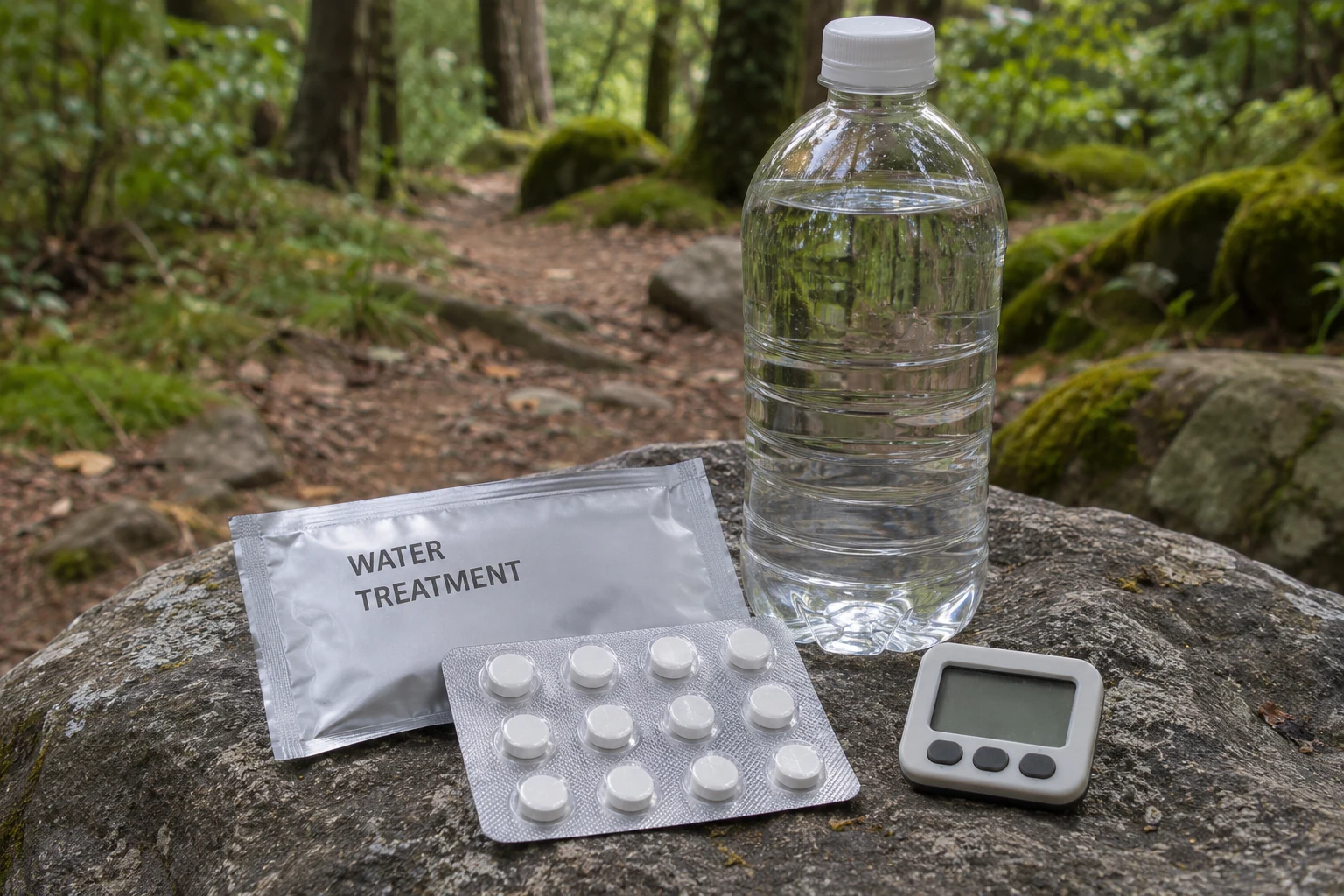
Prepping at a glance
- Keep the complete label with the tablets.
- Match dose and contact time to the specific product.
- Use another safe source when chemical contamination is suspected.
Read the label before relying on the packet
Water purification tablets are not interchangeable. Products may use different active ingredients and may address different organisms under different conditions. Before adding them to a kit, read the complete instructions, treatment claims, expiration information, storage requirements, and any health restrictions. Keep that information with the packet rather than discarding the box to save space.
Check whether the directions are readable in poor light and whether someone else in the household can follow them. A tiny packet with missing instructions is an avoidable complication. Store the tablets where they remain protected and where children cannot mistake them for something to eat.
Match the procedure to the water and container
Water disinfection tablets are formulated for specific quantities and procedures. The CDC advises following the product label; tablets differ in their ability to address parasites, and iodine has restrictions for some users. Do not substitute a remembered dose from another brand or shorten the contact time because the water looks clear.
Choose a container with a known volume and a secure closure. Mark it clearly so the amount being treated is not an estimate. Account for any product-specific requirements relating to water condition and temperature. If the instructions do not cover your situation, obtain suitable guidance or use another safe water source rather than inventing a treatment adjustment.
Plan for the waiting period and limitations
Emergency drinking water treatment takes time. The CDC Yellow Book comparison of treatment methods notes that some chemical methods require substantial contact time. Build that waiting period into your plan and keep safe stored water available while treatment is underway. A second labeled container can help organize batches, provided untreated and finished water remain clearly distinguished.
Tablets do not provide a general solution to fuel or toxic chemical contamination. Follow the local advisory and obtain water from a safe alternative source in that situation. Avoid treating every disruption as the same problem simply because tablets are what you have packed.
Rehearse decisions and maintain the supply
During a household practice session, read the directions aloud and identify the exact container, required dose, waiting period, and way to label a batch. You can rehearse the workflow with safe water without seeking a risky source. Note any missing equipment, such as a way to measure volume or keep track of time.
Record expiration dates and inspect packaging during routine kit reviews. Replace supplies according to the manufacturer rather than assuming an unopened packet lasts indefinitely. Keep a written alternative for situations the tablets do not address: stored water, an official distribution point, or another method specifically suited to the hazard. The objective is reliable access to safe drinking water, with tablets serving one defined role in that broader plan.
