
Prepping at a glance
- Read specific performance claims, not just product names.
- Distinguish microbial hazards from chemical contamination.
- Practice maintenance and keep clean water from being recontaminated.
Ask about the hazard before the equipment
A water filter vs water purifier comparison begins with the water source. Are you planning for an official boil-water advisory, untreated surface water while traveling, or a suspected chemical release? Those are different problems. A product name cannot establish that one device addresses them all.
For emergency water treatment, first follow information from your water utility and public-health authorities. Stored safe water can give you time to understand the situation. Do not rush to collect questionable water simply because a new device is available, and do not assume clear water is free of hazards.
Read the documented removal or inactivation claims
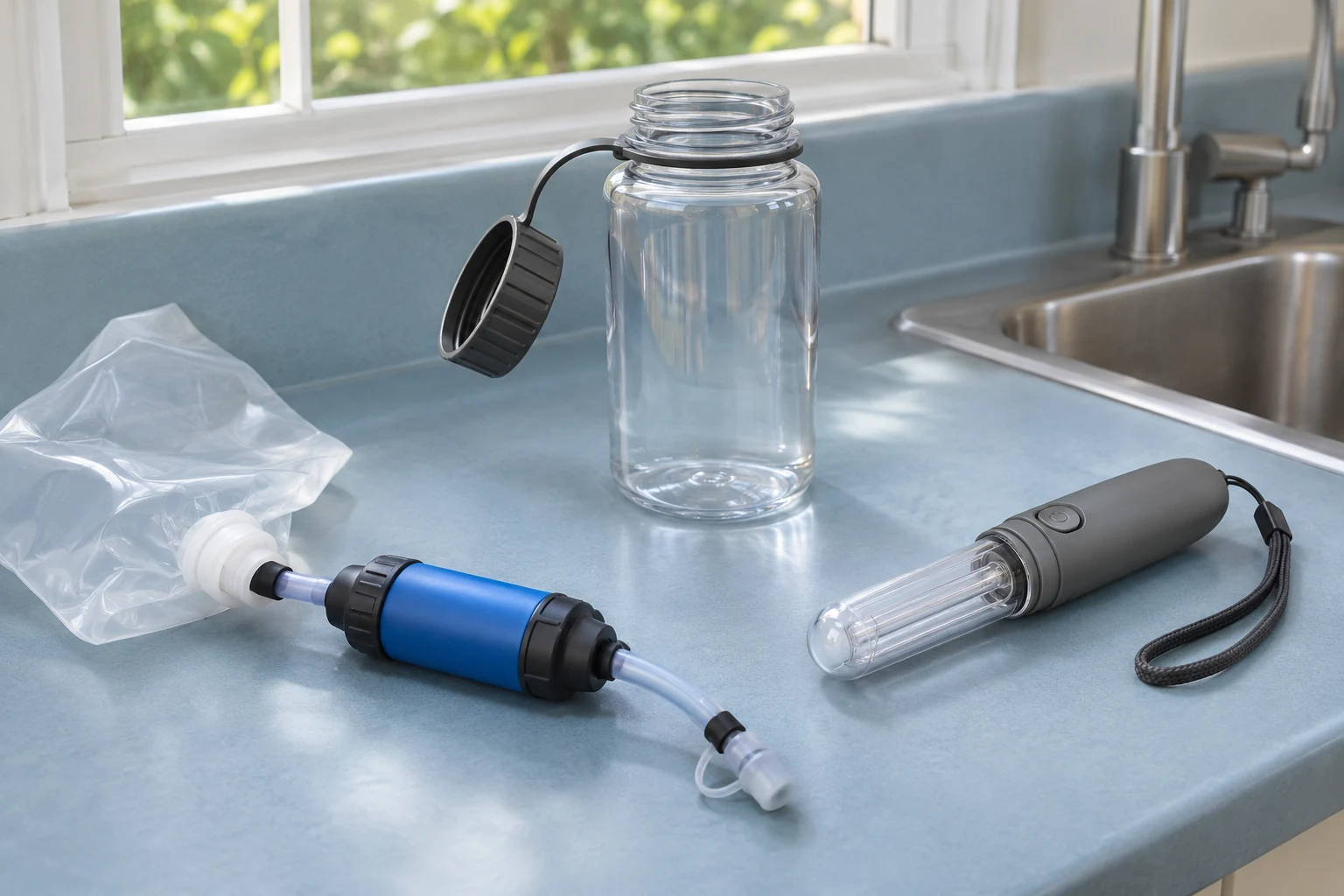
Look for the exact organisms or substances addressed, the testing or certification supporting those claims, and any conditions attached to performance. A portable water filter may remove some microbes without addressing others. The CDC Yellow Book comparison notes that many filters do not reliably remove viruses and that different treatment methods have distinct limitations.
A filter designed primarily to improve taste is not automatically an emergency disinfection system. Conversely, a method that inactivates microbes may not remove sediment or make unpleasant water taste better. Compare the functions you need against the particular model's documentation, rather than relying on the words filter, purifier, or survival printed on the box.
Save the performance document with the manual so its limits remain available offline.
Recognize situations a household device cannot solve
The CDC emergency-water guidance warns that boiling or disinfection cannot make water contaminated with fuel, toxic chemicals, or radioactive material safe. Use an alternative safe source and follow local instructions when that contamination is suspected. Do not assume adding a portable filter changes that advice without verified, contaminant-specific guidance.
This distinction should shape the backup plan. A household might store drinking water, keep a treatment method for an appropriate microbial hazard, and know where official distribution information appears. Those layers cover different circumstances. Owning more treatment gadgets does not remove the need to identify the hazard.
Practice the entire workflow
Read setup and maintenance directions before an emergency. Identify replacement parts, required batteries or power, temperature limits, cleaning steps, and how the equipment indicates a problem. Keep the manual accessible offline. If a device becomes unusable after damage or improper storage, follow its instructions rather than guessing that it is still effective.
Separate untreated-water containers and hoses from the clean side. Plan how treated water will be collected and kept protected. Practice with safe water to learn the mechanics without exposing the household to an unknown source. Finally, consider the daily volume and effort involved: a device that works well for one bottle may be inconvenient for a whole family. Choose equipment that fits both the hazard and the people who must operate it.
