
Prepping at a glance
- Try a sample meal before buying a bulk package.
- Count required water, heat, and companion ingredients.
- Follow storage and after-opening directions for each product.
Understand the processes without assuming a winner
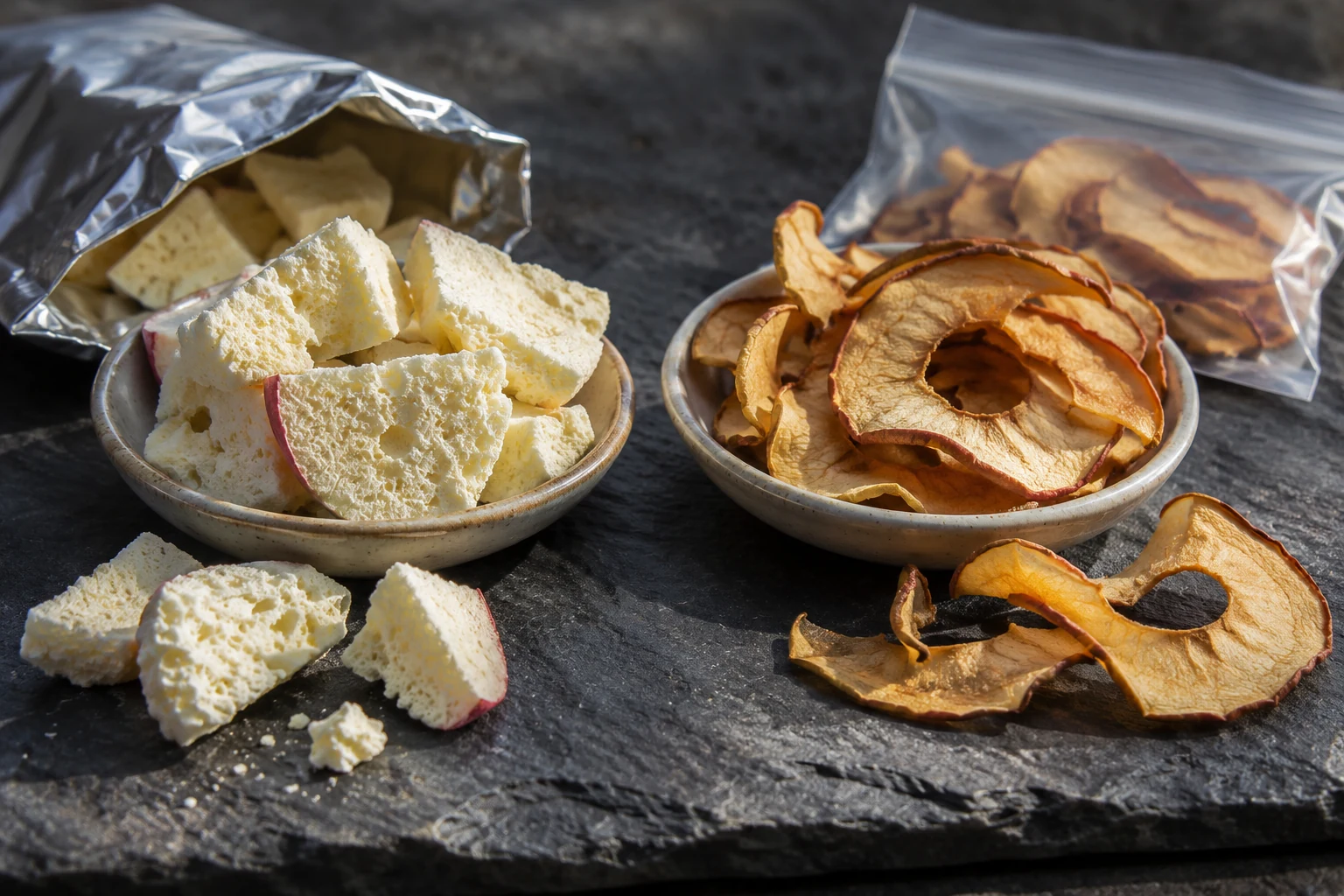
The freeze dried vs dehydrated food comparison is useful only when it leads to a specific purchase or storage decision. Conventional drying removes moisture through a controlled drying process; freeze-drying removes water from frozen food under vacuum. The resulting foods can differ in texture, preparation, price, and packaging needs. Neither term alone tells you whether a product is a complete meal.
Some packages are ingredients, such as vegetables intended for a recipe. Others contain a prepared meal with its own instructions. Read the package carefully before comparing a large container of one ingredient with several ready-to-prepare dinners. Their apparent price difference may describe entirely different uses.
Compare portions you will actually eat
For freeze dried emergency food, review the amount in the package, serving information, allergens, and preparation steps. Ask how many realistic household meals it provides. A package advertised with many small servings may not cover as many dinners as the front label suggests to a hurried shopper.
Buy or borrow a small sample of the format you are considering and prepare it according to instructions. Record water needed, waiting time, taste, texture, and cleanup. Repeat that process with a dehydrated alternative suited to the same meal. There is no need to declare one method universally superior; one product may fit a go-bag while another works better in a home pantry.
Keep the receipt and record the actual portions served so future comparisons use the same basis.
Check safety and storage assumptions
Freeze-drying is not a substitute for making food safe. Utah State University Extension explains that bacteria can survive the process. Follow the product's cooking and handling directions, and do not improvise home freeze-dried meals from foods without a suitable safe procedure.
Dehydrated food storage likewise depends on adequate drying, appropriate packaging, and conditions that prevent moisture returning. USU's home-drying guidance provides the basic principles. Keep instructions with the food and distinguish unopened storage claims from what applies after a large package has been opened.
Build a mixed reserve around household use
Calculate cost per usable meal, including any ingredients that must be added. Consider the value of convenient preparation, but also the water and fuel your plan can supply. A product that needs hot water may be straightforward during normal camping and less useful when both safe water and cooking options are constrained.
Use the formats that earn a place in your routine. Ready-to-eat canned meals can cover immediate needs, familiar dry ingredients can support regular cooking, and selected freeze-dried or dehydrated foods may offer useful variety or portability. Keep records of what your household liked and actually finished. Replace products based on that experience rather than a storage-life competition, and revisit the mix whenever diets, available space, or cooking arrangements change.
