
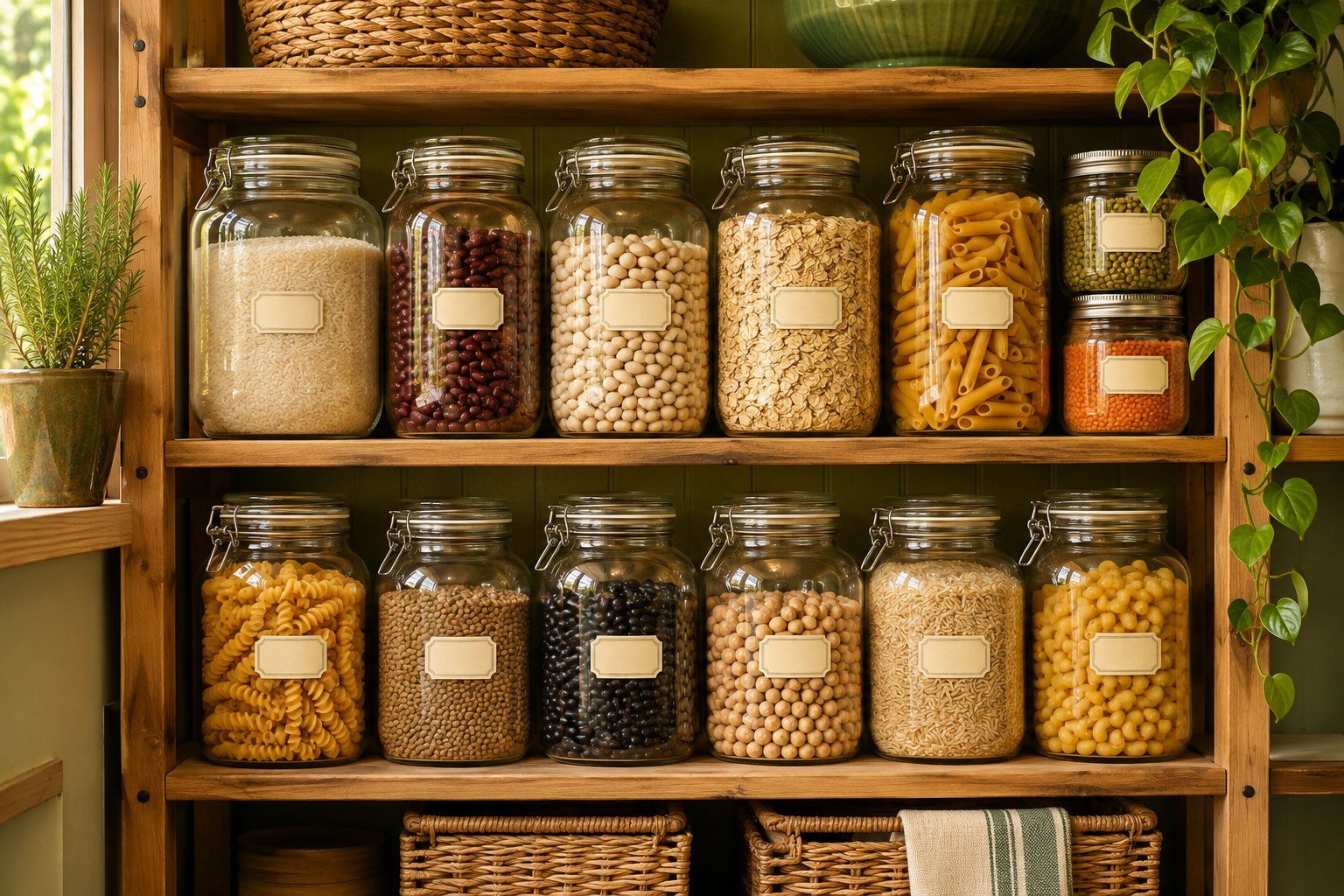
Prepping at a glance
- Group similar foods and keep dates visible.
- Set minimum and target quantities based on actual meals.
- Use a short weekly check rather than a complicated app.
Sort by the way you cook
A pantry rotation system should support the decisions you already make at mealtime. Group similar foods together, then divide them into quantities for everyday use and any reserve target you maintain. You do not need separate rooms or elaborate shelving. A labeled section for beans, another for breakfast foods, and another for canned vegetables may be enough.
Remove items that belong elsewhere so they do not hide the food. Check packaging and labels as you sort. Keep uncertain or damaged items out of the usable inventory until you have resolved the question using appropriate food-safety guidance. Counting questionable food as part of your reserve gives a misleading picture of what the household can rely on.
Make the older usable package easiest to take
A first in first out pantry places newer purchases behind older usable stock. Arrange the shelves so the intended package is the easiest one to reach, rather than relying on everyone to inspect every date. For items purchased out of order, place the package needing earlier use at the front when its instructions and condition support that decision.
Dates need context. USDA's explanation of shelf-stable food dating distinguishes quality dating from a universal safety deadline. Follow the particular product's directions, and never let a date override obvious damage or an unsafe storage history. Rotation is an organization method, not a test that proves food safe.
Write an emergency food inventory you will maintain
Keep only the fields that lead to an action: item, usable quantity, storage location, minimum level, and target level. If the target is eight cans and the minimum is four, a count of three tells the shopper both that replacement is needed and how much restores the target. Choose your numbers from meals and household consumption rather than arbitrary case sizes.
A paper list on the pantry door can work as well as a spreadsheet if it gets updated. Use a pencil or a simple tally when opening a reserve package. For foods stored in another room, note the location explicitly. Otherwise, a household may keep buying an item because its backup supply is effectively invisible.
Use a short review to improve the plan
Before grocery shopping, scan one section, move new purchases into place, and add replacements to the list. Set aside a regular meal for ingredients approaching their planned use window. This is easier than allowing several years of stock to require attention at once.
Watch for patterns. An item that repeatedly sits untouched may not belong in your emergency menu, even if it was inexpensive. A staple that disappears faster than expected may need a higher target or a separate everyday allocation. Record those adjustments. Include other household members in one walkthrough so the system continues when its organizer is busy or away. The measure of success is fewer surprises and usable meals, not a perfectly decorated pantry.
