
Prepping at a glance
- Treat white rice and brown rice as different storage choices.
- Use dry, food-appropriate packaging and retain labels.
- Account for cooking water, fuel, and companion ingredients.
Identify the food before choosing a storage method
Advice about how to store rice and beans long term often treats all bags alike. Start by reading the label: the kind of rice, the bean variety, and whether the product contains added ingredients all matter. Keep the original information with your inventory even if you later repackage the food.
For long term rice storage, distinguish white rice from brown rice rather than transferring a longevity claim between them. Utah State University Extension's white-rice guidance addresses that specific staple. Use product-specific directions for other rice products, especially mixes with oils or seasonings. The most durable option on paper is not necessarily the one your household will use regularly.
Choose packaging for both protection and access
Think in two layers: food-contact packaging and protection from the storage environment. Containers must be suitable for the food and its intended storage period. A robust outer container can protect a sealed inner package, but it does not compensate for unsuitable or damp contents. Follow a trustworthy preservation source and the packaging manufacturer's instructions if using specialized long-term packaging.
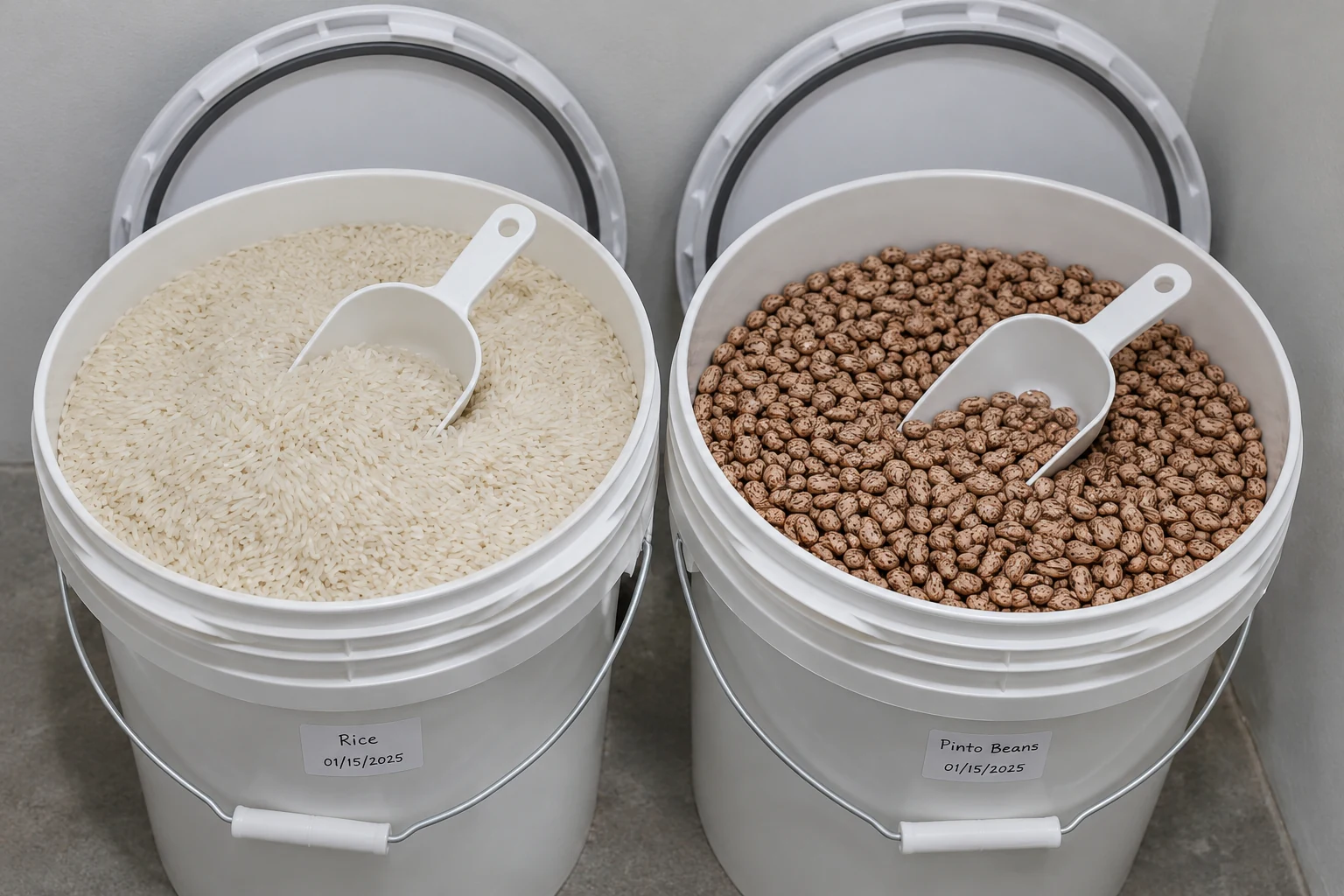
Divide quantities into sizes you can use after opening. Label the food, weight, packing date, and any treatment used. Avoid creating a collection of anonymous white bags that require opening to identify. Keep a small working container in the kitchen and replenish it from the reserve rather than repeatedly opening every stored package.
Keep the environment dry and inspectable
Dry bean storage benefits from a space that protects the food from moisture and allows regular inspection. USU's dry-bean storage publication discusses storage conditions and packaging. Do not extrapolate its advice to cooked beans or other moist foods; those require different handling.
Look for torn packaging, pest activity, condensation, or signs that the storage location has changed. Keep bags organized so the oldest usable stock is easy to retrieve. If you cannot inspect a package without moving a large unstable stack, revise the layout. Accessibility is a maintenance feature, not simply a convenience.
Test the meal, not only the container
Cook from the reserve periodically. Record the amount used, the portions it produced, and any soaking or preparation steps required by a reliable recipe. Follow food-safety directions for the particular bean; do not assume every bean can be prepared with the same shortcut. Older ingredients may also perform differently enough that a practice meal is worthwhile.
A rice-and-bean reserve still needs water, cooking capability, and foods that make the meals acceptable. Keep ready-to-eat alternatives for situations where cooking is unavailable. Build seasoning and companion ingredients into the shopping plan, and replace what you use before the supply drifts below its target. The strongest reason to store these staples is that they fit your routine meals, not that they permit you to stop thinking about food for decades.
