
Prepping at a glance
- Separate quality claims from safety decisions.
- Check the conditions attached to storage-life claims.
- Plan how large packages will be used after opening.
Ask what the claim actually describes
Foods with long shelf life can be valuable, but the number printed on an advertisement may describe a specific unopened package under particular conditions. Look for the manufacturer's instructions, the product's actual packaging, and any explanation of the claimed storage period. A general statement about a food category does not automatically apply to every version of that food.
Separate three questions: whether the food is safe, whether its quality remains acceptable, and whether it still fits your emergency menu. A product can lose appealing texture or flavor before it becomes useful to discard for another reason. Conversely, an impressive date cannot make a damaged or improperly stored package safe.
Understand dates without turning them into guarantees
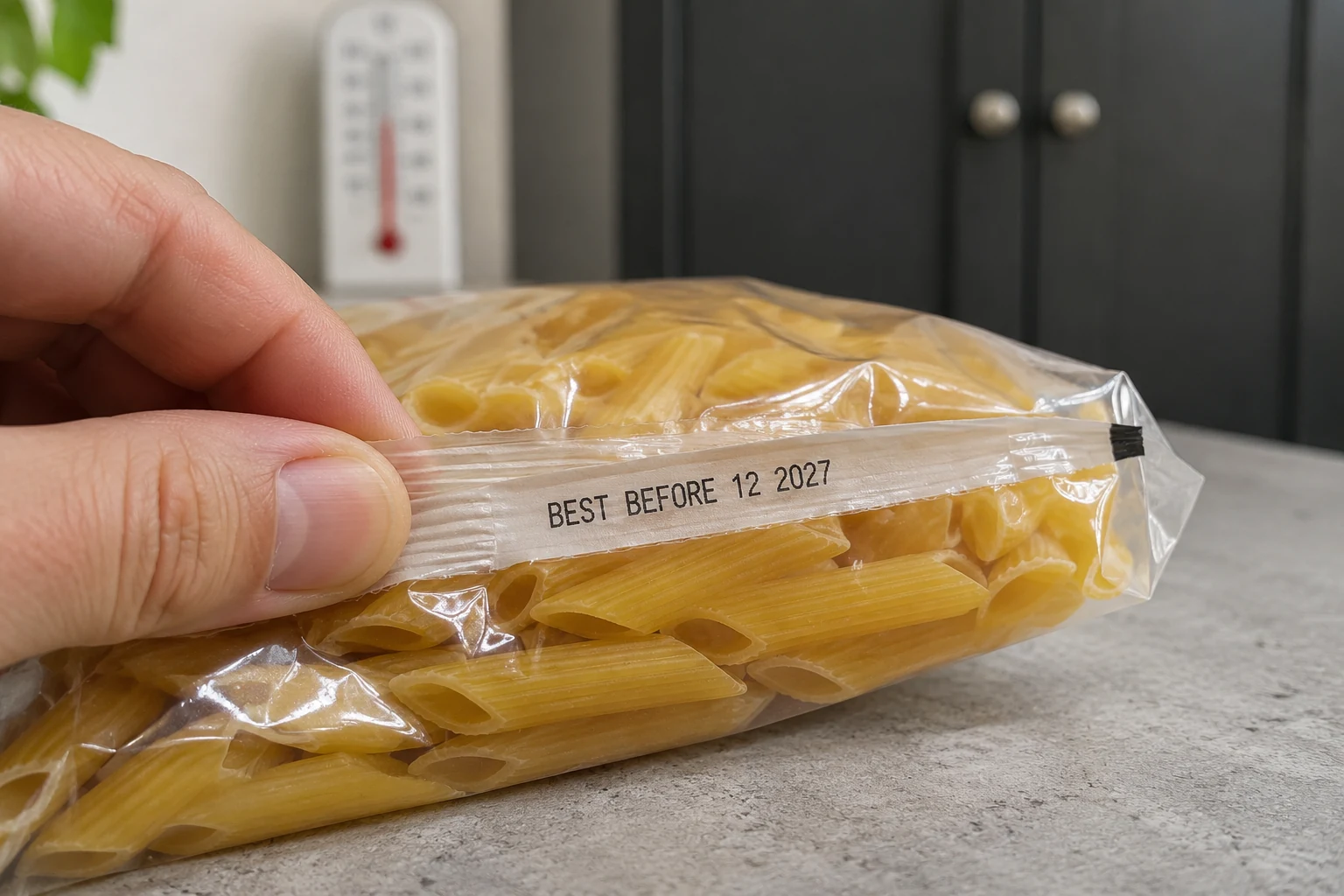
The USDA explanation of shelf-stable food dating notes that many dates concern quality rather than safety. Infant formula is an important exception to casual date assumptions. Read the wording and the product instructions instead of applying one rule to everything in the cupboard.
The shelf life of emergency food should therefore be recorded alongside its conditions, not as an isolated countdown. Keep purchase dates and package information. When a food is repacked, retain the original identity and relevant instructions so future users do not have to guess what is inside or how it was intended to be stored.
Judge the room as carefully as the package
Long term pantry storage is affected by moisture, temperature, and packaging integrity. Utah State University Extension's storage guidance explains how heat and moisture undermine stored food. A hot, damp location can erase the practical advantage of buying a product with a long advertised life.
Walk through your proposed storage space during different seasons. Notice sun exposure, plumbing leaks, condensation, pest access, and how easily packages can be inspected. Do not assume the coolest-looking corner is suitable. Store items in a way that makes damage visible and lets you retrieve older food without disturbing an entire stack.
Buy for use, including after opening
Consider the package size in relation to the household. An unopened bulk container may have a favorable storage claim, while the same food after opening needs different handling and a much shorter working timeline. Check those instructions before committing to large packages. If the family rarely eats the food, smaller units may be more practical even when the unit price is higher.
Build a menu using the food before building a reserve of it. Count water, fuel, other ingredients, and preparation time. Then rotate a modest amount through ordinary meals. Your observations will reveal whether the product is useful enough to keep. A sensible reserve combines durable staples with convenient foods, rather than maximizing the longest possible date at the expense of meals anyone wants to prepare.
