
Prepping at a glance
- Measure usable spaces before buying containers.
- Keep exits and essential access clear.
- Build an accessible reserve before pursuing a larger target.
Map the space you actually have
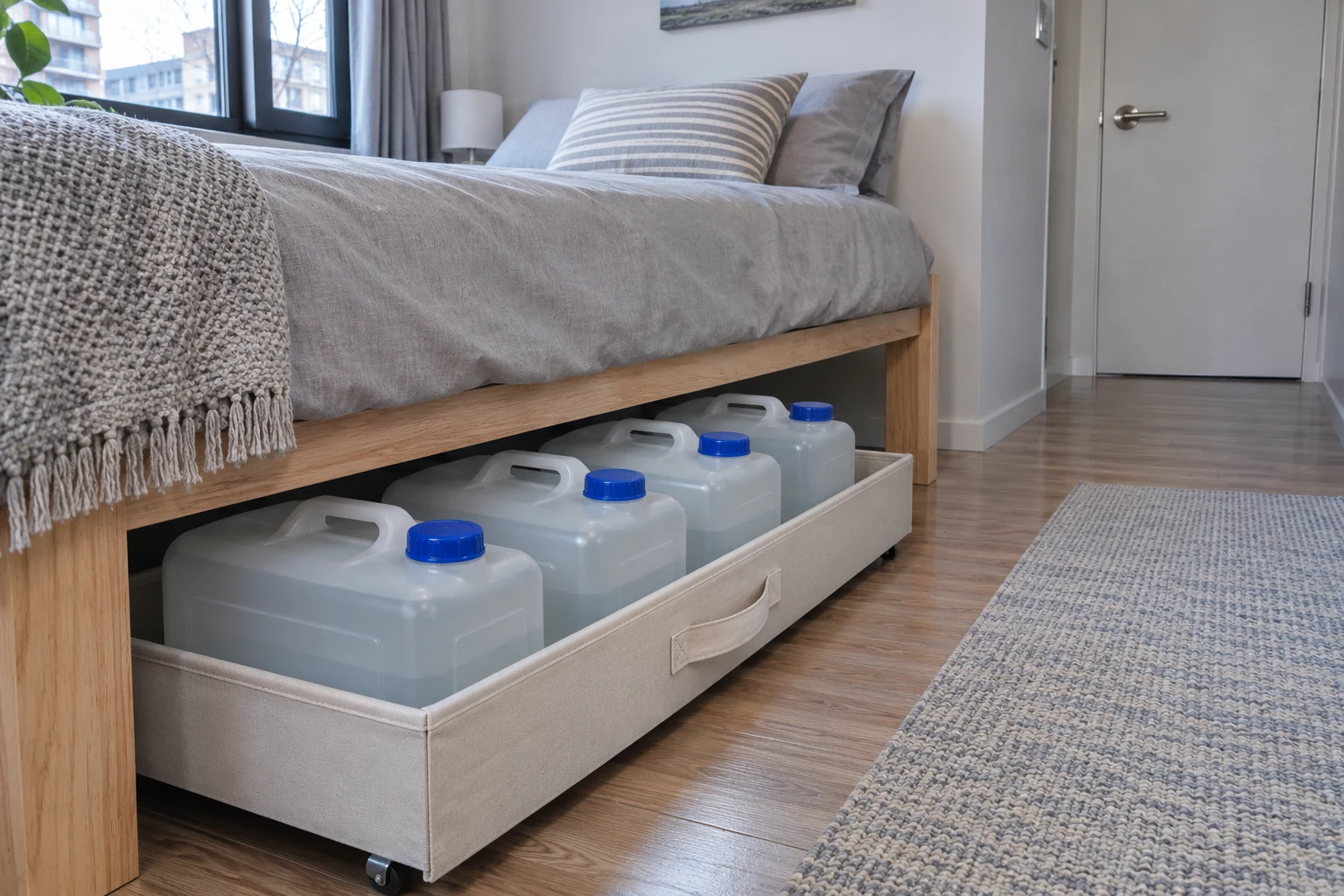
For emergency water storage, small apartment layouts reward careful measurement. Start by listing enclosed, accessible spaces that meet the water container's storage instructions. Measure height and depth instead of assuming a bottle will fit beneath a bed or inside a cabinet. Note which areas are easy to reach and which would require moving heavy furniture.
Avoid treating every empty corner as available storage. Doorways, stairs, electrical equipment, and access needed by someone using a mobility aid must remain usable. Check your lease or building guidance for relevant restrictions. The goal is an apartment emergency water supply that improves resilience without making ordinary living more difficult.
Choose smaller units deliberately
A collection of manageable containers can be more useful than one large tank in a small home. Think through carrying water from storage to the kitchen, pouring it without spills, and taking a limited amount if you must leave. Test the grip and closure with the person who will use it. A container does not become practical merely because its dimensions fit.
Keep drinking water in appropriate food-grade containers. The CDC water-storage guide explains suitable containers and labeling. Retain original packaging information where possible, and do not reuse a container with a hazardous or unknown history. Include the container's volume on your inventory so mixed sizes do not confuse your totals.
Divide the reserve by purpose
Keep an easy-to-reach portion for the first day of an interruption and the rest in clearly documented locations. If you share the apartment, show other residents where the supply is and agree on which water is reserved. A hidden reserve is less useful when the person who organized it is away.
Small space water storage also requires honesty about weight. Do not concentrate a large reserve on a flimsy shelf or assume a balcony can support any arrangement. Ask the building manager or a qualified professional when structural capacity is uncertain. A layout that distributes manageable containers can simplify access, but it is not a substitute for checking the capacity of the furniture or structure supporting them.
Plan for the gap between your target and your space
Write down your stored total and compare it with your household target. If the full target will not fit, prioritize an accessible initial supply, then identify official distribution information and a practical way to carry additional water if local authorities provide it. Do not count a hypothetical delivery or a bathtub you have not filled as water already available.
Reduce unnecessary water demand in your emergency menu by choosing foods that do not require lengthy cooking or extensive cleanup. Keep suitable containers for collecting potable water and a means of transporting them within your abilities. Review the plan when furniture or roommates change. Small homes benefit from a modest reserve that is maintained and understood, backed by a realistic plan for replenishment.
