
Prepping at a glance
- Buy meal components from several food groups.
- Choose package sizes that match household portions.
- Keep a manual opener and a simple meal list nearby.
Choose roles rather than a universal top ten
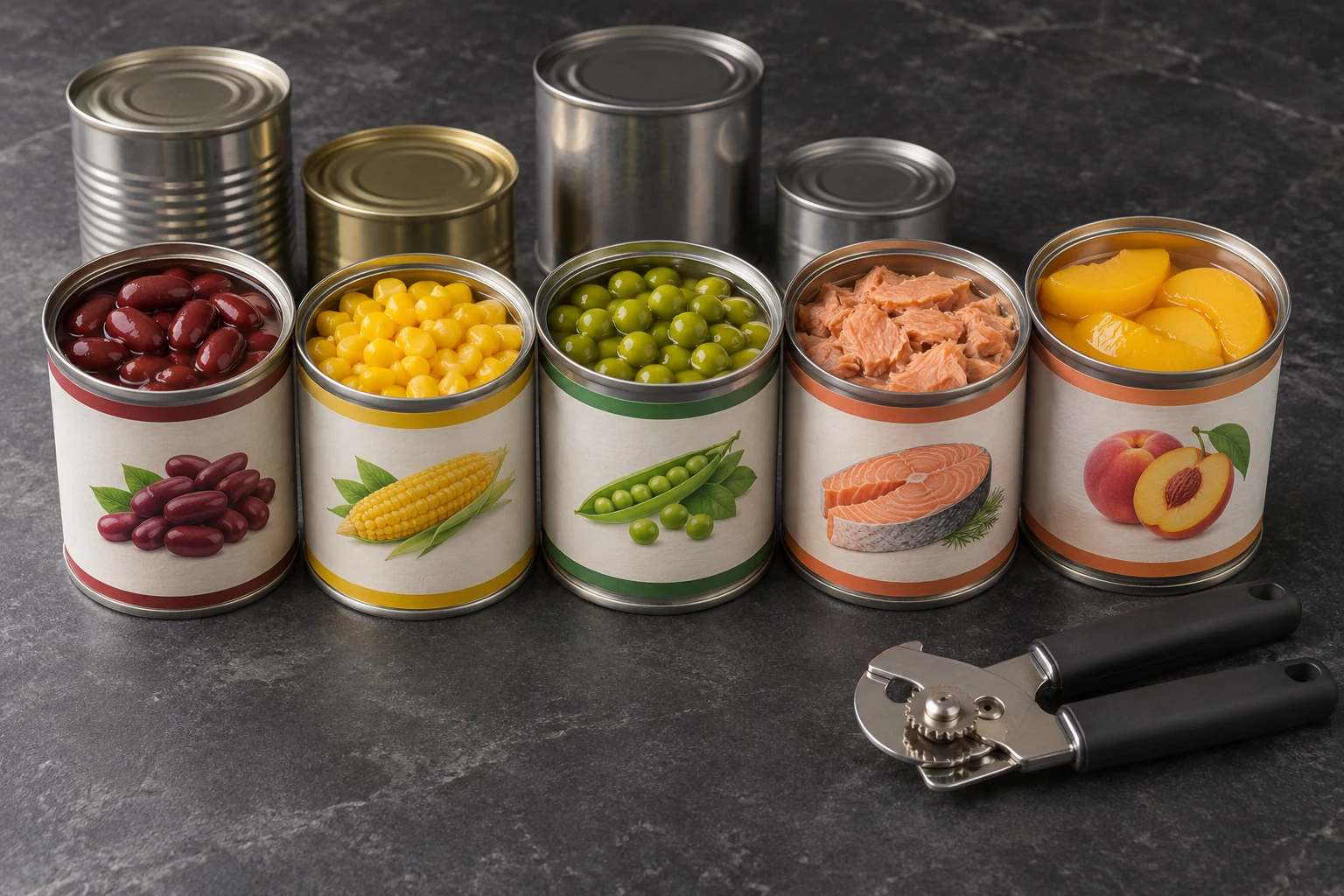
The best canned foods to stockpile depend on your menu, dietary needs, and ability to handle leftovers. Instead of copying someone else's case list, give each can a job. Beans or canned meat can anchor a meal, vegetables add variety, fruit provides another easy option, and soups can offer convenience when their ingredients suit your household.
Look at foods you already purchase. Familiarity reduces the chance that a large reserve will become unwanted food. If you want to add a new item, buy one can first and serve it under ordinary conditions. A product that looks efficient on a spreadsheet may still be unpleasant to the people expected to eat it.
Build several meals from a short shopping list
Canned food emergency meals can be simple combinations: beans and corn with suitable crackers, canned chicken with vegetables, or lentils with a ready-to-eat grain product. These are examples to adapt, not a complete diet prescription. Check that every component is ready to eat if you intend to avoid cooking.
Write three or four combinations on a card and list the cans required for each. This exposes missing items before shopping. It also shows where a single ingredient can serve multiple meals without making the menu identical every day. Include familiar seasonings and a manual opener, and check that everyone who may prepare meals can use the opener safely.
Read beyond the product name
Compare ingredient lists, allergens, serving sizes, and sodium according to household needs. A can's serving count is not necessarily the amount your family will eat. Check for labels requiring refrigeration; not every food packaged in a can is intended for room-temperature storage.
Inspect containers before purchase and during rotation. USDA guidance on canned goods identifies leaking, bulging, and badly damaged containers as reasons not to use the food. Do not accept questionable cans simply because the price is low. A planned bargain that must be discarded is not a useful addition to the reserve.
Control cost through portions and rotation
Stockpiling food on a budget works better when you compare the cost of usable meals rather than the cost per container alone. A large can may cost less per ounce but create waste if opened food cannot be refrigerated. Smaller packages can make sense for one person, while a household that finishes the contents together may prefer a larger size.
Add a few meal combinations at a time. Place new cans behind older ones, keep labels visible, and use the reserve in routine cooking. When something goes unused for months, ask why before buying more. It may need a better recipe, a smaller package, or removal from the plan. Keep a replacement list based on actual consumption. A flexible collection of familiar cans can support both unexpected shopping gaps and ordinary busy evenings without becoming a forgotten pile.
