
Prepping at a glance
- Choose food-grade containers intended for water.
- Record fill dates and storage locations.
- Assign someone to check leaks, labels, and replacement dates.
Choose containers before finding spare bottles
Learning how to store water for emergencies starts with the container's history. A vessel that once held an unsuitable substance is not made appropriate simply by rinsing it. Use containers intended for drinking-water storage, or keep commercially bottled water in its original packaging. Think about how each container will be opened, poured, and cleaned before purchasing it.
The CDC's storage instructions cover food-grade containers, cleaning and sanitizing, and replacement of self-filled water every six months. Follow that procedure rather than improvising a sanitizer recipe. For purchased bottled water, use the manufacturer's storage guidance and the date on the package.
Organize water by how you will use it
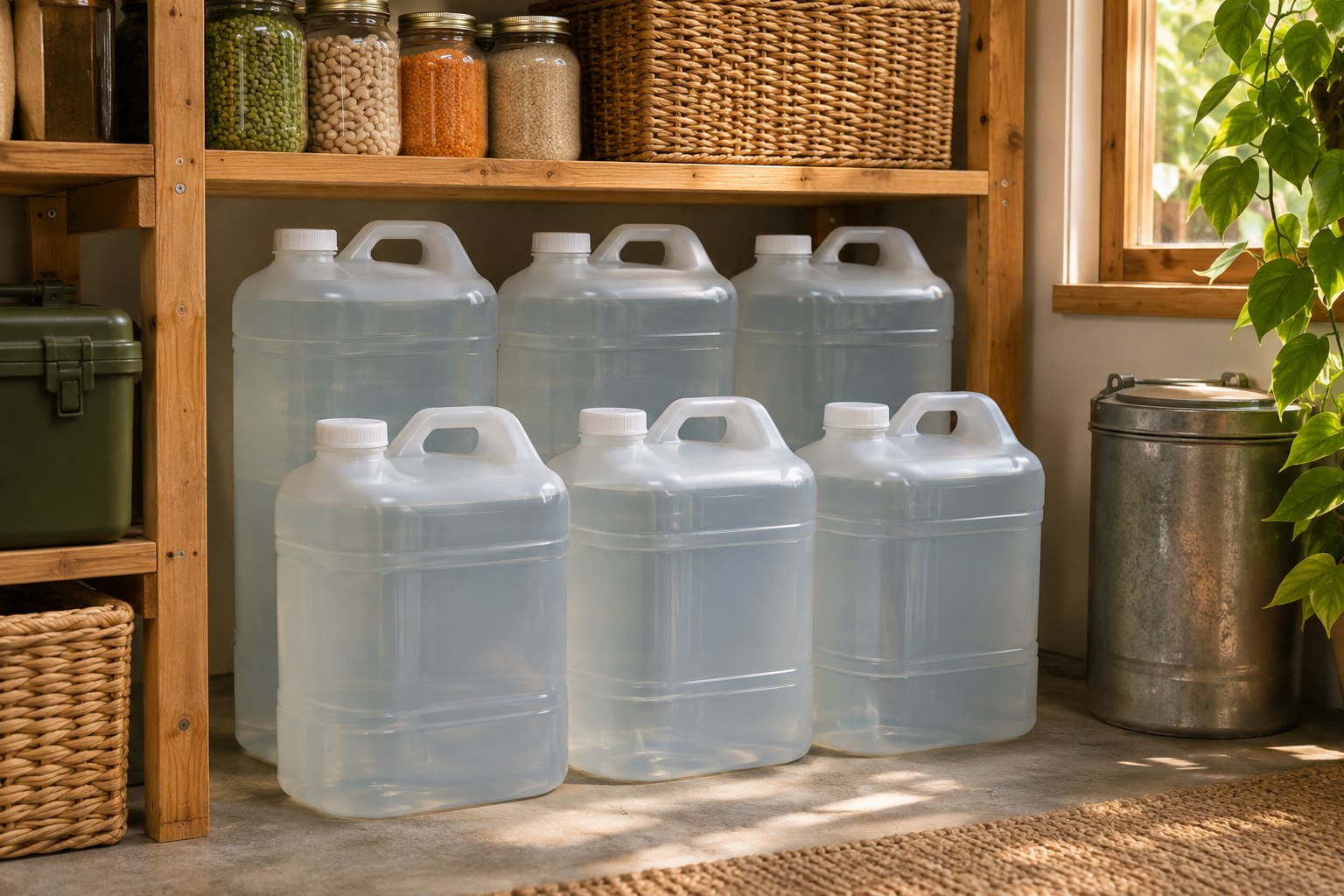
Emergency water storage containers should match household abilities. A size that is easy for one adult to lift may be impractical for a child or someone with limited grip strength. Try handling an appropriately filled container before committing your whole reserve to that format. Smaller units can be useful for moving water to sleeping areas, while larger units can remain in a designated storage space.
Keep a few accessible containers near your emergency supplies and record where the rest are kept. Do not bury the only usable water behind heavy seasonal boxes. If some stored water is designated for non-drinking tasks, label that distinction clearly so a tired family member does not have to remember your original plan.
Build a water rotation schedule that survives a busy month
Use a label with the fill or purchase date, container volume, and next review date. Add the storage location to a simple household inventory. The label should remain readable when the container is wet, and the inventory should be available without relying on a particular phone or account.
Choose a recurring review tied to something you already do, such as checking other emergency supplies. For self-filled containers, keep the replacement interval consistent with CDC guidance. For commercially bottled water, check packaging and the manufacturer's information. Assign responsibility explicitly: a task that belongs vaguely to everyone often gets postponed by everyone. If you replace only part of the reserve, record which part rather than resetting the entire inventory date.
Inspect the whole storage arrangement
Look for leaks, damaged closures, unreadable labels, and objects that make access difficult. Check that storage conditions still match the container instructions; a room used for household chemicals or exposed to excessive heat may no longer be a suitable location. Keep the reserve away from substances that could contaminate it.
Practice dispensing a small amount without putting hands or unclean utensils into the container. Confirm you have any required tap, wrench, or compatible attachment, and keep it with the supply. Replace equipment that makes routine handling awkward before an emergency forces you to use it. Finally, update the stored total after use. Rotation keeps water current, but only replenishment keeps the reserve at its intended size.
