
Prepping at a glance
- Use ready-to-eat foods in portions you can finish.
- Check labels for after-opening refrigeration requirements.
- Test the menu and pack the utensils it actually needs.
Set up the menu before an outage
No cook emergency meals should be easy to assemble with clean hands, safe water, and ordinary utensils. They should also fit your family's allergies and usual portion sizes. The sample below is a shopping framework, not a fixed diet: substitute comparable foods that your household can eat, and adjust quantities for each person.
Read every package. Shelf-stable milk, fish pouches, and canned vegetables have different storage instructions once opened. When refrigeration is unavailable, choose packages your household can finish at one meal. Include drinking water separately; a menu that avoids boiling pasta still requires water for people and basic cleanup.
Days one through four: familiar combinations
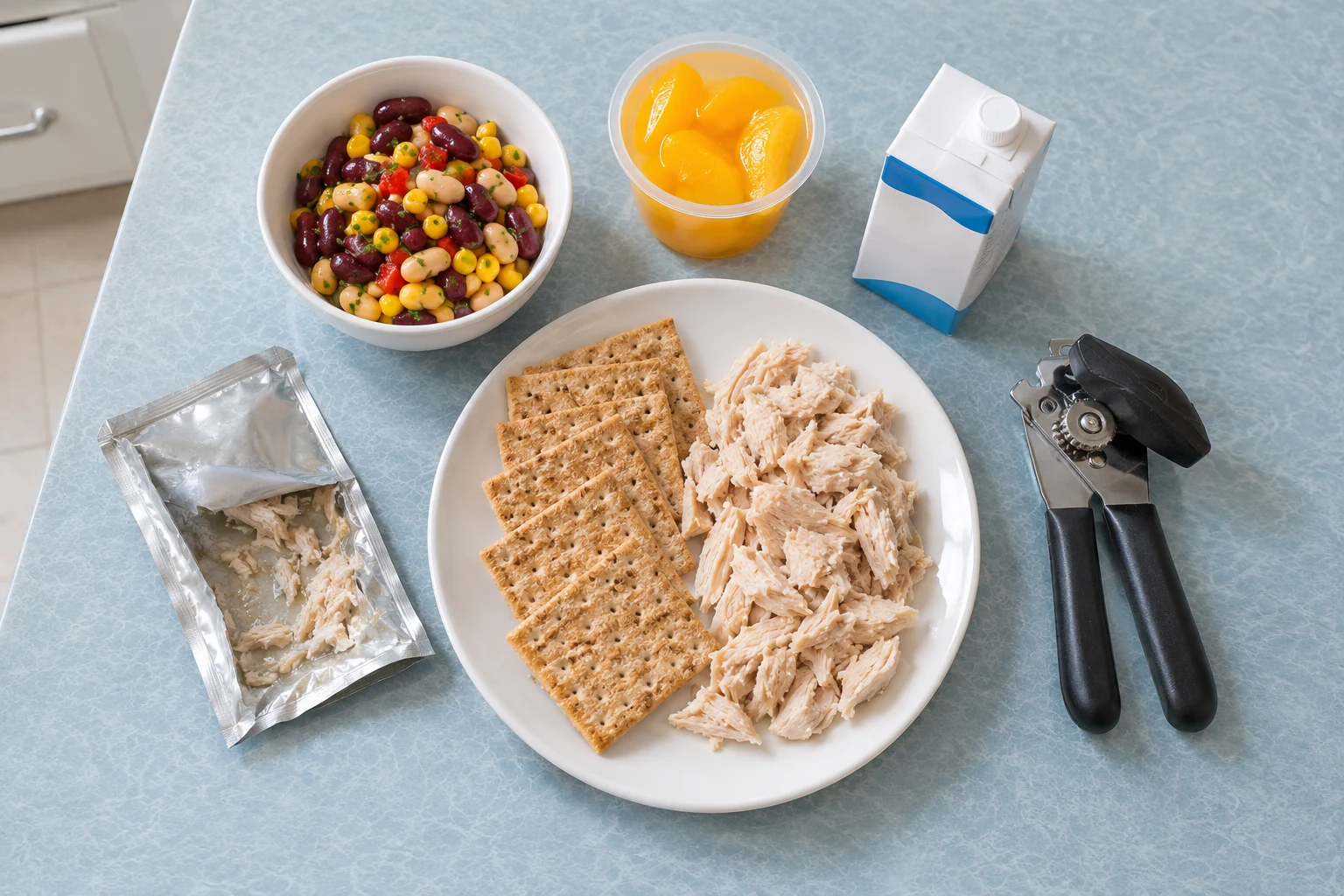
On day one, try dry cereal with a single-serving shelf-stable milk or suitable alternative, crackers with canned chicken and fruit at lunch, and a ready-to-eat bean salad with canned corn at dinner. Add familiar snacks according to appetite. Drain foods only when needed and plan how to contain empty packaging.
For day two, use nut or seed butter with crackers at breakfast, a tuna pouch with ready-to-eat vegetables at lunch, and canned lentils with an appropriate ready-to-eat grain product for dinner. Verify that the grain is labeled ready to eat without heating. Day three can repeat breakfast, switch lunch to chickpeas and corn, and use canned salmon with crackers at dinner. Day four might include cereal, a shelf-stable soup labeled ready to eat, and beans served with tortilla chips and shelf-stable salsa in a small package.
Days five through seven: vary texture and flavor
Day five can return to the most successful breakfast, use chicken with crackers at lunch, and combine canned beans and vegetables at dinner. Day six might include a suitable spread and fruit, a fish pouch with crackers, and a ready-to-eat lentil meal. On day seven, repeat household favorites instead of introducing another unfamiliar emergency product.
Shelf stable meals without cooking can become repetitive quickly. Rotate seasonings, crunchy accompaniments, fruit choices, and protein sources within dietary limits. Keep a written substitution list: if one item is unavailable, the shopper should know which replacement works without changing the entire plan. Include comfortable foods for children, but do not build all seven days around snacks alone.
Test safety, portions, and cleanup together
Practice one full day from the menu while utilities are working. Photograph the packages used, note what remained, and update quantities. Pack a manual opener, spoons, bowls, and a waste bag beside the food. Check whether anyone needs assistance opening pull tabs or handling stiff pouches; convenience is only useful if the intended person can manage it.
Emergency meal planning must include safe handling after opening. Follow label directions, and consult the FDA's outage guidance when refrigeration is interrupted. Do not taste questionable food to decide whether it is safe. Write a simple rule on your menu: prepare only what can be used safely now, then move to the next unopened package when needed.
