
Prepping at a glance
- Plan complete meals before buying cases.
- Separate ready-to-eat meals from foods that require water and fuel.
- Test a short menu before expanding it to a month.
Define what your food reserve must do
A 30 day emergency food supply can cover several different problems: a missed paycheck, a storm that blocks shopping, or a prolonged disruption to deliveries. Those scenarios do not all remove electricity or safe tap water. Write down the conditions you want your pantry to handle before choosing food. A cupboard full of dry pasta helps during a shopping interruption but leaves another problem if you cannot safely cook it.
List everyone who might eat from the reserve, including an occasional caregiver or relative. Record allergies, texture needs, and foods children reliably accept. An emergency food supply for families works best when those preferences shape the plan from the beginning.
Build a repeatable menu, then count ingredients
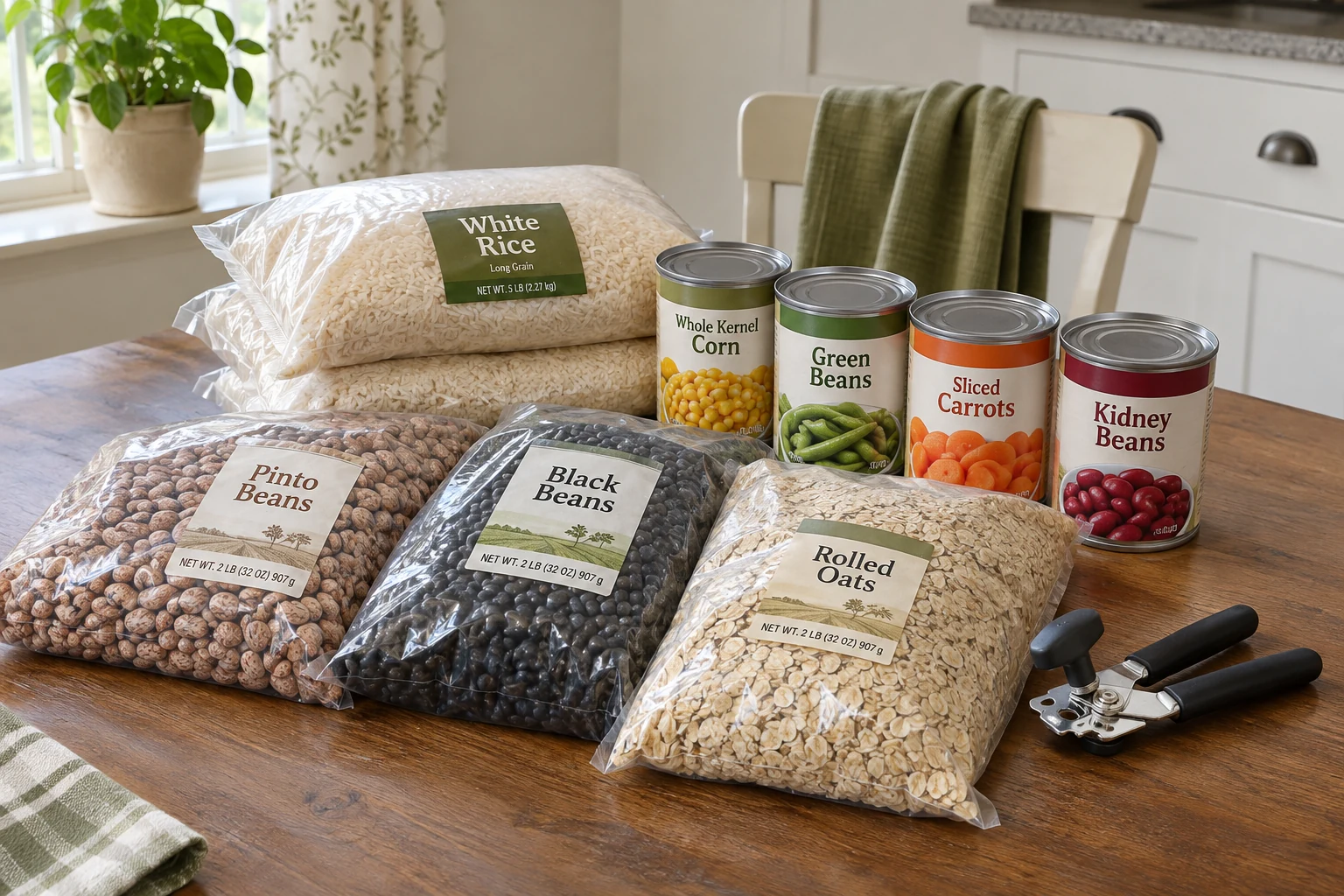
Choose a short rotation of breakfasts, lunches, dinners, and snacks. One example is oatmeal or cereal for breakfast; canned bean salad or crackers with a suitable spread for lunch; and rice with canned vegetables and protein for dinner. Treat that as a planning example, not a nutritionally complete prescription. Adapt it to your normal diet and available cooking equipment.
Use actual portions from a trial meal. If one dinner uses two cans of beans for your household and appears four times in the month, put eight cans on the shopping worksheet. Repeat for every ingredient, including seasonings, fats, drinks, and foods used between meals. Check package serving counts against what your family actually eats.
Give the shelf stable meal plan a no-cook layer
Mark each meal with its water, refrigeration, and fuel requirements. Place the simplest meals at the front of the reserve: ready-to-eat canned foods, shelf-stable packages sized to finish at one sitting, and familiar snacks. Keep a manual opener alongside them. This gives you choices while you assess an outage instead of forcing immediate outdoor cooking.
Do not assume opened shelf-stable food remains safe without refrigeration. Follow package storage instructions and use small containers when leftovers would be difficult to chill. For interruption planning, the Red Cross food-safety guide explains why temperature control matters. A working pantry includes a safe way to handle food after opening, not merely before.
Expand slowly and rehearse the shopping gap
Buy a few additional ingredients from the menu during ordinary shopping trips. Label a shelf or bin for the reserve, but keep it in your normal rotation. Put new purchases behind older packages and record the amount needed to restore your target after use. This approach exposes unpopular foods before you own a month of them.
Try a weekend using the reserve while keeping utilities available. Notice missing utensils, monotonous meals, excessive cleanup, and cooking steps that consume more water than expected. Adjust the plan before a real emergency. Recheck the household list whenever diets or family size change, and rebuild around what proved useful rather than keeping the original menu simply because it is written down.
