
Prepping at a glance
- Use the CDC baseline, then account for household needs.
- Track stored gallons rather than simply counting containers.
- Split water between practical locations and portable containers.
Choose your planning period
Knowing how much emergency water to store begins with a time period and a household count. The CDC recommends at least one gallon per person per day for three days, with a two-week supply if possible. More may be needed in hot conditions and for particular household needs; include pets separately. Treat this as a planning baseline, not a promise that every activity will fit within it.
Start with the people likely to be home, then identify situations that could add someone. A visiting relative, caregiver, or child staying during a closure changes the calculation. Write a second total for that larger household so the difference is visible before an emergency.
Make an emergency water supply calculator on paper
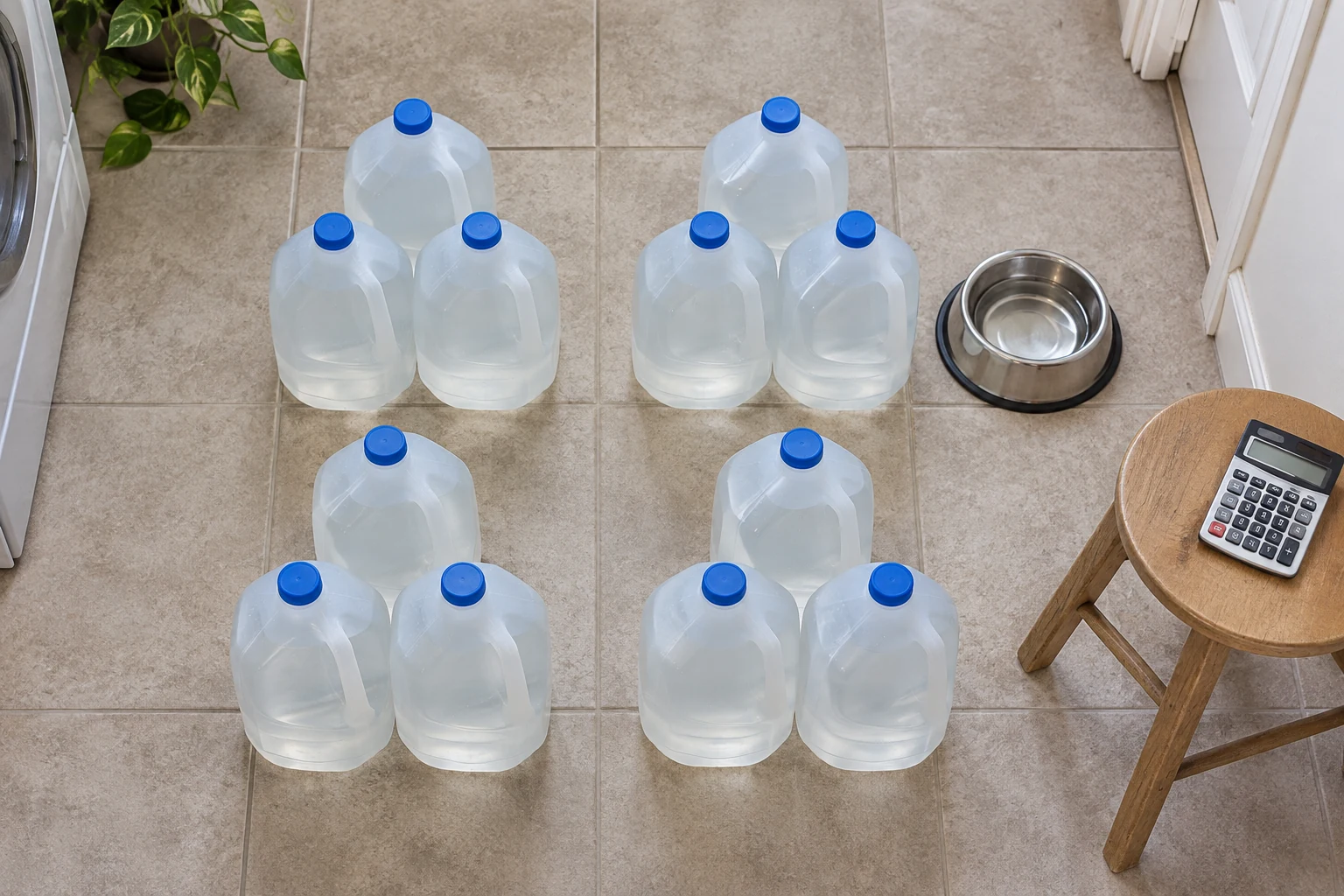
Multiply people by days by your chosen daily allowance. For example, a four-person household using the one-gallon baseline would plan twelve gallons for three days. That arithmetic is only the starting line. Add a separate note for pets, additional drinking needs, and tasks that could consume more water than the baseline comfortably allows.
Use two columns: target amount and amount actually stored. Record the size printed on each container rather than estimating from appearance. If you use bottles labeled in liters, keep all your arithmetic in one unit or use a dependable conversion before combining totals. A clear worksheet prevents a collection of small bottles from looking larger than it is.
Separate essential uses from optional ones
List what your water must support: drinking, foods that require added water, essential hygiene, and any product-specific care needs. Ask healthcare or equipment providers about special arrangements rather than guessing how an interruption affects medical routines. Review your emergency menu at the same time. Dry staples may be compact, but they bring preparation and cleanup requirements that ready-to-eat meals avoid.
Water storage for families becomes more useful when the water can be accessed by the people who need it. A large container may suit a fixed storage location, while smaller containers are easier to carry to a room or vehicle. Do not depend on moving the entire reserve quickly during an evacuation. Decide which portion is intended to travel and which supports staying home.
Turn the number into a manageable reserve
Choose storage locations before buying containers. Check that doors, escape routes, and everyday access remain clear. Spread the reserve in a way that avoids making one leak or inaccessible room your only point of failure. Keep drinking water clearly distinguished from water reserved for other uses.
Label the inventory with the date checked, each location, and the next review date. Begin with the shorter target if space or money is tight, then add gradually. A small, maintained supply is more useful than an ambitious calculation with nothing behind it. Revisit the worksheet after household changes and after any practice exercise that reveals you used more water than expected.
