
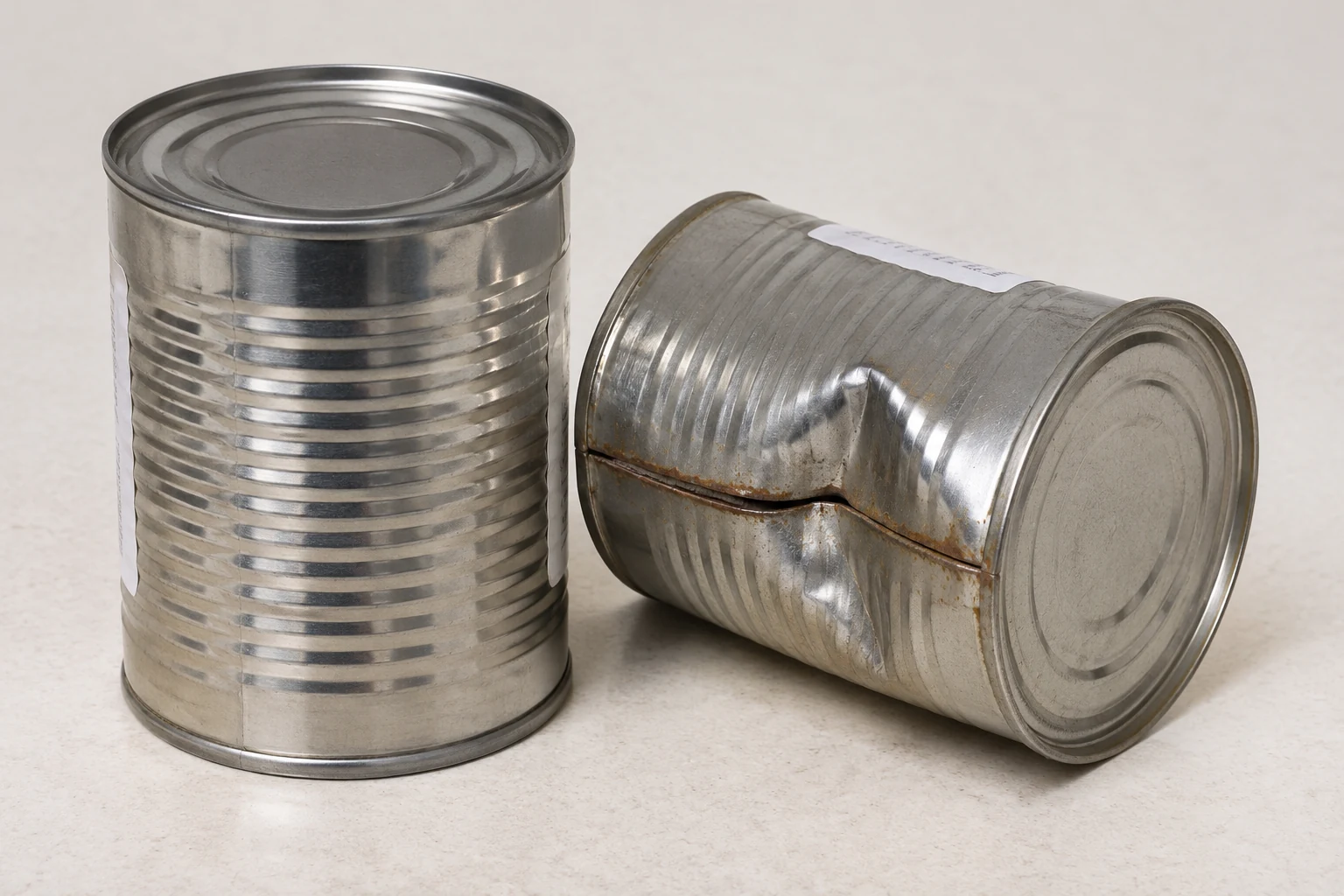
Prepping at a glance
- Check container condition before thinking about dates.
- Do not taste questionable food to test safety.
- Treat opened cans and home-canned foods as separate cases.
Start with the right category
How long does canned food last? First identify what you have: a commercially shelf-stable product, a canned item labeled for refrigeration, or food preserved at home. Those categories cannot share one simple calendar rule. Read the label and keep any storage instructions with the item.
For commercially canned foods, the USDA's storage guidance gives general quality ranges of 12 to 18 months for high-acid foods and two to five years for low-acid foods under suitable conditions. These ranges are not permission to use a damaged can, and they do not replace a manufacturer's product-specific instructions.
Keep the exact product name and storage directions visible in your inventory.
Inspect the package without taking risks
Look for leaking, bulging, severe damage, or problems at seams. Damaged food cans deserve a safety decision before they deserve a place at the front of the rotation shelf. Do not buy suspicious cans for a discount, and do not taste their contents to see whether they are acceptable.
If a container or its contents appears suspicious, keep it away from people and animals and follow official disposal guidance. Do not open it merely to satisfy curiosity. The absence of an unpleasant smell is not proof of safety. Keep the product identity available if you need to ask the manufacturer, an extension specialist, or a food-safety service about the damage.
Reconstruct the storage history
Canned food shelf life assumes a suitable environment. A carton kept in a stable indoor pantry is a different situation from one exposed to repeated freezing, extreme heat, flooding, or unidentified contamination. If you do not know the history, avoid inventing a reassuring explanation simply because the date appears favorable.
Check the shelf and surrounding room for clues: damp cardboard, rust, water marks, and nearby leaks. USDA's explanation of why cans do not last forever discusses the effect of storage conditions and container deterioration. Correct the location before replacing stock, or the same problem may recur.
Handle opened and home-canned food separately
Once a can is opened, follow the label's refrigeration and use instructions. The unopened storage period no longer describes the food on your plate or in a partly used container. Plan package sizes around what you can finish safely, especially during an outage when refrigeration may be unavailable.
For home-canned food, confirm that a tested process appropriate to the food, jar size, equipment, and altitude was followed. A sealed lid alone does not establish that processing was safe. Keep records at canning time rather than trying to reconstruct them months later. If the method is unknown or questionable, seek reliable preservation guidance instead of borrowing the commercial canned-food timeline. In the pantry inventory, distinguish commercial cans from home-canned jars so their histories and handling requirements remain clear.
