
Prepping at a glance
- Write down when power was lost.
- Keep refrigerator and freezer doors closed as much as possible.
- Use measured temperatures and the official food-by-food chart.
Capture the information you will need later
Planning for food safety during power outage events begins before food warms. Keep appliance thermometers in the refrigerator and freezer, and know where a food thermometer is stored. When electricity stops, record the time and keep doors closed as much as possible. Repeatedly opening the refrigerator to check progress makes the situation harder to manage.
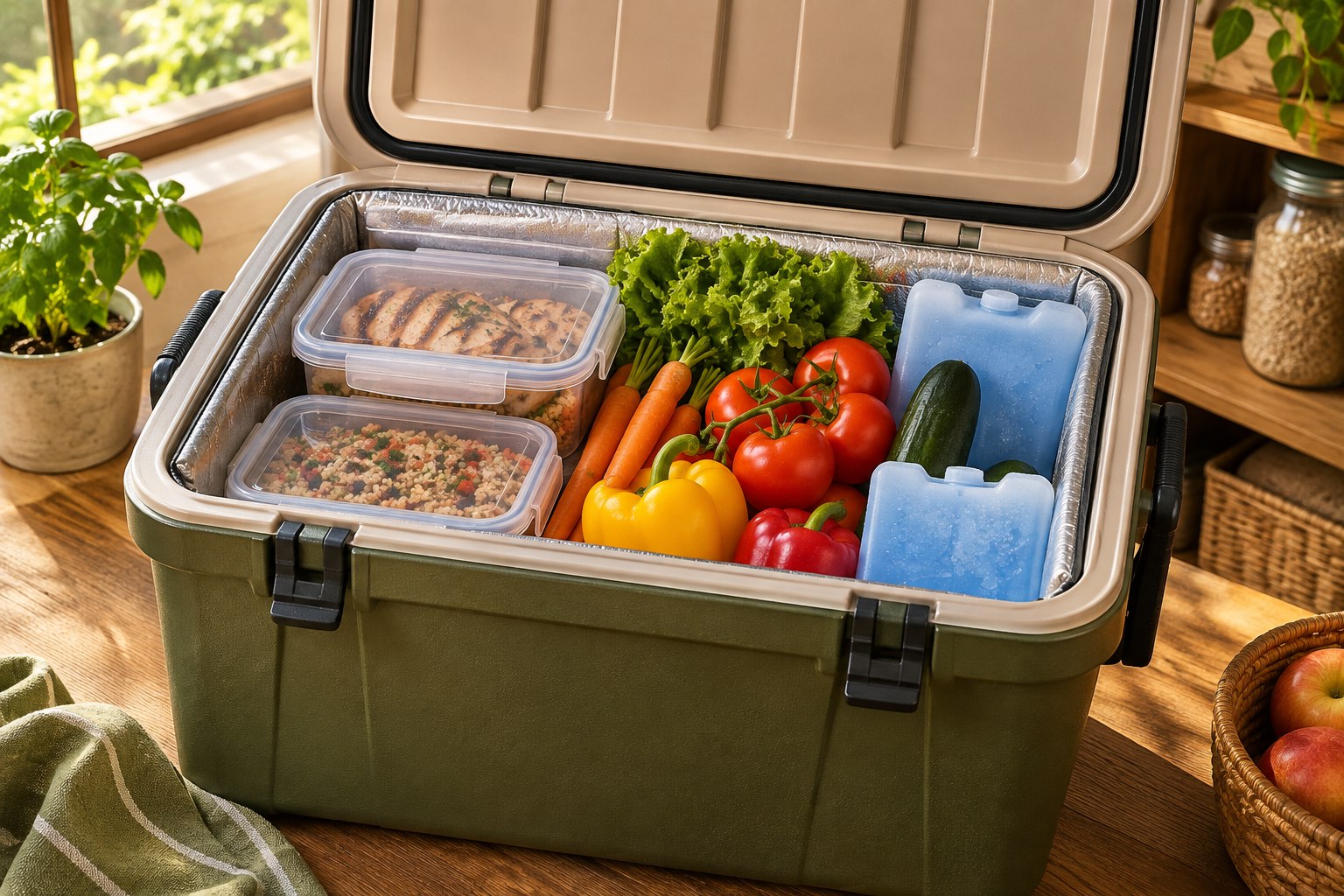
Make your next meal from shelf-stable supplies while assessing the outage. If you have a cooler and a reliable source of ice, plan how to maintain safe temperatures rather than simply transferring food into a different unmonitored container. Keep raw foods separated from ready-to-eat items during any move.
Use the refrigerator timeline correctly
For a refrigerator power outage, FoodSafety.gov states that a closed refrigerator keeps food safe for up to four hours. Its chart advises discarding refrigerated perishables after four hours without power and gives food-specific guidance for exposure at 40°F or above for more than two hours. Use the full chart when evaluating different foods.
Do not apply the same rule blindly to a raw chicken package, an unopened shelf-stable condiment, and a whole uncut fruit. Their handling requirements differ. Likewise, if food was kept safely cold by another verified method, record that temperature history rather than relying only on the duration of the electrical outage. When the history is unknown, do not invent one.
Evaluate frozen food separately
Freezer food safety has a different timeline. The same official guidance estimates about 48 hours for a full, closed freezer and 24 hours for a half-full one. Food that still contains ice crystals or measures 40°F or below can generally be refrozen, though quality may change; check the chart for product-specific exceptions, including ice cream.
Inspect efficiently when power returns or a transfer becomes necessary. Record temperatures and assess packages without leaving everything on the counter for a prolonged sorting session. Do not use outdoor winter weather as a substitute for controlled cold storage: an unmonitored location adds uncertain temperatures and exposure to animals or contamination.
Discard safely and improve the backup plan
Never taste food to determine whether it survived an outage safely. Smell and appearance cannot establish a safe temperature history. Bag discarded food so people and animals will not accidentally eat it, and clean affected storage areas according to appliance and food-safety guidance. Photograph losses if useful for your records, but do not delay disposal of unsafe food to preserve a perfect inventory.
After replacing essentials, review what would have made the decision easier: a thermometer, a printed chart, a clear outage log, more shelf-stable meals, or a better cooler arrangement. Avoid immediately rebuilding a freezer full of expensive food without addressing the weakness that caused uncertainty. A practical plan protects health first and reduces future waste through better information and preparation.
