
Prepping at a glance
- Keep no-cook meals as the first fallback.
- Never bring outdoor cooking equipment indoors.
- Check appliance instructions, ventilation, and local restrictions.
Begin with the space, not the stove
Cooking without electricity looks different in a detached home, an apartment, and a temporary shelter. Identify where equipment could legally and safely operate before buying it. A balcony, garage, tent, or covered entry is not automatically a suitable outdoor cooking area. Building rules, fire restrictions, weather, and clearances can eliminate an option that appears convenient.
Write down what remains available during an outage. An appliance may rely on electricity for ignition, controls, ventilation, or other functions even when its fuel is not electric. Read its manual and consult the manufacturer when operation without power is unclear. Do not improvise modifications to make it work.
Make no cook backup meals the immediate option
Keep foods that can be eaten safely without heating and without refrigerated additions. Familiar canned or shelf-stable meals, suitable spreads, crackers, and fruit can cover the period while you assess conditions. Choose package sizes that fit the household so unsafe leftovers do not become the next problem.
No cook backup meals also help when a storm makes outdoor cooking hazardous or when evacuation is likely. Pack the manual opener and utensils with the food. Practice one meal in ordinary conditions to discover whether a supposedly convenient product actually requires hot water, a difficult opening tool, or ingredients you had not counted.
Keep combustion equipment in its proper setting
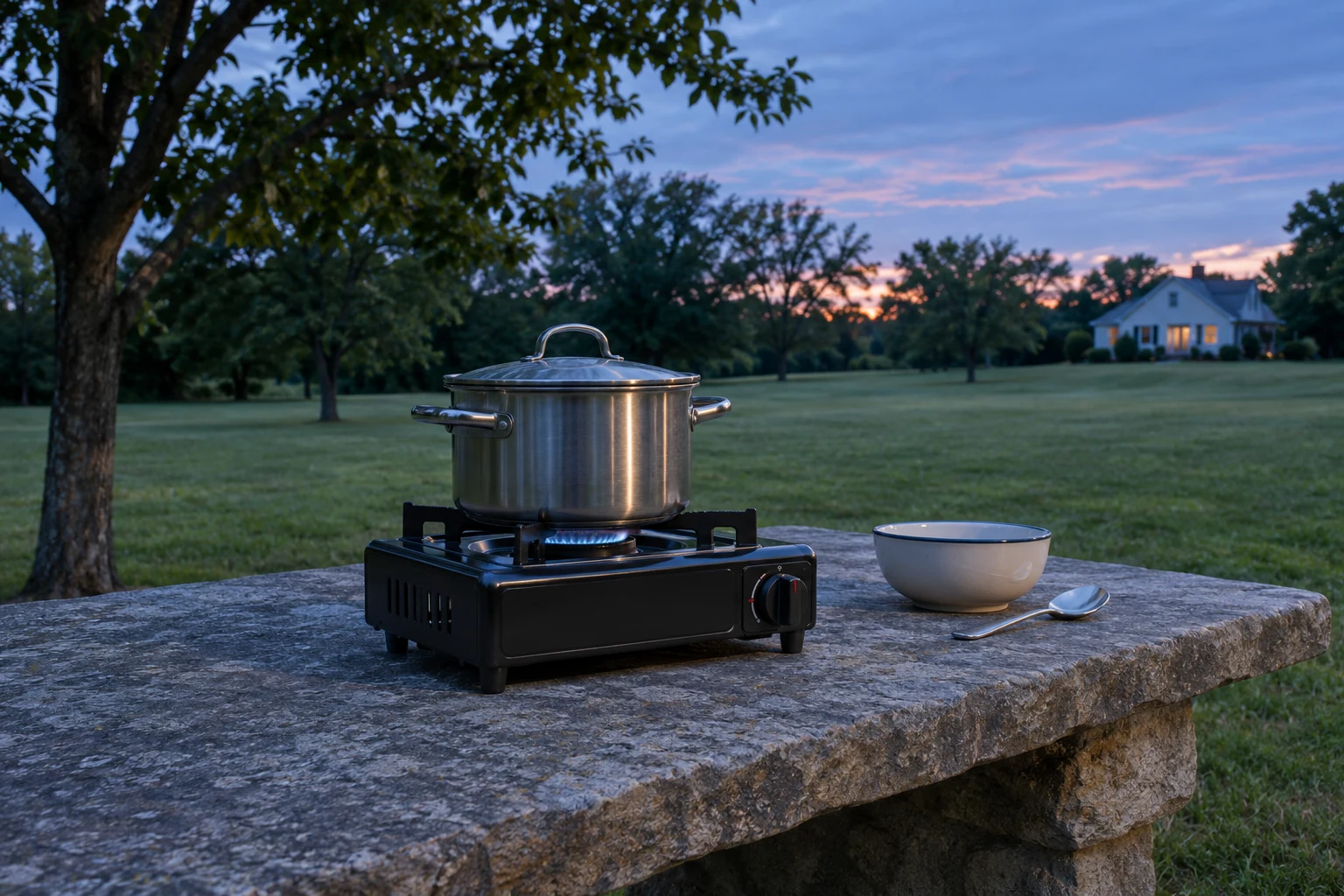
For power outage cooking, carbon monoxide is a central hazard. The CDC specifically warns against using a portable gas camp stove indoors. Outdoor grills and similar equipment must not be brought into a home or garage. Opening a window does not turn an outdoor appliance into an indoor one.
The EPA's outage guidance distinguishes properly vented, suitable cooking appliances from unvented combustion equipment. Use only equipment installed and operated as intended, and confirm that required ventilation still works without electricity. Maintain functioning carbon monoxide alarms, but do not treat an alarm as permission to use unsafe equipment.
Reduce the demands of any workable cooking option
If a safe cooking option is available, choose simple meals compatible with it. Plan pots, utensils, water, fuel, lighting, and a stable work area. Follow appliance and fuel-storage instructions, keep children and pets away from the cooking zone, and check current local fire restrictions. Avoid experimenting with unfamiliar equipment for the first time during severe weather.
Practice under safe conditions before relying on the setup. Record how much preparation and cleanup the meal requires and whether the food can be finished without leftovers. Keep the no-cook menu available even after purchasing equipment; a backup should not depend on favorable weather or a single fuel supply. If your space does not support safe cooking during an outage, planning to eat without heating is a complete and practical choice.
