
Prepping at a glance
- Read the full message and affected area.
- Prepare during a watch and act as directed by a warning.
- Give each major hazard a specific household response.
Understand the broad distinction
Weather watch vs warning is a useful starting distinction, but the full message matters. A watch generally indicates conditions or risk that warrant preparedness, while a warning identifies a hazard that requires protective attention and action as directed. National Weather Service: watch, warning and advisory definitions explains the National Weather Service terminology. Exact criteria and recommended responses depend on the hazard.
An advisory can still affect safety, travel or a person's particular needs. Do not dismiss it because the word sounds less urgent. Someone with a long drive, limited mobility or a heat-sensitive medical condition may need to act earlier than others. Read the issuing office's explanation instead of treating alert labels as a complete decision system.
Extract four details from every alert
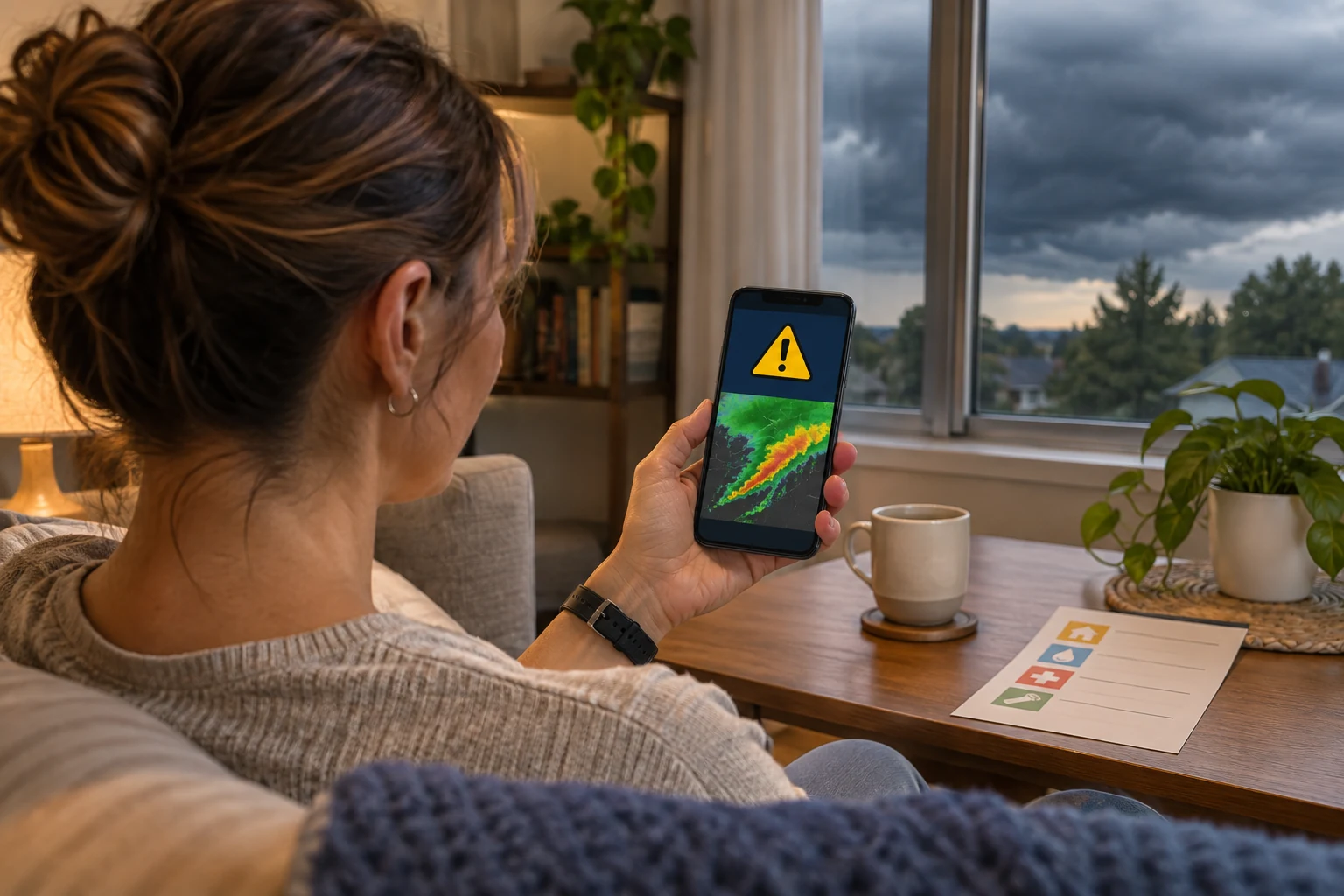
For each severe weather notification, identify the hazard, affected location, time period and recommended action. Confirm that a shared screenshot is current and applies to your area. A dramatic image without a timestamp or location may distract from the actual local message. Use official information when available and keep a reliable way to receive updates.
Know your county or other relevant warning geography, and identify nearby landmarks used in messages. If traveling, review the route's alerts as well as those at home. A household member caring for someone elsewhere may need notifications for more than one place; label those clearly so the wrong location does not trigger confusion.
Write hazard-specific actions
A weather alert action plan should describe what changes when the risk increases. For a storm watch, that might mean charging devices, checking the shelter area and confirming who is home. For a warning, the appropriate action may be immediate shelter or another response described in the message. Avoid one generic instruction for every hazard.
Assign practical roles: one adult helps a child, another assists someone with mobility needs, and someone brings essential communication equipment if time allows. Keep paths clear and supplies reachable beforehand. Do not delay urgent protective action to complete a packing list. The plan should make the first useful step easier, not create a long sequence that must be finished before moving.
Practice reading and acting without rushing
Use an archived example clearly labeled as a drill. Ask each household member to explain what area it covers and what they would do next. Walk through the planned response at an ordinary pace, correcting inaccessible doors, missing contacts or unclear responsibilities. Do not send simulated alerts in a way that could be mistaken for a real emergency.
Maintain more than one alert route where practical, including accessible options for people who cannot rely on sound or a phone screen. Review the plan after moving, changing work schedules or adding household members. During an event, keep monitoring official updates because timing and affected areas can change. Understanding the label is only the beginning; readiness means converting the complete message into an appropriate action.
