
Prepping at a glance
- Learn identification with qualified local guidance.
- Do not rely on apps or folklore to establish edibility.
- Keep reliable stored food as the emergency plan.
Begin with observation rather than a meal
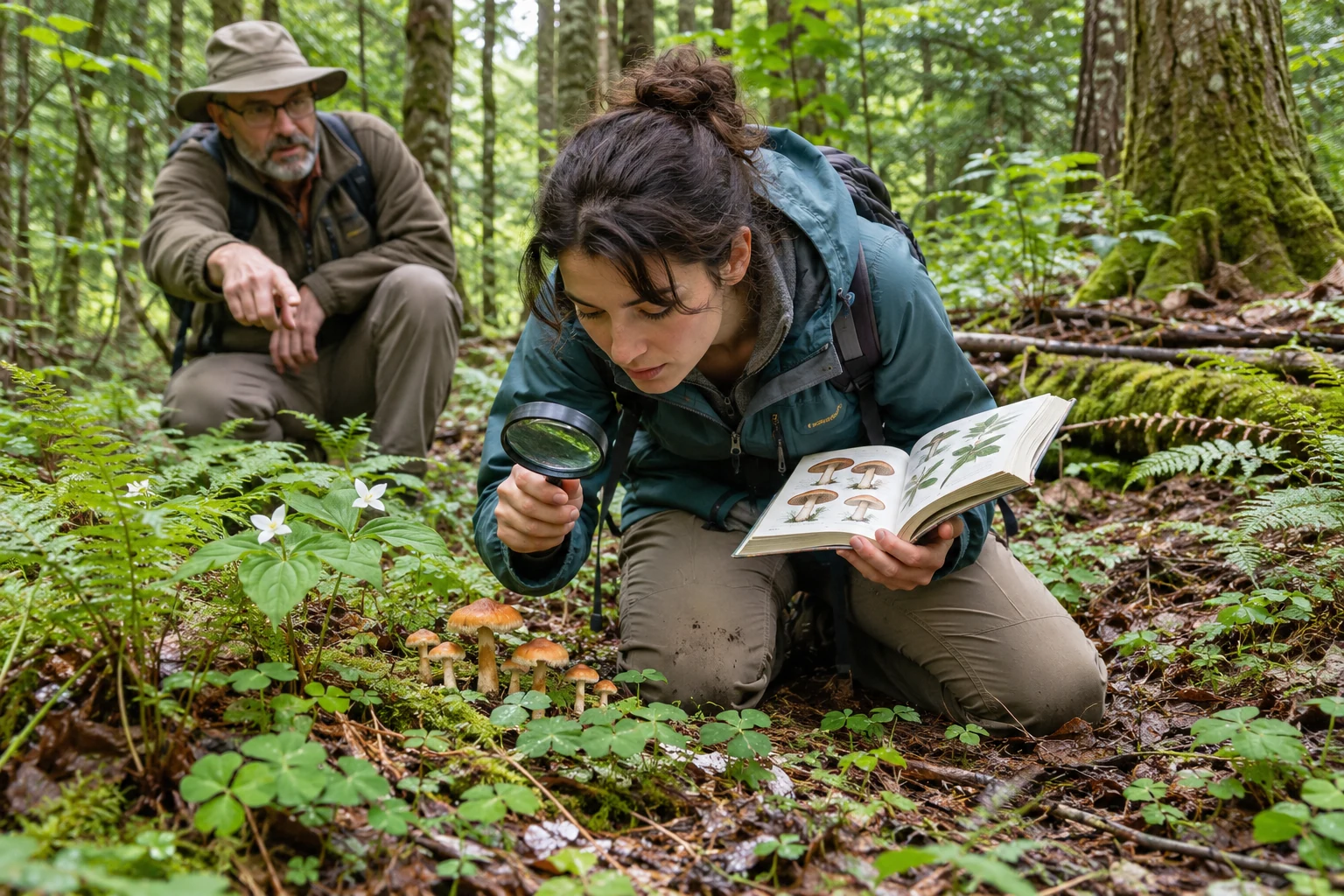
Foraging for beginners should start as a nature-study project. Choose a local class or knowledgeable qualified instructor and learn a small number of species in their actual habitat. Keep a notebook with dates, locations, photos and identification questions. The first successful outing can end with no food collected at all.
Wild plant identification involves more than matching one leaf or mushroom cap to a photograph. Seasonal stages, lookalikes and regional differences can make superficial matches misleading. Do not use a phone application, social-media comment or a general article as the sole basis for eating a wild plant or fungus. Uncertainty means leaving it uneaten.
Learn the dangerous lookalikes as carefully
Ask an instructor how the species is distinguished from similar organisms and which features must all be present. Learn what you cannot determine from a photograph alone. Missouri Department of Conservation: mushroom hunting emphasizes positive mushroom identification and rejects common folk tests. A rule such as animals eat it or cooking will make it safe does not establish edibility.
Keep children and pets from tasting specimens. Do not mix unidentified items into a food container where pieces could be confused later. If someone has eaten an uncertain wild organism, seek prompt professional poison guidance; severe symptoms require emergency help. Preserve useful identification information without delaying care or trying improvised treatments.
Check permission and the collection site
Safe foraging practice includes land access, collection rules and environmental conditions. Ask the land manager or owner what is allowed and whether permits or species-specific restrictions apply. Rules can differ between adjacent properties. A public trail does not automatically authorize harvesting everything beside it.
Consider possible contamination from traffic, chemical application, runoff or other land uses, and ask local authorities or instructors about site concerns. Identification alone does not make every collection location suitable. Learn sustainable harvesting practices for the specific species and place, and leave sensitive or protected organisms undisturbed. If you cannot resolve permission or site questions, keep the activity observational.
Keep foraging out of the emergency calorie budget
A dependable emergency food plan should not assume beginners can find enough safe wild food under stressful conditions. Season, access, skill and availability can all change. Store familiar suitable food and treat foraging education as a separate long-term skill. This reduces pressure to eat something uncertain because other supplies have run out.
After each class, review notes with the instructor and correct misunderstandings. Build a local reference collection with reliable sources, but keep it supplementary to expert learning. Only consider consumption when identification, preparation requirements, personal suitability and site safety have been properly established. The useful habit is being comfortable saying you do not know. A cautious observer gains experience without turning an identification exercise into a preventable medical emergency.
