
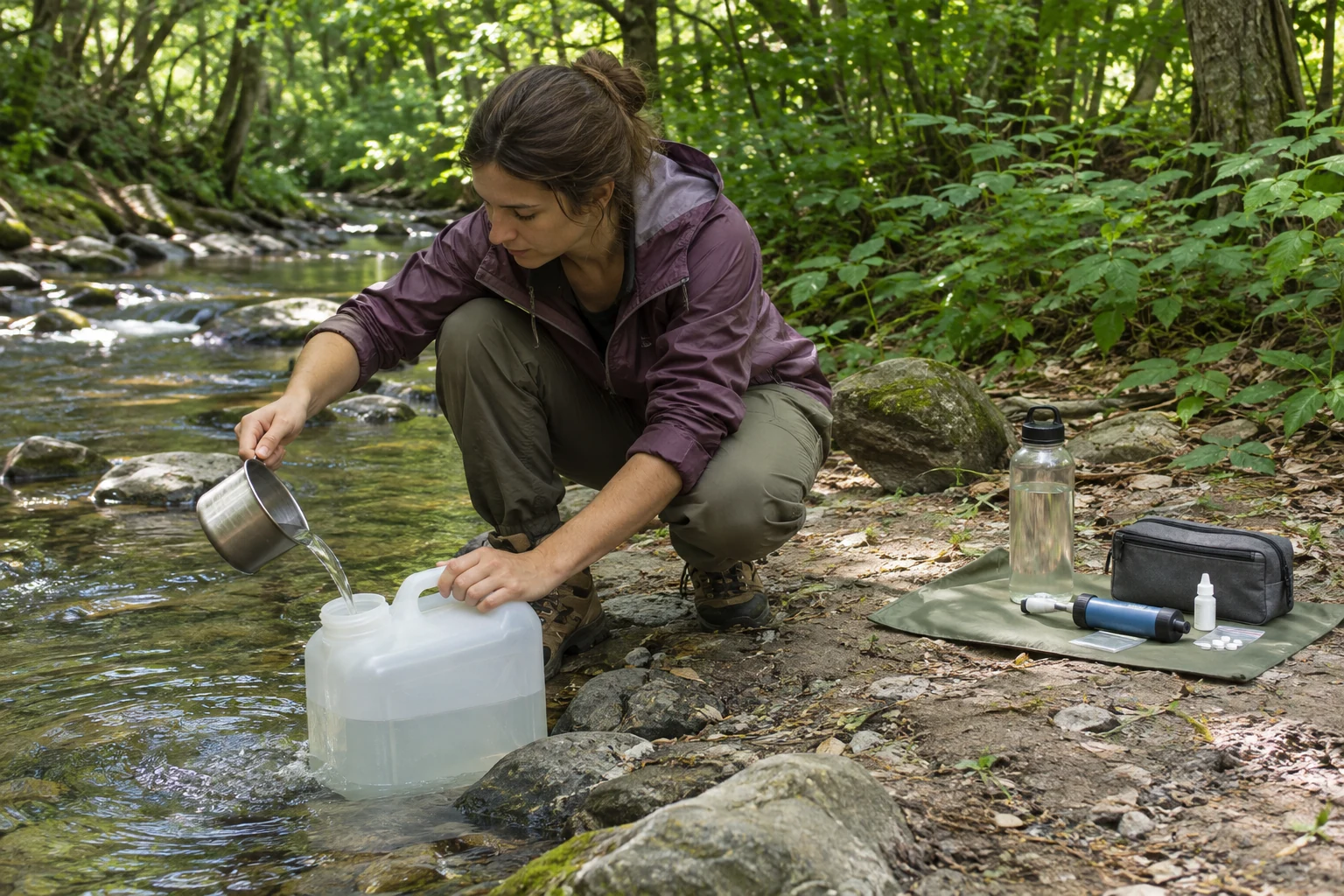
Prepping at a glance
- Verify likely sources before departure.
- Match treatment to the contamination risk.
- Turn back before reserve water becomes inadequate.
Plan water before choosing the route
Learning how to find water in the wilderness should start with reliable route information, not folklore about plants or terrain. Check maps, current land-manager reports and knowledgeable local sources for water availability. A mapped stream or spring may be seasonal, inaccessible or unsuitable. Record where you expect to refill and what alternatives exist if that location fails.
Backcountry water planning includes the group's needs, weather, activity and ability to carry water. Do not reduce the initial supply simply because a filter is packed. A treatment device cannot help at a dry source. For routes with uncertain water, choose a safer itinerary or obtain qualified local advice before departure.
Inspect sources without taking new risks
Reach water only by a safe, lawful route. Avoid steep banks, unstable edges or crossings beyond your ability. Look for current advisories and obvious reasons to reject a source, while recognizing that clear appearance does not establish safety. Do not assume moving water is automatically safe or that a pleasant taste rules out contamination.
CDC: emergency water treatment explains emergency treatment limits, including the need for an alternative when fuel or toxic chemicals may be present. Ordinary outdoor treatment is not a universal answer to pollution. If you cannot identify a suitable source, use the reserve and planned alternative rather than experimenting because the group has already traveled too far.
Use a complete treatment process
Outdoor water treatment must match the risks and the product's documented capabilities. Read the instructions before the trip, including any required additional treatment, maintenance and storage restrictions. CDC: choosing home water filters explains that different filter types address different contaminants. Avoid treating a taste-improving filter as equivalent to a system intended for microbial hazards.
Keep untreated water containers and clean collection equipment separate. Practice the entire process at home with an appropriate source and the actual equipment so you understand the effort and time involved. Label components clearly and protect the clean outlet from contamination. Carry instructions offline and know what damage, freezing or other conditions would require you to stop relying on the product.
Set a reserve and turnaround decision
Before starting, agree on the point where the group must turn around or take an alternate route if a source is unavailable. This should leave enough margin to reach known water safely; it is not a challenge to see how little you can tolerate. Check progress during the trip rather than discovering the problem when every bottle is empty.
After a practice outing, record how much was carried and used, conditions encountered and whether the refill process worked. Treat those observations as information for similar trips, not a universal consumption formula. Keep food planning consistent with water availability, since some meals require additional preparation water. The most useful water skill is preserving choices through early planning and conservative decisions, supported by treatment that suits the actual source.
