
Prepping at a glance
- Learn the licensing path before transmitting.
- Find local instruction and operating practice.
- Build a station around a specific communication task.
Define why you want to learn
Ham radio for beginners is easier to approach with a concrete purpose. You might want to join local conversations, learn electronics or participate in organized community communication activities. Write that purpose down before buying a radio. A handheld device alone does not guarantee contact with distant family or emergency services.
List the people or groups you hope to reach and ask how they actually operate. Local clubs can explain common practices and available instruction. Visit a meeting or demonstration if possible. Observe how operators listen, identify themselves and exchange concise information. This gives equipment choices a context beyond promotional range claims.
Build a current study routine
A Technician license study plan should use current material for the US examination and explain the concepts behind the questions. ARRL: getting your Technician license describes the entry-level license and its focus. Learn basic regulations, operating practices and electrical principles rather than memorizing answer patterns without understanding their purpose.
Schedule short sessions and note topics that need clarification. Ask an instructor about licensing steps, current examination arrangements and when your authorization permits operation. Do not transmit merely because you have purchased equipment or passed a practice quiz. Keep records of the official process and verify the current status of your authorization before using privileges that require it.
Learn one station before adding more
Choose equipment suited to your initial task, location and budget with guidance from knowledgeable local operators. Include antennas, power, compatible charging and safe placement in the plan. Read the manual and learn how to identify settings without guessing. A more complex radio can delay learning if every basic operation requires navigating unfamiliar menus.
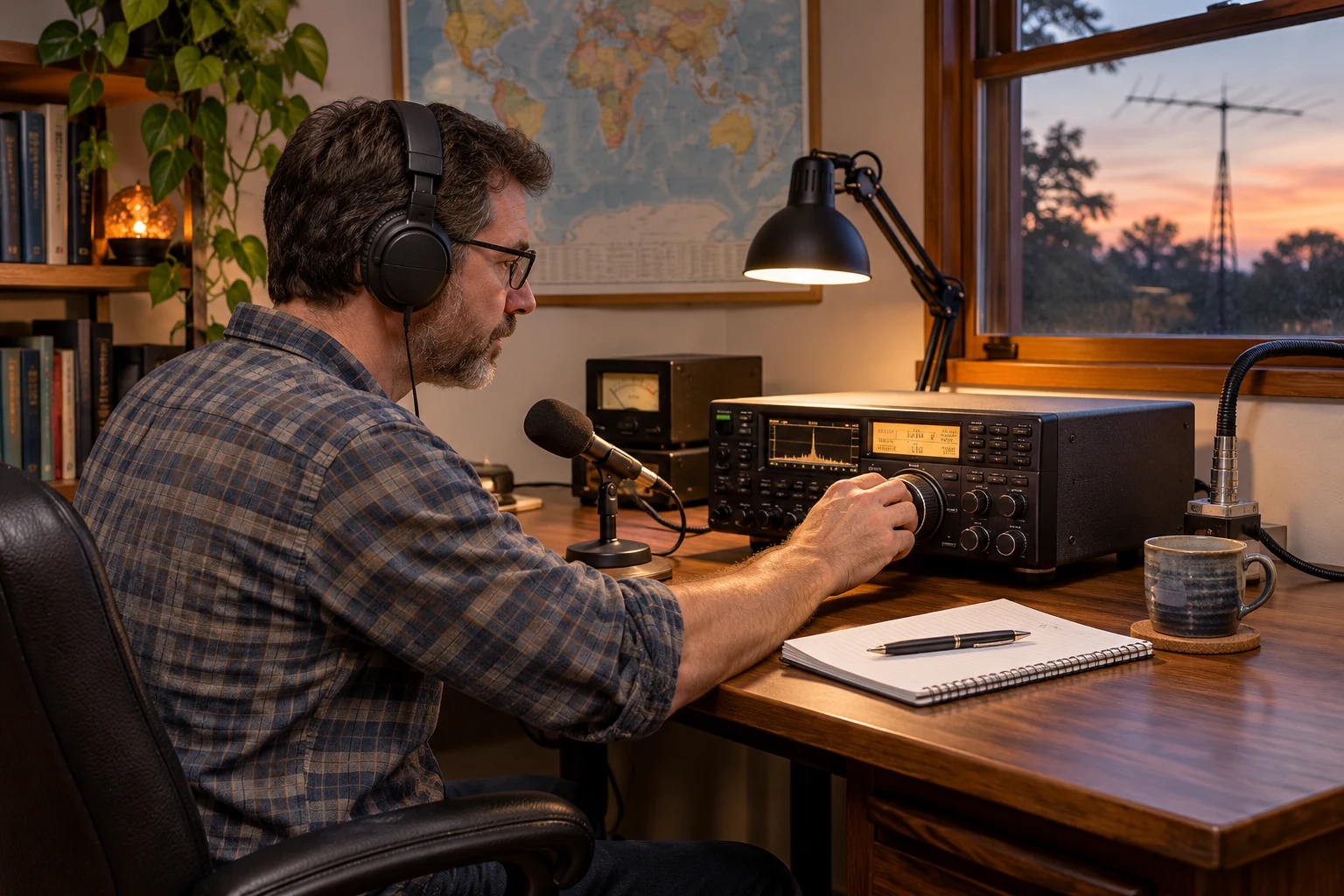
Beginner ham radio practice should be lawful and modest: listen, understand local operating patterns, then make permitted contacts once properly authorized. Practice clear speech, accurate call-sign use and concise messages. Keep a notebook of settings and successful contacts. Do not rely on a repeater without understanding its coverage, access conditions and the fact that it may be unavailable during an outage.
Connect the hobby to preparedness carefully
After ordinary operating skills become comfortable, ask established organizations about training for emergency communication roles. Follow their procedures rather than self-deploying or transmitting unsolicited traffic during an incident. A useful volunteer must fit into an organized system, not merely own a powerful transmitter.
For household planning, keep ordinary phones, written contacts and meeting arrangements as complementary tools. Test backup power safely and record how long the actual station operates under normal conditions. Review what happens if the intended contact is not listening. Continue practicing outside emergencies so the equipment remains familiar. The meaningful milestone is making clear, lawful, repeatable contacts and understanding the system's limits, not collecting radios or assuming a license guarantees communication in every disaster.
