
Prepping at a glance
- Match the service to the intended users.
- Verify US licensing and equipment requirements.
- Test actual locations instead of trusting advertised range.
Start with the people and the distance
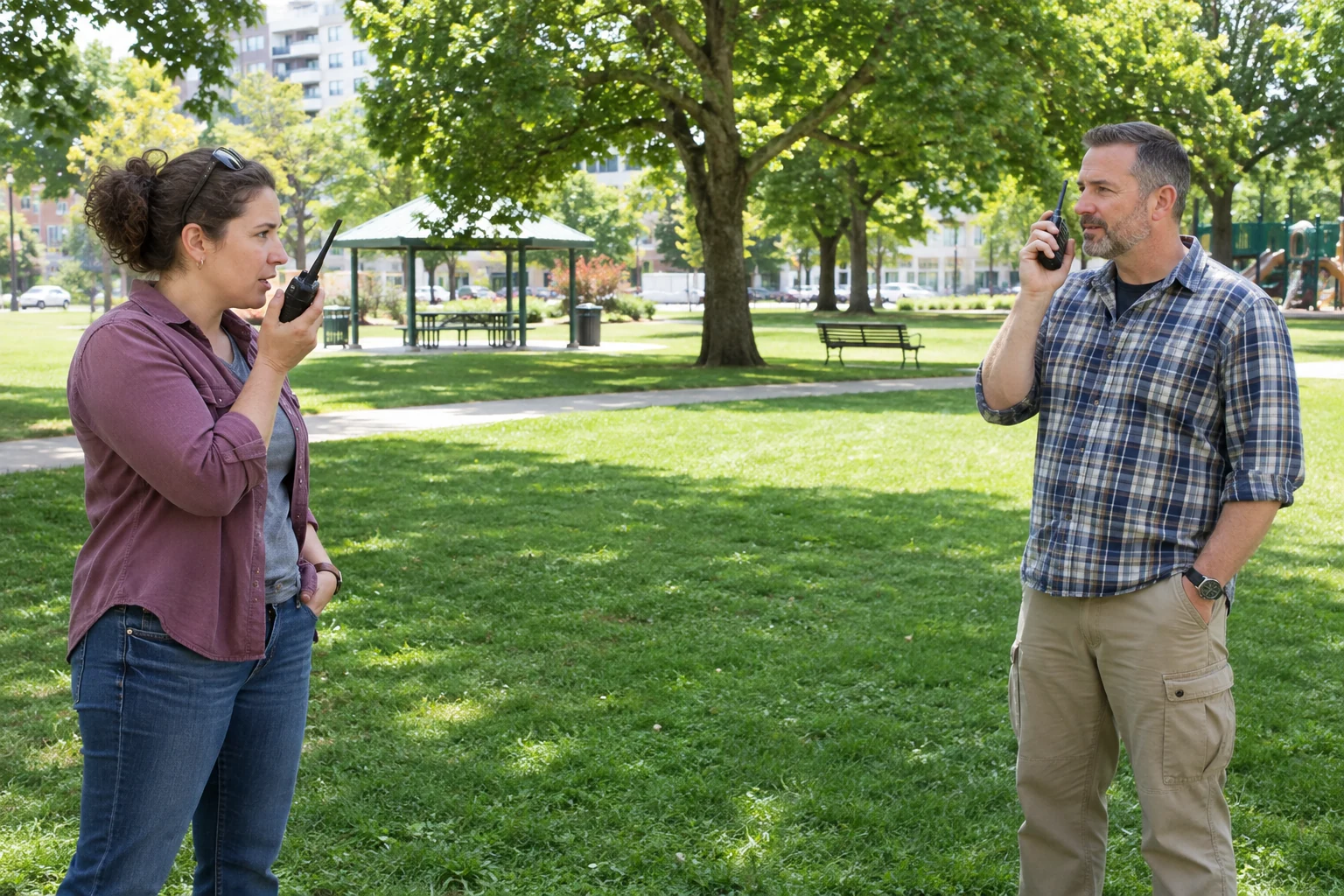
The FRS vs GMRS vs ham radio decision begins with a communication task. Are you coordinating family members around a campground, checking between nearby homes or learning a broader technical hobby? Write down who will transmit, their locations and whether everyone is willing to learn procedures and satisfy licensing requirements.
A family two way radio plan also needs a schedule and fallback. Two compatible radios do little if one person listens at the wrong time or the batteries are empty. Agree on the selected channel or frequency, plain-language messages and a next step when contact fails. Avoid making radio the only way to coordinate an important household decision.
Understand the US service distinctions
FRS is a US personal radio service operated under its applicable rules using suitable certified equipment, without an individual license application. GMRS license requirements differ: Current FCC GMRS licensing rule requires an individual license and specifies who may operate under it, including defined immediate family members. Do not assume that an unrelated group is covered by one person's license.
Amateur radio involves operator licensing and permitted operating practices. ARRL: getting your Technician license outlines the entry-level Technician path. A radio marketed as programmable does not become lawful for every service because it can tune to a frequency. Check Federal Communications Commission personal radio service rules and current FCC requirements for the intended service, equipment and operation before transmitting. Rules in other countries may differ.
Treat range as a local test
Terrain, buildings, antennas, power and interference affect whether two stations can communicate. Do not treat a package's maximum range as a promise between your actual locations. A repeater can extend some systems where permitted and available, but it is another dependency with its own coverage, access and power limitations.
Conduct lawful tests from the places in your plan and record the conditions. Use concise messages and listen before transmitting. Remember that ordinary shared-channel conversations are not private; avoid broadcasting sensitive personal details. Privacy-code labels generally do not mean encryption or an exclusive channel. Teach everyone how to recognize a busy channel and avoid interfering with other users.
Choose the learning commitment you will sustain
FRS may suit simple nearby coordination, while GMRS or amateur radio may fit users willing to manage their additional requirements and capabilities. The appropriate choice depends on the task rather than which radio appears most powerful. Budget for batteries, suitable charging, manuals and practice time as well as hardware.
Create a small contact card with the agreed settings and check-in procedure. Practice during normal conditions and keep a non-radio fallback such as a meeting location or written plan. Review licensing and equipment rules before changing the setup. A modest system the intended users can operate correctly is more useful than sophisticated equipment left unprogrammed in a box until communications fail.
