
Prepping at a glance
- Carry signaling tools where you can reach them.
- Practice without creating a false distress report.
- Combine visibility with a clear trip and contact plan.
Build a reason for someone to look
Emergency signaling methods are part of a larger plan. Before an outdoor trip, leave the route, party details, expected return and overdue-response instructions with a reliable contact. Carry appropriate communication equipment, but do not assume every location has cellular coverage or that every device connects to rescuers.
National Park Service outdoor emergency plan discusses making yourself visible and managing resources during an outdoor emergency. If you need help and can contact emergency services, provide your location and situation clearly and follow instructions. A whistle or mirror is an additional way to attract attention; it does not replace a known route, a return check-in or an appropriate communication plan.
Use sound without exhausting yourself
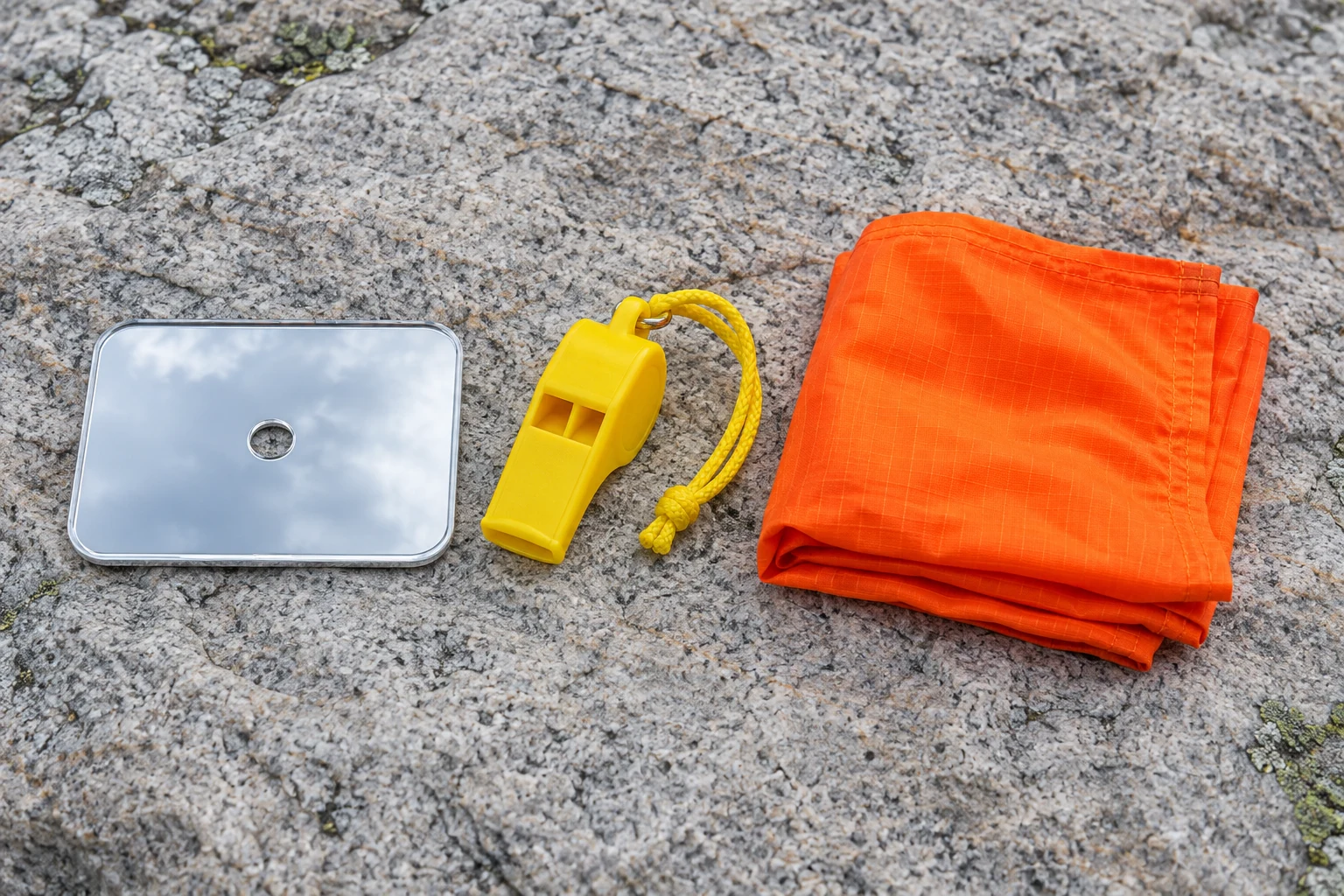
A whistle can be easier to carry and repeat than shouting over a long period. For rescue whistle practice, learn the local or activity-specific signaling conventions from a qualified source or trip leader. Store it where you can reach it if separated from the main bag. Check that clothing or other gear does not block access.
Practice in a suitable location with companions informed that it is a drill, away from places where it could be mistaken for a real emergency. Avoid blowing close to anyone's ears. Confirm that the intended user can operate it comfortably. Do not assume an attached whistle on a buckle is useful until you have inspected and tried it appropriately.
Learn visibility tools in safe conditions
Signal mirror basics include reading the device's aiming instructions and practicing with a willing observer in a safe setting. Never direct reflected sunlight toward drivers, aircraft or unsuspecting people. Do not use laser pointers as improvised signaling toys. A mirror needs suitable light and line of sight, so it belongs alongside other options rather than serving as the only plan.
Bright clothing or a visible shelter can help make your position easier to identify. Choose a safe place to display them without climbing exposed terrain or moving into a hazard. Keep the party together where appropriate. Making yourself findable should not create a new injury or cause you to abandon a known safe position.
Match the tool to the environment
A dense forest, open field and urban street offer different opportunities for sound, visibility and electronic contact. Think through the route before choosing equipment. Keep batteries maintained, instructions available and any required service plan active. For electronic SOS functions, use the manufacturer's demonstration mode rather than sending a real distress message during practice.
After a drill, check whether everyone could reach and operate the equipment and explain when to use it. Record any accessibility issue or missing instruction. In a real emergency, conserve resources, protect yourself from conditions and follow responder directions. Effective signaling is a calm effort to communicate location and need, not a reason to take risks in pursuit of a more dramatic signal.
