
Prepping at a glance
- Check current restrictions before every session.
- Prepare extinguishing supplies before ignition.
- Keep shelter and food plans that do not depend on fire.
Check permission and conditions first
Fire starting for beginners begins with a decision about whether a fire is allowed and appropriate. Check current land-manager restrictions, local rules and conditions before practice. A designated ring does not automatically mean fires are permitted that day. Wind, dry vegetation or limited water can make an otherwise familiar location unsuitable.
Choose a supervised learning setting and a small objective, such as understanding how approved tinder and kindling behave in an established fire area. Do not practice during a warning period or near buildings, overhanging vegetation or combustible shelter materials. If you cannot establish a safe setup, postpone the fire portion and review the equipment without lighting anything.
Prepare the entire session before ignition
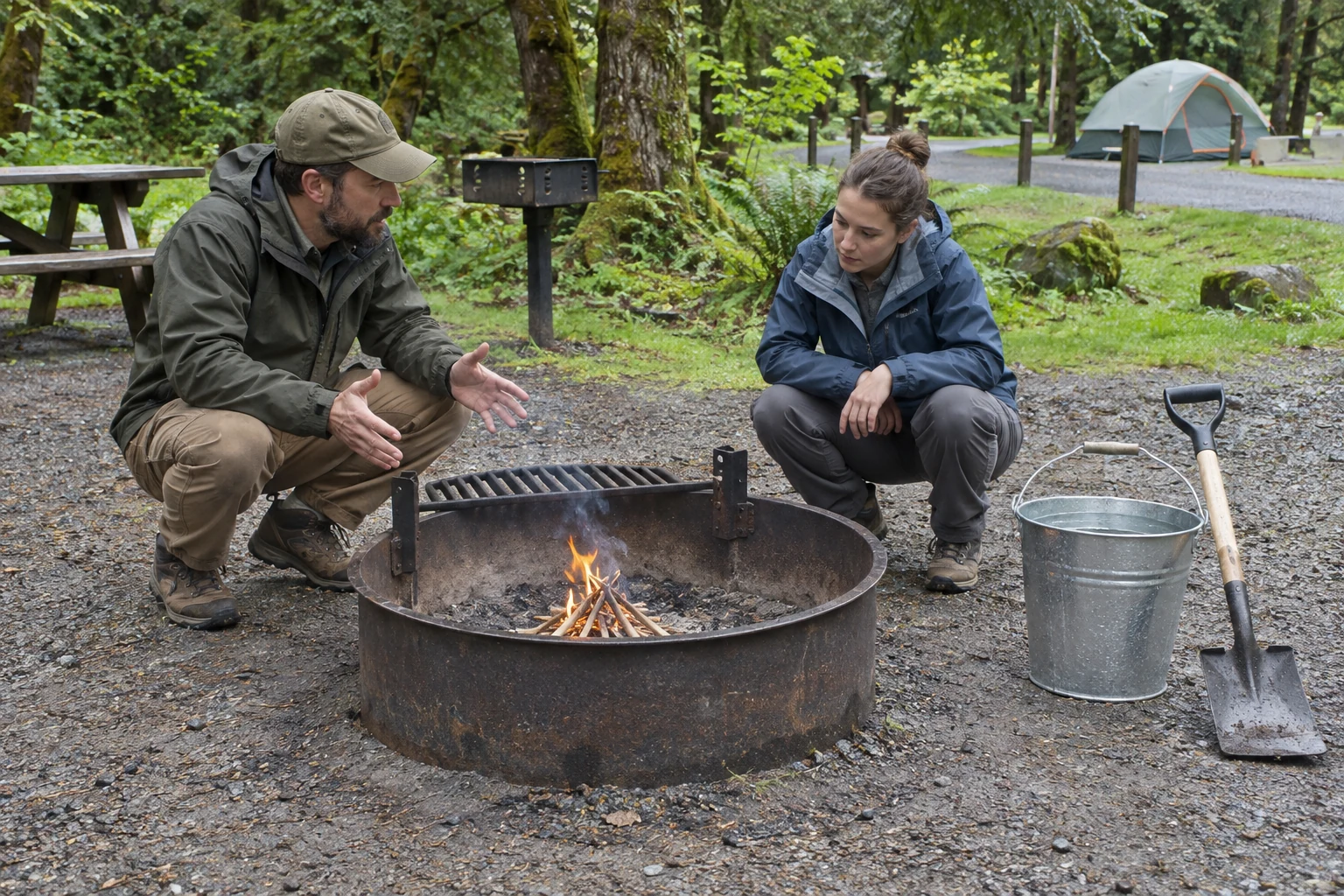
Safe campfire practice includes the end of the session before the beginning. Have suitable water and tools ready, identify the person supervising and keep children and pets appropriately separated. Minnesota DNR campfire safety describes basic campfire precautions and extinguishing practices. Follow the site's rules and the instructions for any ignition tool you use.
Gather permitted fuel of suitable sizes so you are not leaving an active fire unattended to search for more. Do not use gasoline or other improvised accelerants. Start with a small controlled exercise under experienced instruction. Keep clothing, loose hair and stored gear away from flame and sparks. A larger flame is not evidence of better skill.
Learn the process without making it a dependency
Observe how the arrangement affects airflow and how different sizes of dry fuel behave. Add fuel deliberately rather than smothering a small flame with large pieces. Ask an instructor to explain why an attempt fails instead of repeatedly adding ignition material. Stop if conditions change or the fire cannot be controlled within the approved area.
For preparedness, keep no-cook food, suitable clothing and shelter options so warmth and meals do not depend on successfully making a fire. Fuel may be wet, restricted or unavailable. Never use a campfire, grill or improvised combustion setup indoors, in a vehicle or inside an enclosed shelter. Outdoor fire skills are not a substitute for safe home backup arrangements.
Finish with an extinguishing routine
Create a campfire extinguishing checklist using the land manager's instructions. Allow enough time and water to extinguish the fire completely, including hidden hot material; a session is not finished when visible flames disappear. Follow the recommended wetting and stirring process and confirm the remains are cold before leaving. If you cannot complete that safely, get help rather than abandoning it.
After practice, discuss ignition, supervision, fuel choices and shutdown separately. Record what equipment was missing and what conditions would have required cancellation. Clean and store reusable tools according to their instructions. The valuable skill is managing the entire process responsibly, including declining to light a fire when the setting does not support one.
