
Prepping at a glance
- Choose a safe site before choosing a pitch.
- Practice with the exact tarp, cord and anchors.
- Keep insulation and weather protection as separate needs.
Define a modest practice objective
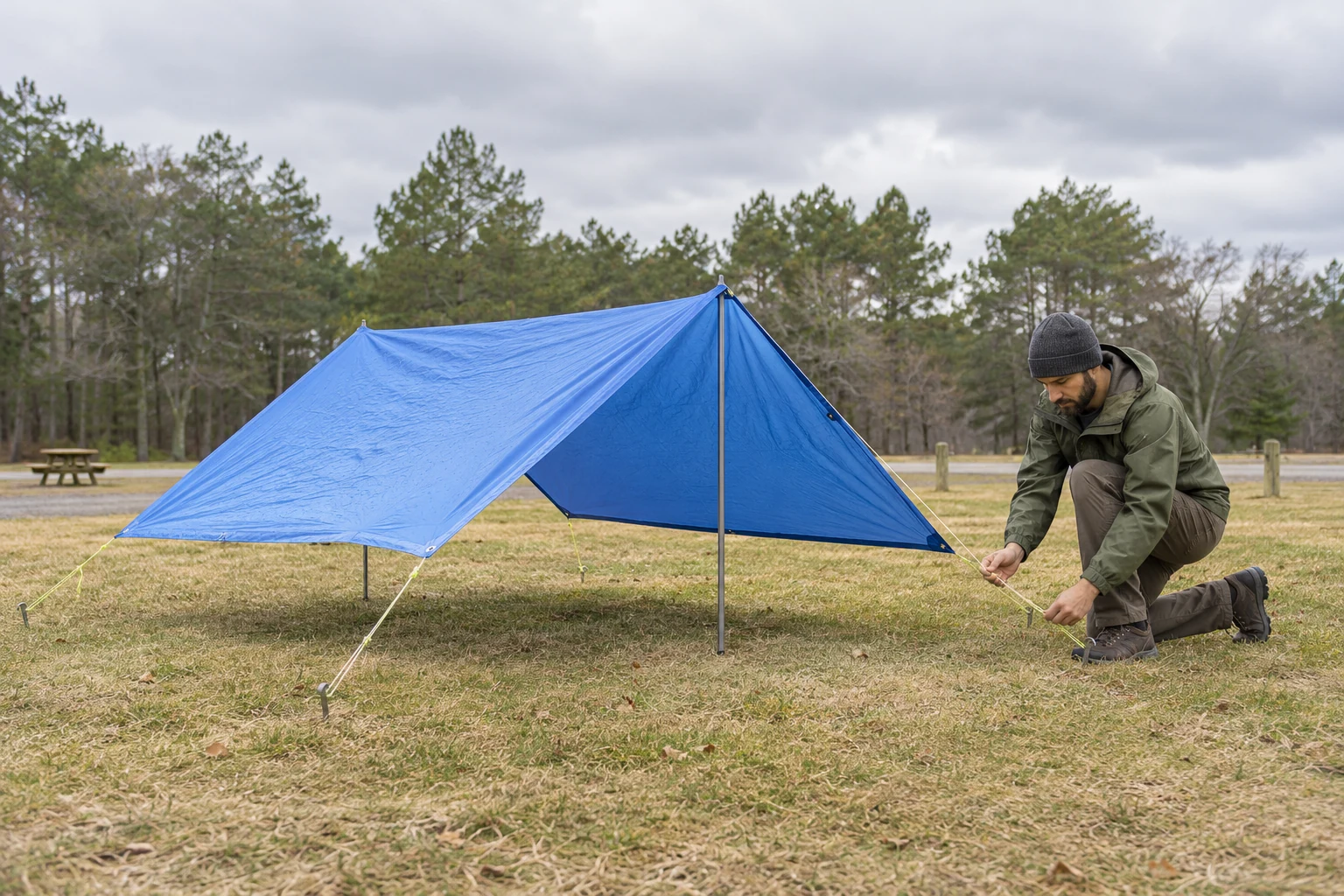
An emergency tarp shelter can offer useful weather protection in appropriate conditions, but a beginner should learn its setup before relying on it. Start in a lawful backyard or easy campsite on a mild day with an immediate indoor or vehicle fallback. The first goal is a stable, repeatable setup that you understand, not surviving a difficult night.
National Park Service outdoor gear checklist includes shelter within outdoor preparation. A beginner emergency shelter also needs clothing, ground protection and insulation appropriate to the environment. Do not assume a roof-shaped sheet alone makes a safe cold-weather sleeping system. Plan the whole situation and use instruction suited to the conditions you expect.
Inspect the site first
Look above, around and beneath the proposed setup. Avoid damaged or dead overhead branches, drainage channels, unstable slopes, exposed lightning locations and places where water could collect. Follow the land manager's rules and leave sensitive vegetation undisturbed. An attractive flat patch may still be a poor site if it lies in a drainage path.
Think about wind and likely rain direction, while recognizing that weather can change. Keep entrances and access routes clear. Do not place a shelter where you would have to cross a hazard to leave it. If conditions exceed your experience, choose established shelter or end the outing rather than trying to solve every problem with a more elaborate tarp pitch.
Use the equipment as designed
For tarp shelter practice, lay out the tarp, compatible cord and intended anchors before beginning. Read instructions for attachment points and avoid concentrating loads on weak fabric. Practice a simple pitch recommended for that product, with help from a qualified instructor if needed. Keep guylines visible to prevent trips and protect trees where anchors are permitted.
Check that the shelter sheds water rather than forming deep pockets and that attachments remain secure under ordinary hand checks. Do not suspend people or heavy loads from improvised lines. Never cook or use fuel-burning heating equipment inside a tarp enclosure. Shelter fabric and a low roof introduce hazards that a practice setup should not create.
Rehearse access and teardown
Place the sleeping or sitting arrangement inside and try entering without disturbing the lines. Reach the light, water and rain layer from the intended position. If the setup is cramped, fix the arrangement while conditions are easy. Practice taking it down without losing small stakes or leaving cord behind.
Dry and inspect equipment before storage, following its care instructions. Write a short sequence or keep a simple diagram with the kit so another person can help. Repeat the exercise in a different safe location before attempting more demanding conditions. The useful outcome is knowing how long setup takes, which parts are missing and when a tarp is insufficient. That judgment is as important as remembering a knot or achieving a neat-looking pitch.
