
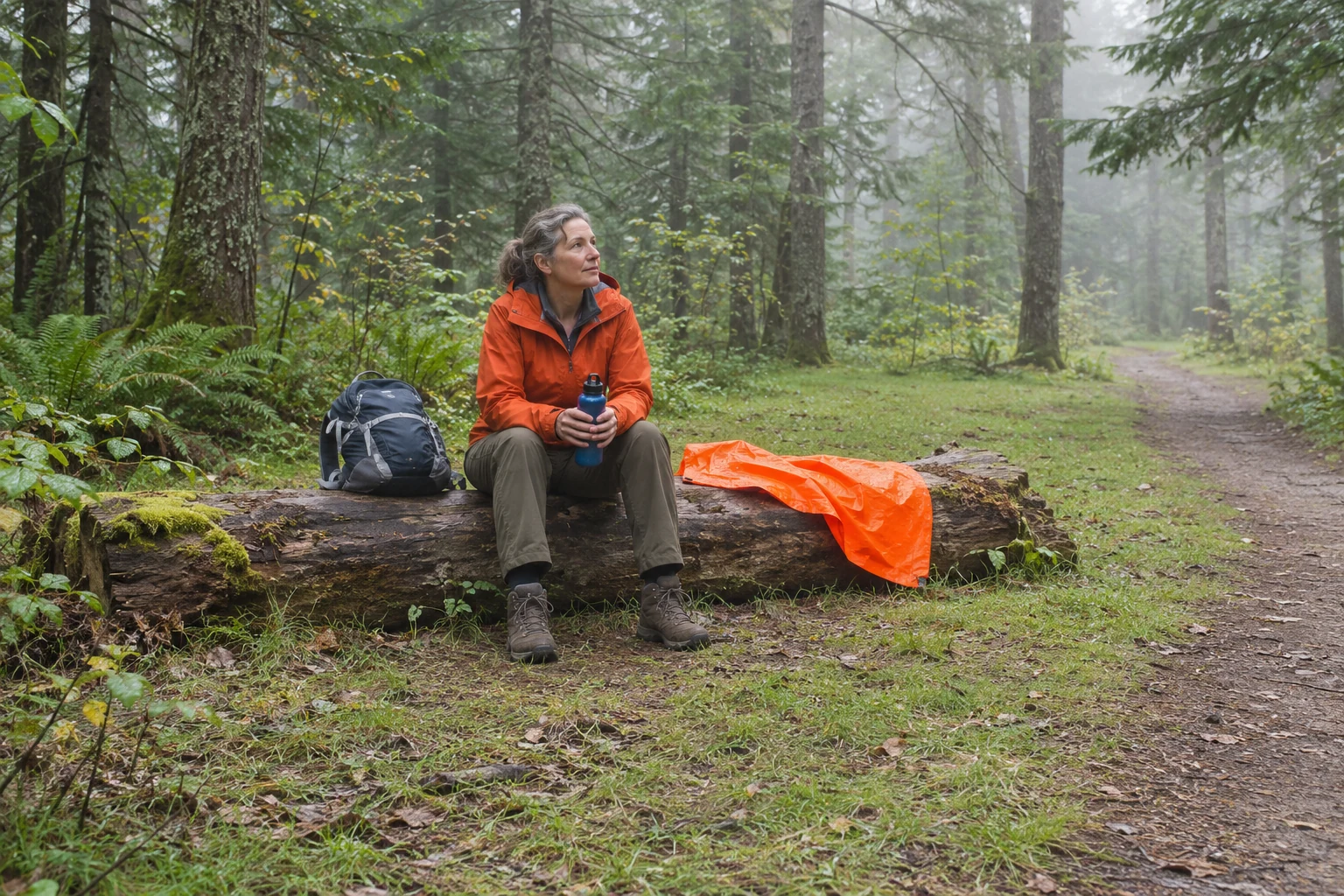
Prepping at a glance
- Share a route and overdue-response plan.
- Stop and assess when the route no longer makes sense.
- Conserve resources and make your location easier to find.
Plan the return before the start
Thinking about what to do if lost hiking is most useful before reaching the trailhead. Prepare a hiking trip plan with the intended route, party members, transport details, expected return and a named person who knows what to do if you are overdue. Tell that person when you return or change plans so they do not have to guess.
Check conditions, closures and the route's suitability for everyone in the group. Choose a turnaround time with room for delays. Carry appropriate navigation, weather protection, water and communication tools, and know how to use them. National Park Service: hike smart emphasizes planning for lost or injured companions rather than assuming every outing proceeds as intended.
Recognize uncertainty early
A lost hiker emergency plan needs a trigger: the expected junction is missing, landmarks no longer match, daylight is running short or someone cannot identify the route. Stop before continuing farther on an assumption. Bring the group together in a safe place and assess your location, condition, remaining daylight and immediate hazards.
Check the map, recent route and available location information calmly. Do not split the group to try several directions, and do not follow a stream or other feature on the assumption that it must lead safely to a road. Terrain can introduce cliffs, crossings and other hazards that are invisible from the decision point.
Seek help and make yourself findable
Follow National Park Service outdoor emergency plan for a lost-person response, including conserving resources and improving visibility. If you can contact emergency services, provide the best available location, party size, injuries, conditions and supplies. Follow their directions. A location pin or coordinates should be read carefully, including the coordinate format if relevant.
If you cannot confidently resolve your position, avoid wandering and expanding the search area unless remaining there presents immediate danger or responders instruct otherwise. Move only as needed for safety, and communicate any relocation when possible. Keep signaling equipment accessible, protect yourself from weather and organize supplies so you know what is available.
Turn the plan into a simple rehearsal
At home, practice finding your device's location display and explaining it to a companion without placing a real emergency call. Review how to use the whistle or signaling equipment you carry. Pack the gear where it can be reached if the main bag is awkward to open. Agree how the group will stay together at junctions.
After each ordinary hike, compare the actual timing with your plan and note confusing intersections. Adjust future routes to the group's demonstrated ability. The purpose is not to become comfortable taking greater risks because rescue equipment is present. It is to make conservative decisions earlier and give rescuers clearer information if help becomes necessary. A reliable return check-in is part of the outing, not an optional courtesy afterward.
