
Prepping at a glance
- Pack the actual load, including water, before fitting.
- Use the correct torso and strap adjustments.
- Reduce weight when the bag changes balance or causes pain.
Fit the journey before filling the bag
Learning how to pack a bug out bag begins with the evacuation plan. Decide where you expect to go, how you will travel and which items must remain with you. A vehicle trip to an indoor destination may not require the same load as a planned outdoor overnight. Avoid adding camping gear merely because the pack has unused space.
Lay the proposed contents out by purpose. Separate immediate-use items, personal essentials, weather protection and shared supplies. Remove duplicates with no defined role. Include the water and clothing you actually intend to carry before judging bug out bag weight; an empty-bottle demonstration understates the real task.
Organize for stability and access
Keep the load secure and avoid hard objects pressing into your back. Use the bag manufacturer's packing guidance for its design and intended use. Put often-needed items where they can be reached without scattering everything onto the ground. Protect documents and sensitive supplies appropriately, and keep liquids from leaking into other equipment.
A small labeled pouch can hold a light, contact card and charging cable. Personal medication and accessibility needs deserve deliberate placement, following their storage requirements. Secure loose straps and avoid dangling gear that catches on doors or shifts while walking. Do not attach so much outside the pack that the stated capacity becomes an excuse for an unstable load.
Adjust the pack in the correct sequence
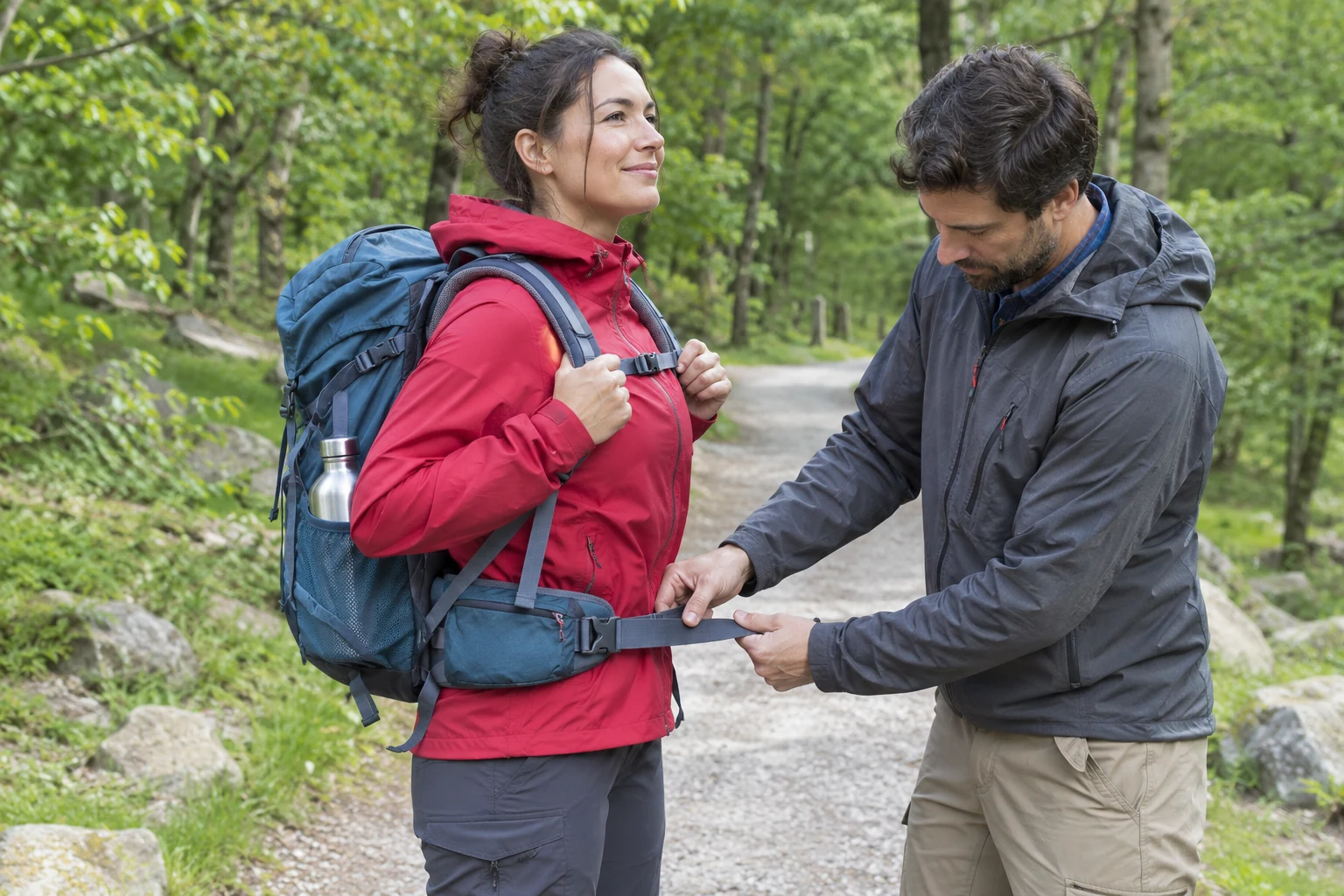
A backpack fit check should use the manufacturer's process for the exact model. Osprey: fitting your backpack describes torso, harness and hip-belt considerations for Osprey packs; other designs may differ. Adjustments cannot make every pack suitable for every body, so seek a knowledgeable fitting if the load remains uncomfortable.
Try the pack over the clothing you expect to wear. Check that closures can be managed, breathing is unrestricted and the bag does not interfere with needed mobility aids. Ask someone to observe the fit while you stand and move normally. Avoid simply tightening every strap as far as possible; that can hide a sizing problem without resolving it.
Walk, retrieve and revise
Start with a short, easy walk close to home, then practice sitting, turning and passing through an ordinary doorway. Stop if the bag causes pain, numbness, poor balance or unusual strain. Reduce the load or change the carrying arrangement rather than treating discomfort as a training requirement. A wheeled option or assistance may better fit some evacuation plans.
During the practice, retrieve a rain layer or light and put it away again. Note what was difficult to find and whether repacking changed the balance. Reweigh after changes and update the contents list. Repeat when seasons or personal needs change. The successful bag is one the intended person can manage and understand, with essentials accessible and enough margin to cope with an ordinary delay.
