
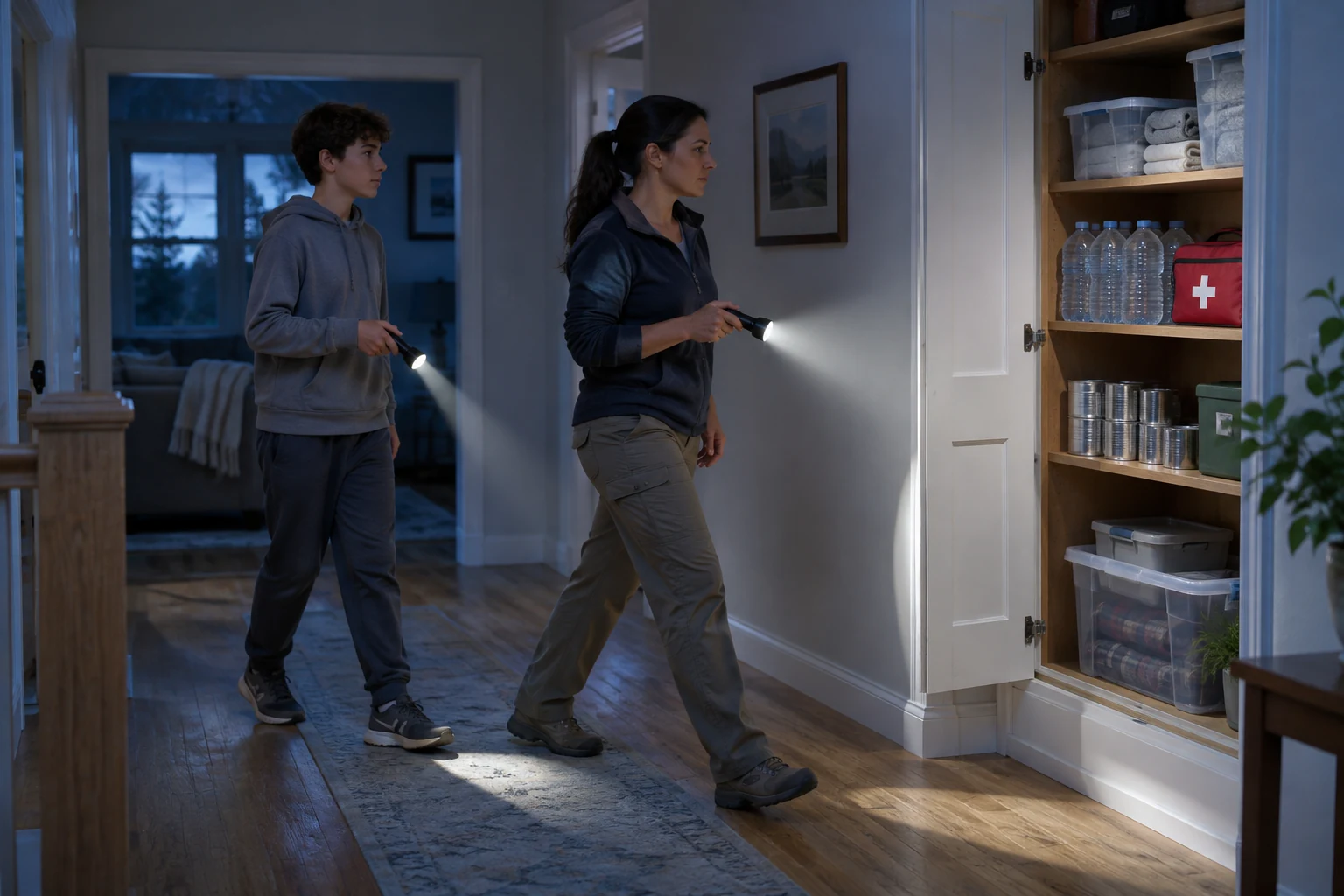
Prepping at a glance
- Simulate unavailable services rather than creating hazards.
- Keep medical and safety equipment operating.
- Turn each discovery into a specific correction.
Set boundaries before the weekend
A power outage practice drill does not require turning off the main breaker or disabling the refrigerator. Tell everyone the exercise's purpose and duration, and agree that anyone may stop if uncomfortable. Keep smoke and carbon monoxide alarms, medical devices and other critical systems operating normally. Preserve safe indoor temperatures and normal access to help.
For a safe blackout simulation, mark selected conveniences as unavailable while leaving the real systems intact. You can choose not to use room lights or the microwave for an hour without disconnecting electricity. Plan around household medical, accessibility and caregiving needs. The exercise should never make a vulnerable person prove they can tolerate unsafe conditions.
Run three ordinary tasks
Begin by finding a light and receiving a weather update with your planned equipment. Next, prepare a familiar meal using only the safe options in your outage plan. Finally, send a practice family check-in and locate emergency contacts on paper. Department of Energy: home emergency preparedness guide supports battery lighting as an outage option; use safe equipment rather than substituting candles or indoor fuel-burning devices.
Keep notes about access and usability. Did the lantern require batteries stored elsewhere? Was the manual opener missing? Could someone with limited hand strength open the food? These observations are more useful than counting how many emergency products are on the shelf.
Add a short evening scenario
For the household outage drill, imagine the interruption continues until tomorrow. Discuss drinking water, hygiene, food safety, phone charging and temperature management without actually disrupting those needs. Identify the point at which the household would relocate and where it could go. Do not improvise medical-device runtime estimates; use the care team's established plan.
Try finding clothing and bathroom supplies using the planned lights while keeping walking routes safe. Check whether children or pets need a calmer arrangement. If the exercise becomes stressful, shorten it and discuss the problem. A useful drill builds understanding; it does not reward endurance, sleep deprivation or refusing to use a normal service when it is needed.
Debrief before shopping
Ask each participant for one thing that worked and one thing that was difficult. Separate missing equipment from missing information. A labeled cable may solve a charging problem without buying another power station; a printed contact card may solve a communication gap without another radio. Assign owners and dates to important corrections.
Restore the normal setup, recharge used equipment and replace consumed supplies. Update the inventory so the kit is not left weaker after practice. Massachusetts emergency management: family emergency plans encourages practicing household plans; repeat a small exercise after major changes rather than waiting years. Keep the next drill focused on the unresolved task. Over time, these modest sessions create a plan the household can follow because it has already tried the essential steps in safe conditions.
