
Prepping at a glance
- Confirm rules before purchasing birds or a coop.
- Budget feed, bedding, maintenance, and veterinary support.
- Arrange daily care and a backup caretaker.
Check permission and the long-term commitment
Raising backyard chickens for beginners begins with local rules, not a chick order. Ask the relevant authority about permitted flock size, roosters, setbacks, coop requirements, and any permit. Check lease or association rules separately. Selling eggs can introduce additional requirements, so do not assume permission to keep birds also authorizes a sales operation.
The University of Minnesota Extension flock guide covers basic care and the importance of local regulations. Decide why you want chickens and how you will care for them over their lives, including periods of reduced laying. Eggs are an output of animal care, not a reason to ignore its ongoing obligations.
Calculate backyard chicken costs as a complete system
Price the coop, protected run, suitable feeders and drinkers, feed storage, bedding, cleaning supplies, and any required permits. Add recurring feed and bedding, repairs, veterinary consultation, and care while you travel. Get current local quotes rather than relying on an old online estimate. A cheap coop that needs extensive reinforcement may not be the lowest-cost option.
Size housing for the actual birds and management plan. UMN gives a reference minimum of three to five square feet of indoor space per bird; local requirements, breed, climate, outdoor access, and welfare needs may require more. Check a complete housing plan with a knowledgeable local source instead of using one number as the entire design.
Plan daily chicken care and household hygiene
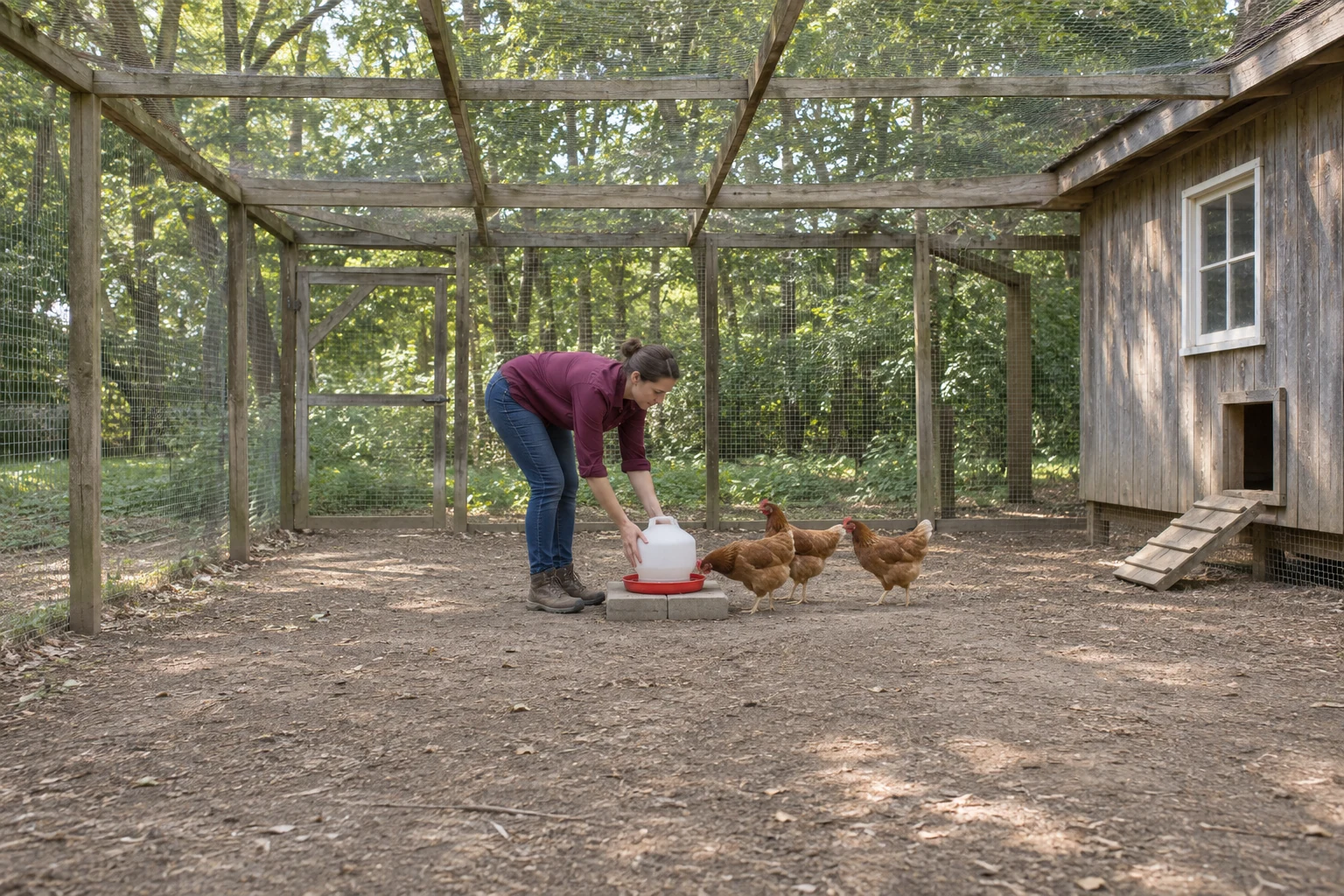
Provide appropriate balanced feed, continuous access to clean water, secure shelter, and regular observation. Write a morning and evening checklist that includes the condition of birds, feed and water, enclosure security, and egg collection. Plan bedding and waste management before they become a neighbor or sanitation problem.
Follow the CDC backyard-poultry hygiene guidance. Wash hands after handling birds or their environment, keep poultry and their equipment out of household food-preparation areas, and do not kiss or snuggle birds. Children younger than five should not handle poultry. Healthy-looking birds can still carry germs, so visible cleanliness does not replace routine precautions.
Prepare for absence, illness, and extreme weather
Identify a veterinarian or appropriate poultry-health resource before an urgent problem. Learn normal flock behavior so changes are easier to notice, and follow current local animal-health advice for disease prevention. Keep new birds and visitors within a planned biosecurity routine rather than adding them casually.
Train a backup caretaker using the written checklist. Show where feed, water supplies, cleaning tools, contacts, and shutoff or access points are located. Plan for heat, freezing weather, and power interruptions affecting any equipment. Start with a modest flock that fits your housing and schedule. Expand only after you have demonstrated reliable care through different weather and an ordinary busy week.
