
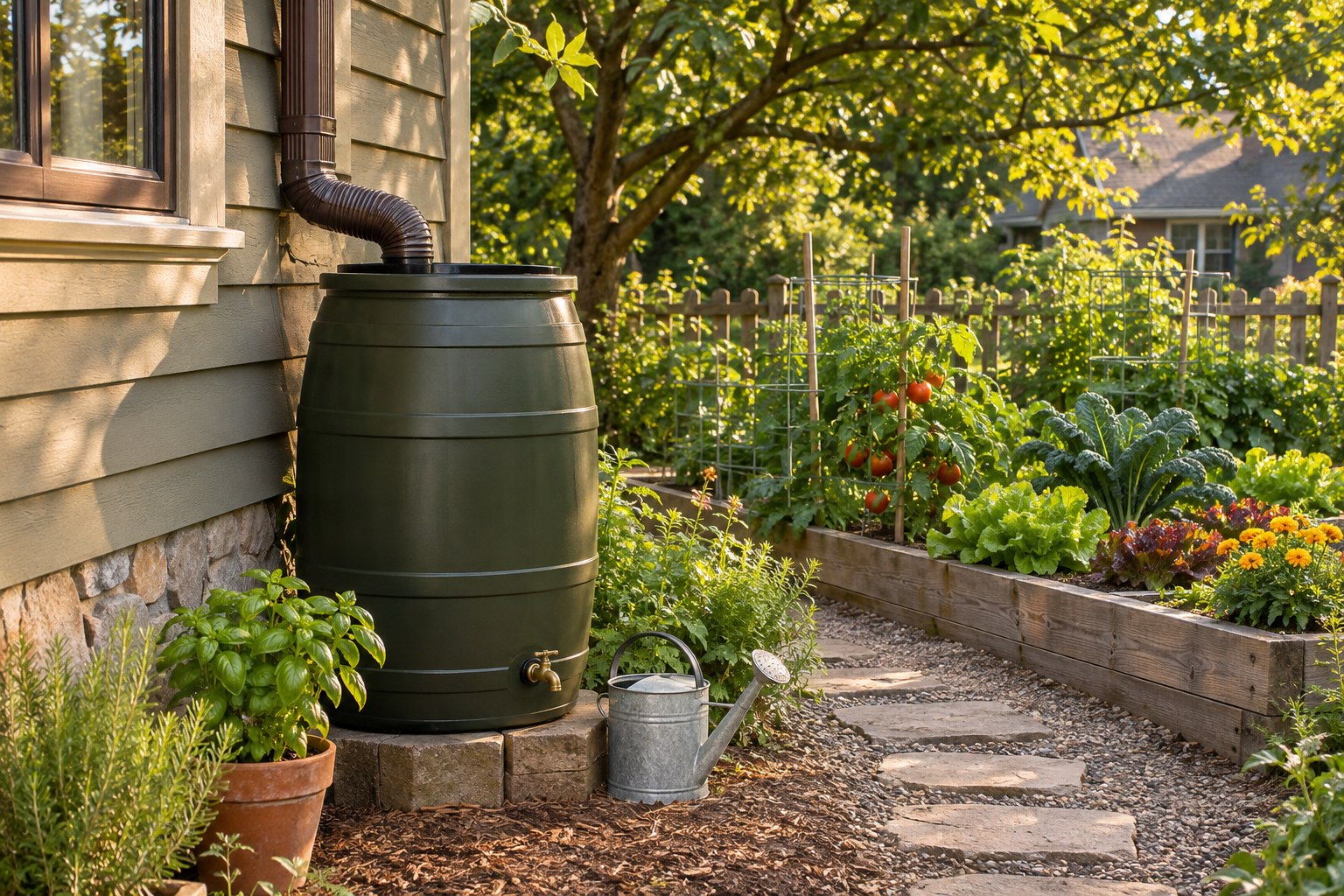
Prepping at a glance
- Check local rules and the suitability of the roof surface.
- Plan a stable base, screened openings, and overflow.
- Treat collected garden water as nonpotable.
Define the use and check the local rules
Rainwater collection for beginners should start with a limited goal, such as supplying some garden irrigation. A simple barrel is not a drinking-water system. Label it accordingly and keep it separate from potable plumbing. Check local collection rules, property requirements, and any restrictions before modifying a downspout.
The Oregon State University Extension rainwater guide explains collection components and how roof materials affect appropriate use. Its legal discussion is specific to Oregon, so confirm the rules where you live. Ask local extension or water-quality staff about using runoff from your particular roof on edible crops rather than assuming all surfaces are equivalent.
Draw the rain barrel setup before installation
Sketch the roof drainage path, inlet, barrel, outlet, and overflow route. The base must safely support the filled container and remain stable in wet conditions. Avoid improvised high platforms or arrangements children could climb. Choose a container designed for the purpose with a secure cover and protected openings that prevent access by children and animals.
Plan screening and maintenance access so debris and mosquitoes do not turn the system into a nuisance. Place the outlet where you can fill a watering can or connect the intended delivery method without moving the barrel. Check the manufacturer's instructions for fittings, support, and winter handling before installation. Keep the arrangement clear of emergency access and ordinary walkways.
Give overflow a safe destination
Garden rainwater harvesting must handle water after the container is full. Direct overflow through an appropriate route that avoids foundations, erosion, neighboring property, and places where people could slip. Do not assume a small hose will manage every storm or that a barrel replaces the building's drainage system.
Inspect the arrangement during a moderate rainfall from a safe location. Watch for backed-up gutters, leaks, splashing near the house, or water escaping somewhere unintended. Address those problems before relying on the setup in heavier weather. If the roof drainage is already problematic, correct that issue with suitable professional help rather than adding storage to a failing system.
Match expectations to rainfall and upkeep
A barrel's capacity is not the same as a guaranteed summer water supply. It may fill quickly in wet weather and remain empty during a prolonged dry spell. Compare your garden's needs with local rainfall patterns and the practical amount you can store. Keep another lawful water source or reduce the garden to a size you can support.
Check screens, lids, fittings, and overflow regularly. Follow the system instructions for cleaning, seasonal draining, and freeze protection. Keep records of how often the water is actually useful. Start with one manageable setup and improve it before adding more containers. The best expansion is one supported by observed use, safe drainage, and a maintenance routine the household can sustain.
