
Prepping at a glance
- Observe soil moisture instead of watering by habit.
- Fix leaks and direct water to the root area.
- Prioritize a manageable garden over an oversized planting.
Set a realistic water budget
Drought tolerant vegetable gardening does not mean growing food without water. It means matching crops and garden size to local conditions while reducing avoidable waste. Before planting, identify your reliable water source, any seasonal restrictions, and the effort required to deliver water to the beds. A larger garden may produce less useful food if you cannot maintain it through the driest period.
Review past summers and ask local extension staff about crops and varieties suited to your region. Do not choose a vegetable solely because a seed catalog calls it drought tolerant. Establishment, flowering, and harvest needs still matter, and tolerance in one setting does not guarantee performance in another.
Measure the problem before adding more water
A water efficient vegetable garden starts with checking the soil and the watering system. Look for leaking connections, runoff before water penetrates, dry pockets, and areas that stay wet. Observe conditions near the root zone using a suitable method rather than deciding solely from the surface appearance.
The University of Minnesota Extension watering guide explains how water stress affects vegetables and why delivery matters. Adjust irrigation to soil, weather, and crop stage. A fixed timer can be helpful, but it does not remove the need to inspect the bed after rain or during unusual heat.
Write down rainfall and irrigation observations so changes are based on patterns rather than one dry afternoon.
Reduce losses and group similar needs
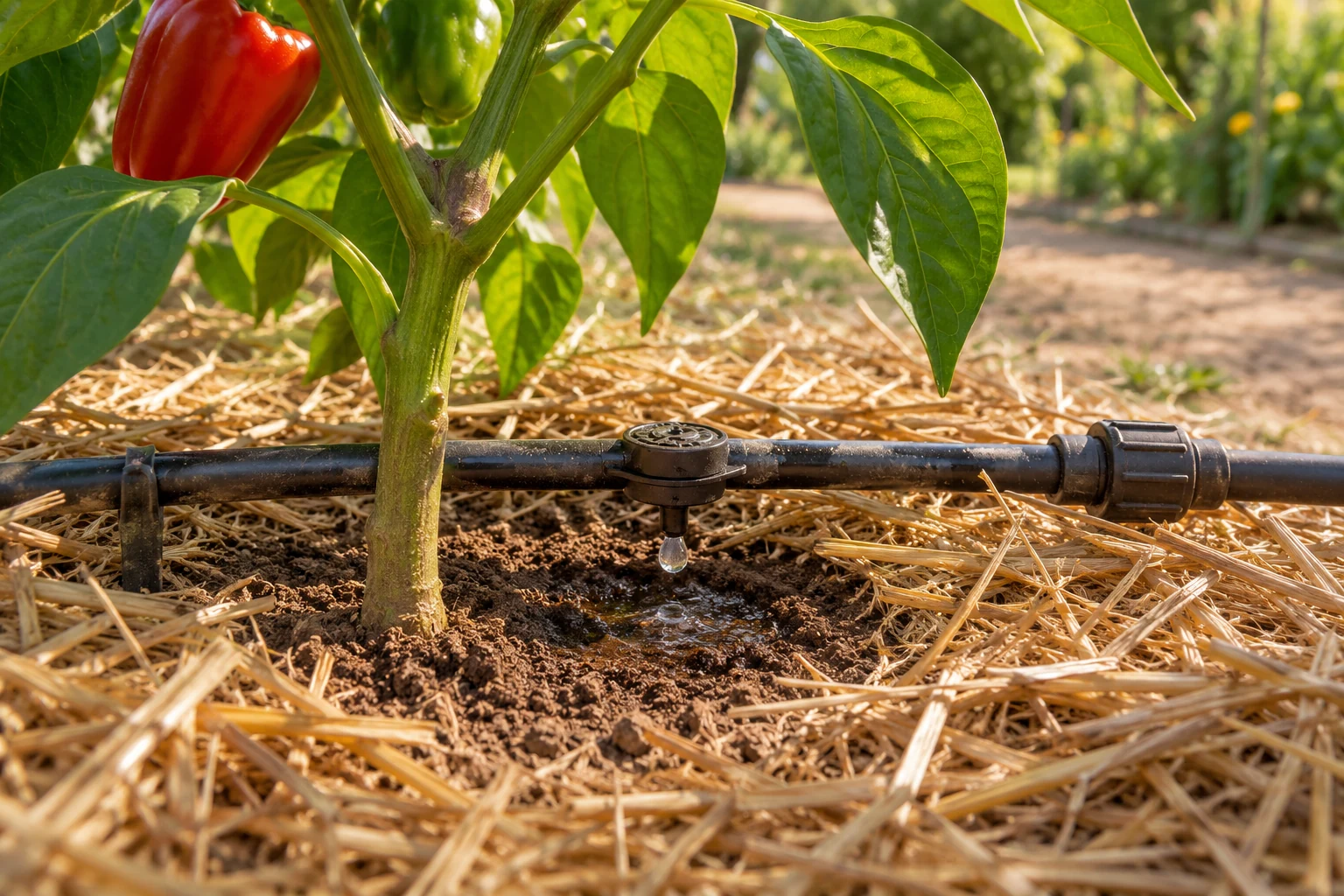
Use a suitable irrigation arrangement that delivers water where plants need it, and check that it reaches the intended area. Group crops with compatible needs when practical. Keep paths distinct so water and attention are not spent on unplanted space, and deal with weeds that compete with crops.
Mulch for vegetable gardens can reduce moisture loss when the material and timing suit the crop. Iowa State University Extension's watering guidance discusses mulch and irrigation options. Avoid covering stems improperly or assuming any available material is appropriate. Follow local advice for soil temperature, pest concerns, and the particular crop.
Prepare a dry-spell priority list
Decide in advance which plants and beds you will prioritize if water becomes limited. Consider established value, crop stage, household use, and the likelihood of a useful harvest. New plantings that cannot be supported may need to wait. Include containers in the assessment, since their watering demands can differ from in-ground beds.
Keep drinking-water reserves separate from garden planning, and follow local restrictions during shortages. Record which crops performed acceptably with the resources you could provide. At season's end, reduce or relocate the most demanding low-value areas before buying more equipment. A drought-ready garden is one whose scale and routine match a realistic supply, with decisions made before every plant is competing for the last available watering can.
