
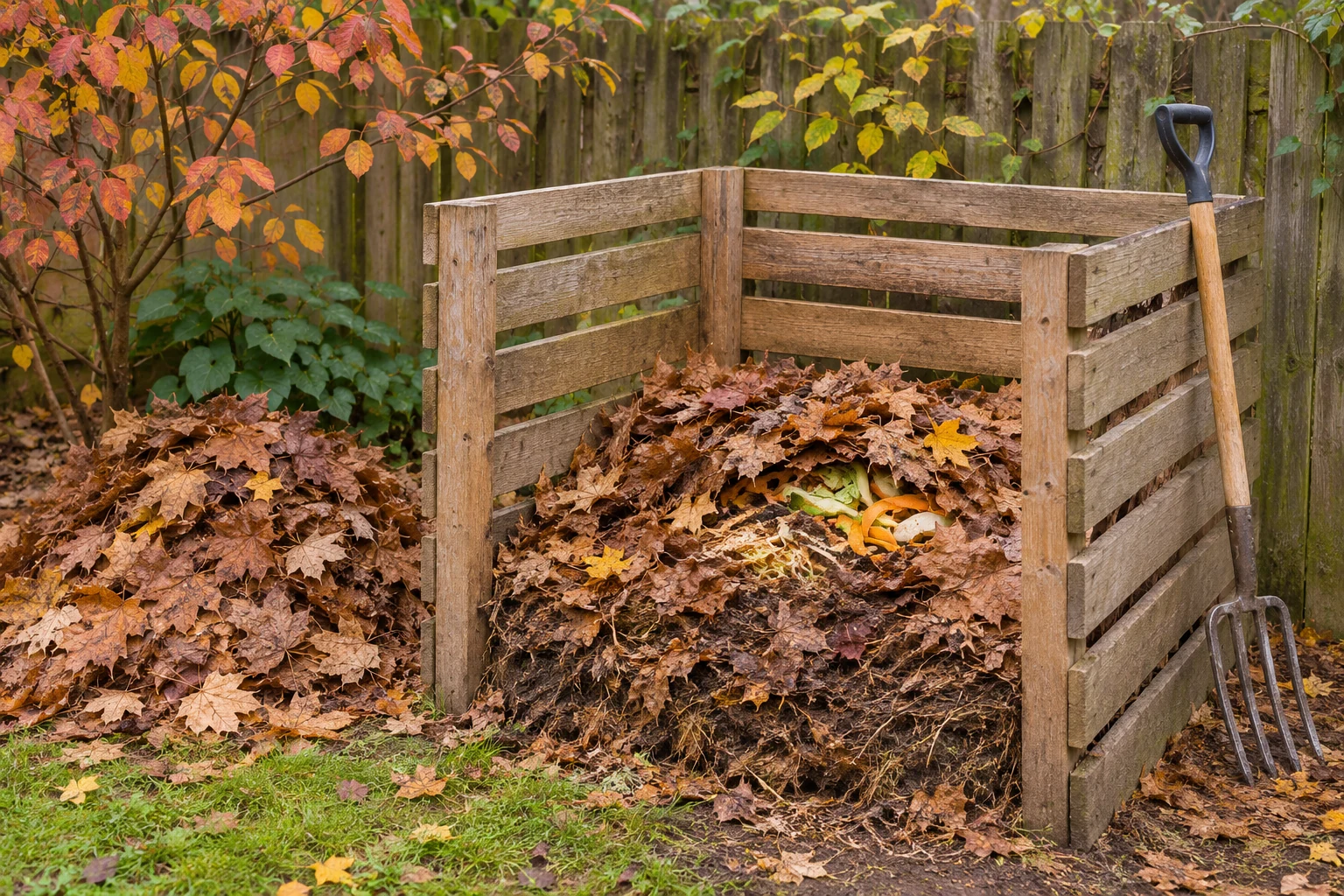
Prepping at a glance
- Match the system to your space and materials.
- Balance suitable scraps with dry carbon-rich material.
- Keep unsuitable waste out and troubleshoot before expanding.
Choose the simplest system you can maintain
Composting for beginners starts with an honest inventory of materials and space. A household with fallen leaves and a garden may suit a backyard pile or bin. An apartment may be better served by an established collection program or a carefully managed worm system. A countertop appliance that dries scraps is not automatically producing finished compost.
The EPA home-composting guide explains the different approaches. Choose a method before buying equipment. Consider year-round access, drainage, water availability, and local rules. A backyard compost bin placed where nobody wants to walk in bad weather is unlikely to receive consistent attention.
Keep the ingredient plan clear
For a basic backyard system, EPA identifies carbon-rich materials, nitrogen-rich materials, moisture, and air as the central ingredients. Suitable vegetable scraps and coffee grounds can be combined with materials such as dry leaves or appropriate plain shredded cardboard. Keep a supply of suitable dry material nearby so adding scraps does not become an unbalanced dumping routine.
Composting food scraps does not mean every kitchen discard belongs in a backyard bin. Follow the method's accepted-material list; meat, dairy, fats, pet waste, and several other materials are unsuitable for a typical beginner backyard system. Commercial collection programs may accept different materials, so use the rules for your actual destination rather than assuming all composting works the same way.
Create a convenient daily routine
Use a small, manageable kitchen container and empty it regularly into the chosen system. Remove produce stickers and other contaminants before scraps leave the kitchen. Make the separation clear to everyone who cooks, including visitors. A short list near the container can prevent repeated sorting later.
At the outdoor system, follow the recommended layering, covering, moisture, and aeration procedure. Keep tools accessible and check the site when adding material. If the system develops persistent odor, excess wetness, or pest activity, pause additions that worsen the problem and consult the method's troubleshooting guidance. Buying a larger bin does not correct an ingredient or maintenance problem.
Use finished compost thoughtfully
Do not schedule a garden project around an exact completion date unless the material is actually ready. Weather, ingredients, and management affect the process. Follow guidance for recognizing finished compost and for its appropriate garden use. Unfinished scraps should not be treated as a universal substitute for growing medium or fertilizer.
Keep a simple record of what goes in and how the system behaves. Notice whether you have more scraps than the bin can handle or more dry leaves than you can store conveniently. Adjust the scale accordingly, and use a collection service for overflow if available. The useful outcome is a clean, manageable material cycle that supports the garden, not the largest possible pile or a promise to eliminate every household waste stream.
