
Prepping at a glance
- Start with a suitable open-pollinated variety.
- Learn how pollination affects the next generation.
- Label, dry, store, and test seed before depending on it.
Choose a manageable first crop
Seed saving for beginners works best as a small learning project. Pick one vegetable you enjoy growing and find crop-specific instructions for collecting its seed. Saving vegetable seeds requires more than scooping seeds from whatever happens to be in the kitchen; plant identity, pollination, maturity, and storage all affect the result.
The University of Minnesota Extension seed-saving guide identifies tomatoes, peppers, beans, and peas as useful starting choices. It also explains why biennial crops such as carrots and beets are more complicated. Begin with a suitable crop and a clearly labeled variety rather than an ambitious collection of uncertain seed.
Understand open pollinated seeds and crossing
Open pollinated seeds can reproduce plants resembling the parent variety when pollination is appropriately managed. Seeds saved from a hybrid do not reliably reproduce the same characteristics. Read the original packet and keep its information with your garden records so you know what you started with.
Cross-pollination requirements vary among crops. Nearby compatible varieties can affect the next generation even when the current harvest looks normal. Use crop-specific guidance for isolation or other controls instead of assuming one distance or technique applies to everything. If maintaining variety purity is important, plan before planting. A small seed-saving experiment is still useful, but label uncertainty honestly rather than presenting unverified seed as a dependable variety.
Harvest seed at the correct stage
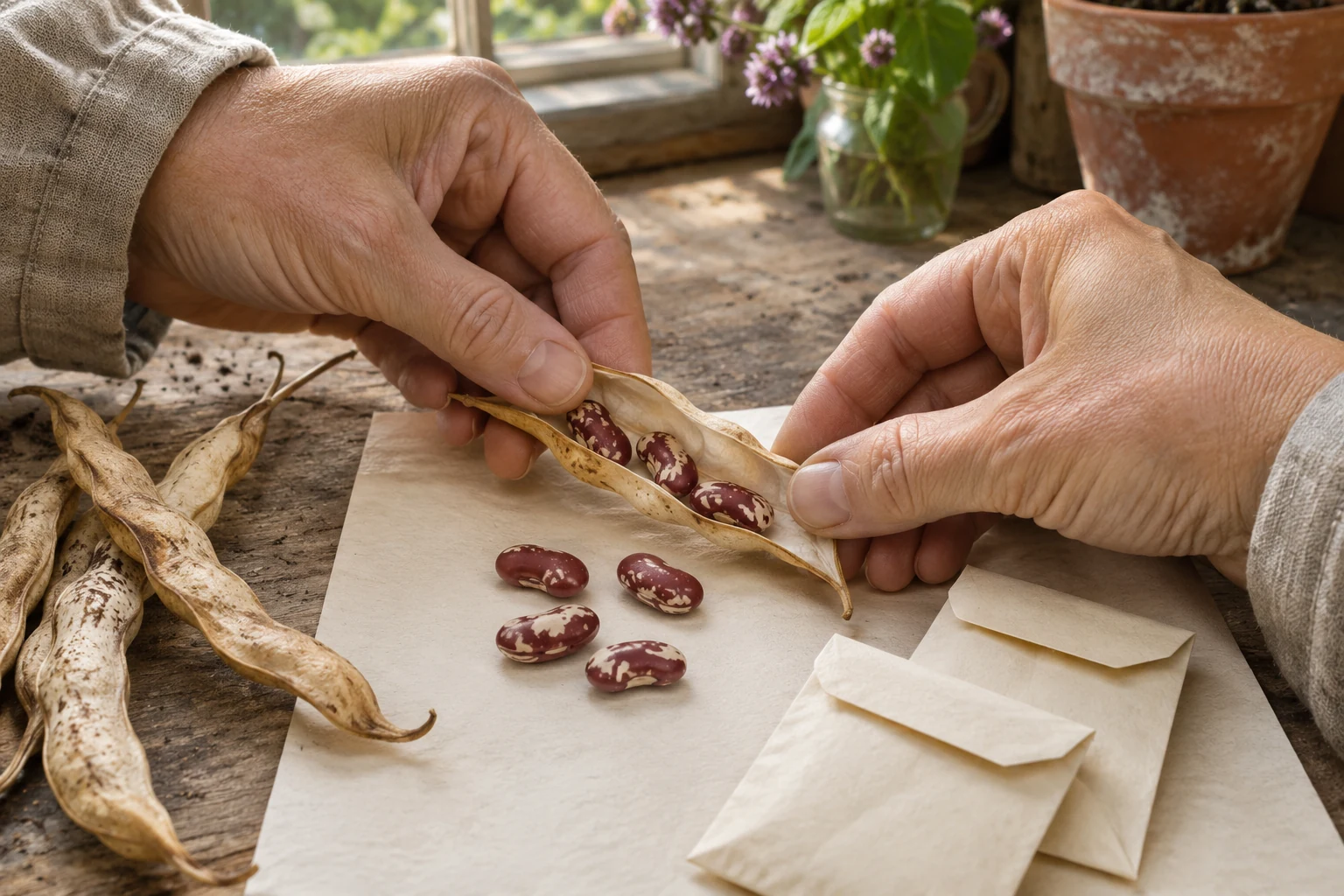
The stage for eating a vegetable may differ from the stage for collecting mature seed. Follow the process for the particular crop, including any required cleaning, fermentation, or drying steps. Do not transfer a tomato-seed method to beans or vice versa. Choose suitable healthy plants and record why you selected them.
Set aside a clean, labeled workspace. Keep different varieties separate throughout processing, and label containers before seeds become difficult to distinguish. Save more detailed notes than you think you need: the plant location, variety, collection date, and any possible crossing. Those notes help explain results next year when the memory of harvest day has faded.
Store and test before relying on the result
Use the crop-specific guidance for thoroughly drying and storing seed. Protect it from unsuitable moisture and temperature, and keep labels readable. A packet should identify the crop, variety, year, and relevant uncertainty. Store purchased backup seed separately so a first attempt does not become the only route to next season's garden.
Before planting the main crop, evaluate germination using a suitable seed-testing method and record the result. Grow a small trial and observe whether the plants match expectations. Keep learning from one crop before adding several more. Seed saving can develop useful local experience and preserve favored varieties, but dependable results come from repeated observation and careful records rather than merely accumulating jars of seed.
