
Prepping at a glance
- Inspect doors, mesh, roof edges, and ground-level gaps.
- Protect ventilation openings without sealing the coop airtight.
- Recheck the enclosure after storms and seasonal changes.
Inspect the enclosure as a connected structure
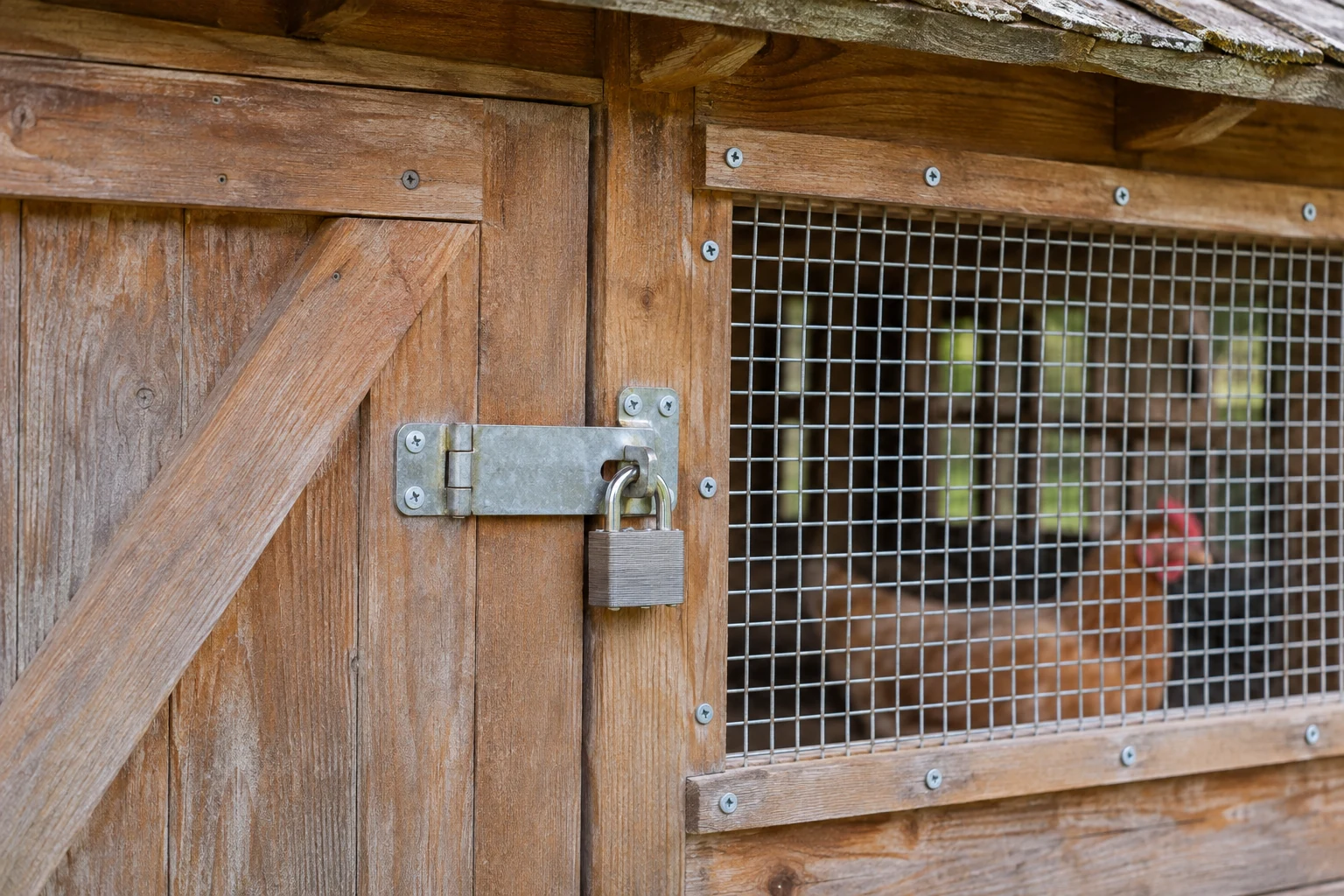
Chicken coop predator protection is only as strong as the places where components meet. Walk around the coop and run, checking doors, corners, mesh attachments, roof edges, vents, and the ground boundary. Look for gaps, loose fasteners, damaged material, and places a predator could reach through or dig beneath.
Use local knowledge of likely predators to guide the design. The Extension poultry predator-management guide explains why barriers and management must match the threats. A product labeled chicken wire is not automatically a complete predator barrier, and an attractive prefabricated coop still deserves a careful inspection.
Strengthen barriers without making new hazards
For a predator proof chicken coop, choose appropriate mesh, secure fastening, and latches suited to the enclosure and local threats. Inspect how materials attach to the frame; strong mesh provides little protection if it pulls away at an edge. Address digging and overhead access with a suitable complete design rather than fixing only the most visible side.
Keep sharp edges, entanglement risks, and unstable materials away from birds and caretakers. Make doors easy for a person to check and close reliably. Automatic doors can assist a routine, but confirm that they work as intended and that birds are actually inside before closure. No enclosure should be described as an absolute guarantee against every predator.
Preserve chicken coop ventilation and shade
Security work must not turn the coop into a sealed hot box. Protect openings with appropriate barriers while maintaining airflow. The University of Minnesota Extension heat-stress guidance emphasizes ventilation, shade, and reliable water. Check the interior during hot conditions rather than judging comfort from outside the structure.
Plan for equipment failure if fans or powered water systems are part of the setup. Keep electrical components suitable for the environment and professionally installed where required. If birds show signs of serious distress, seek timely veterinary or poultry-health guidance instead of waiting for the weather to change. A secure enclosure must support bird welfare as well as exclude predators.
Prepare for storms and daily mistakes
Check drainage, roof integrity, anchoring, nearby branches, and objects that could strike the run in strong winds. Keep feed protected from water and pests. Have a suitable temporary-care plan if the structure becomes unsafe, and prepare transport or containment equipment before an evacuation is needed.
Use a brief evening check: count birds, verify water access, inspect doors and latches, and look for new damage. After a storm, repeat the perimeter inspection before assuming the enclosure remains secure. Record recurring weak points and repair the cause rather than repeatedly patching the same failure. Reliable protection combines sound construction with a routine that still works when the usual caretaker is tired, delayed, or away.
