
Prepping at a glance
- Choose the food and intended meal before equipment.
- Compare freezing, drying, and tested canning realistically.
- Label a small practice batch and use it before scaling up.
Choose a useful first project
Food preservation for beginners should begin with a food you already cook and a realistic amount to process. A small batch of garden beans for future dinners is a clearer project than preserving everything you can obtain cheaply. Write down how you will use the result and where it will be stored before choosing equipment.
Look for a tested procedure from the National Center for Home Food Preservation, USDA, or a university extension service. Confirm that it covers your exact food and form. A procedure for pieces is not automatically suitable for a puree, and a method for one vegetable may not transfer to another.
Compare home food preservation methods by their demands
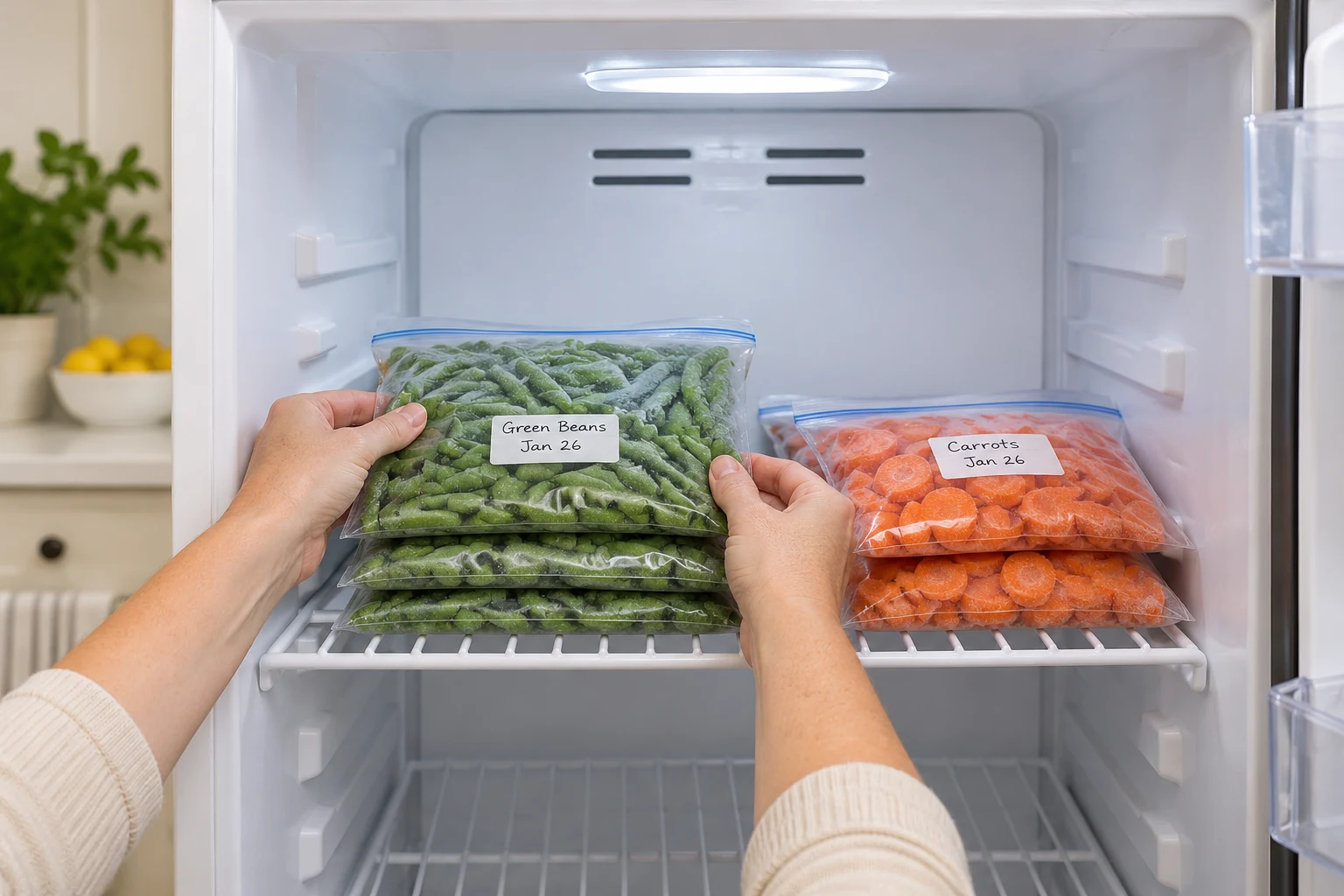
Freezing may be a practical first method when you have dependable freezer space and an outage plan. The NCHFP freezing guide includes food-specific preparation, blanching, packaging, and storage information. Choose a familiar vegetable from its list and follow that procedure rather than assuming all vegetables freeze well untreated.
Drying can make some produce compact and convenient for cooking, but it requires an appropriate process and protection from moisture afterward. Canning can produce useful shelf-stable food when a tested method is followed exactly, but it adds requirements for equipment, acidity, jar size, processing, and altitude. Choose according to the food and your capacity, not a claim that one method is always easiest.
Plan a small session from start to storage
For preserving garden vegetables, make a checklist of produce, equipment, containers, labels, timing, and available storage. Inspect equipment before harvest day. Read the entire procedure, including cooling or post-processing steps, so the project does not stop at the moment the food looks finished.
Keep the recipe visible and avoid improvising changes. For canning, use the method the tested recipe specifies; the University of Illinois Extension canning guide is a useful starting resource. Do not substitute a boiling-water process for required pressure canning or assume a sealed lid proves that processing was adequate.
Test the stored food in ordinary meals
Label each package with its identity, processing date, and any preparation information needed later. Record the source procedure and batch details. Store the food as directed, then use some in the intended meal while the experience is still fresh. Evaluate portion size, texture, convenience, and whether the household wants more.
A method that preserves food successfully may still be a poor fit if nobody enjoys the result or the storage arrangement is burdensome. Adjust the quantity or choose another verified method next time. Expand only after the first batch has demonstrated both safe processing and useful meals. The goal is a pantry or freezer that supports daily life, with skills and records you can repeat confidently.
