
Prepping at a glance
- Assess existing soil and drainage before buying materials.
- Include fill, irrigation, and maintenance in raised-bed costs.
- Choose a layout you can reach and care for comfortably.
Compare the same growing area
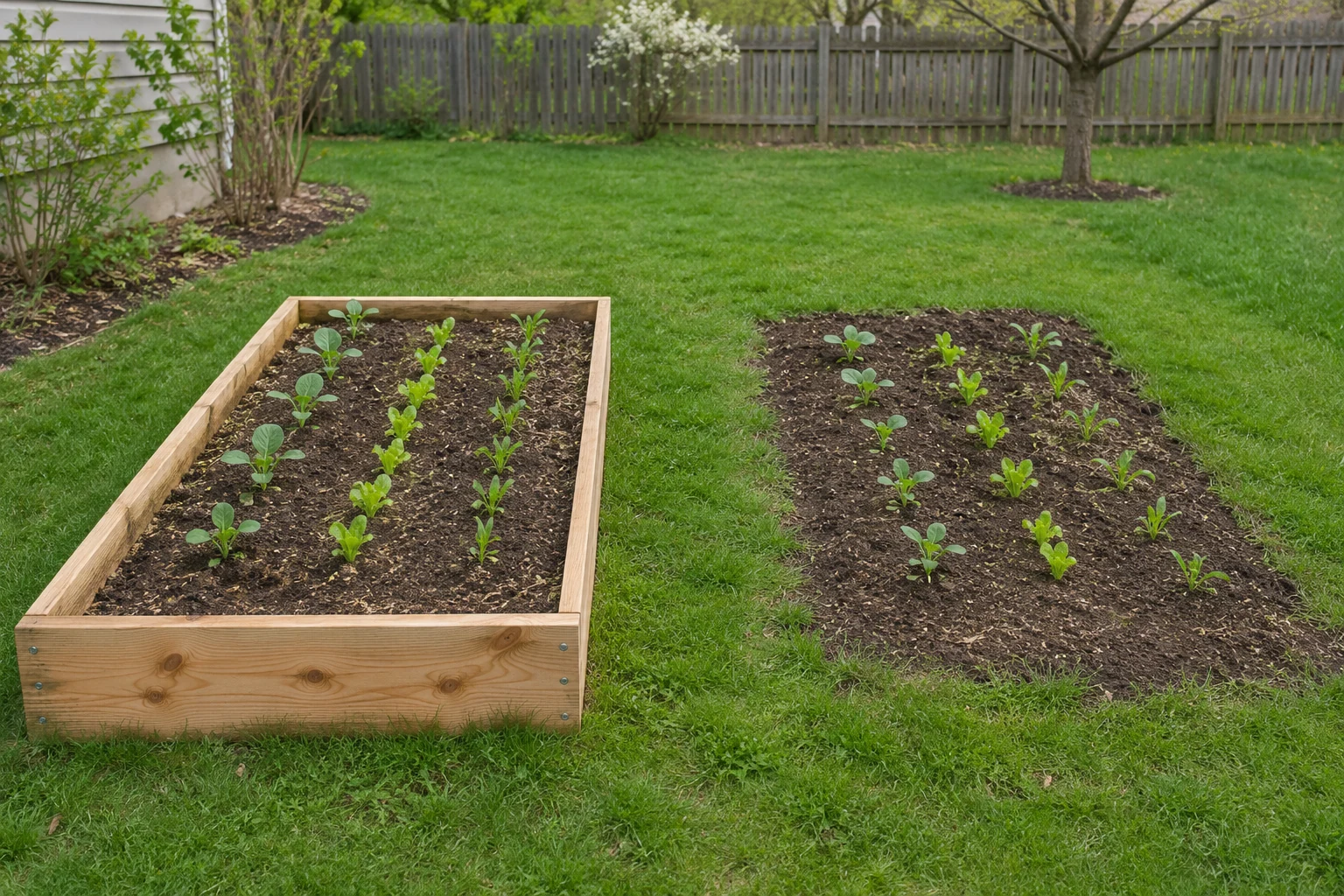
The raised beds vs in ground garden decision is easier when both options cover the same usable planting area. Draw two simple layouts and include paths, access, water supply, and room for mature plants. A bed's advertised dimensions do not tell you how much of it you can comfortably maintain.
Start with your existing site. Good usable soil may make an in-ground approach practical, while difficult drainage, accessibility needs, or other constraints may justify a raised bed. If the soil may be contaminated, obtain appropriate testing and local guidance. Adding a shallow layer of purchased soil is not automatically a complete solution to contamination below or nearby.
Understand what a raised bed changes
A raised bed vegetable garden can define the growing area and make soil management or access easier in some situations. It also requires a suitable structure if framed, enough appropriate fill, and a plan for watering and eventual maintenance. Price those parts together before deciding it is an inexpensive weekend project.
The University of Maryland Extension raised-bed guide discusses materials and growing considerations. Follow reliable guidance when selecting materials that will contact growing soil. Consider the height and reach that suit the gardener, not just a standard kit size. A tall bed may improve access while increasing fill requirements substantially.
Understand the in-ground alternative
An in ground vegetable garden can use suitable existing soil without purchasing a frame or a large volume of fill. It still needs site preparation, weed management, clear paths, and amendments based on evidence. Poor drainage or compacted soil will not disappear simply because the bed is inexpensive to establish.
Plan how you will reach plants without repeatedly stepping on the growing area. Observe where water collects after rain and whether nearby trees compete for space or cast shade. A soil test can help identify appropriate amendments instead of encouraging a cart full of products that may not address the actual limitation. Include preparation time in the comparison, even if the materials cost is lower.
Choose for maintenance, then start small
Estimate a season of care for each layout: watering access, weeding, supports, mulch, harvesting, and replacement of any structure or edging. Think about how a hose or watering can will move through the space. Check whether the garden remains reachable after rain and whether paths fit the people who will use them.
A small trial area can settle uncertainties before a larger commitment. You might test one raised bed beside a modest in-ground section under similar conditions, or simply start with the option that solves your clearest problem. Record effort and harvest usefulness rather than judging success from appearance alone. Expand after a season demonstrates that the system fits your soil, schedule, budget, and physical needs.
